






















The modern mining sector is undergoing a profound digital transformation, fueled by the integration of the Internet of Things (IoT), data analytics, and cloud computing. While large-scale automation typically focuses on massive autonomous haul trucks, robotic drilling rigs, and unmanned processing plants, some of the most significant gains in mining efficiency are occurring at the level of the individual technician. In high-risk, high-tolerance maintenance and assembly workflows, the adoption of smart hand tools enhancing mining workforce efficiency is emerging as a critical driver of operational excellence. These advanced tools, ranging from connected torque wrenches to smart calipers and digital multimeters, are equipped with onboard microprocessors, digital displays, and wireless communication capabilities. By bridging the gap between physical labor and digital data management, smart tooling allows technicians to execute complex maintenance tasks with unprecedented accuracy, directly optimizing equipment uptime and boosting overall mining productivity.
The Digital Transition of Hand-Held Tooling in Heavy Industry
For decades, the standard toolkit of a mining maintenance technician consisted of heavy, manual, purely mechanical hand tools. While these tools were durable, they relied entirely on the physical skill and subjective judgment of the user, leaving considerable room for human error during complex repair routines. A technician over-tightening a bolt or misinterpreting a dial gauge could easily compromise the mechanical integrity of high-value mining assets, leading to premature failures in the field. The development of smart hand tools has solved this vulnerability by embedding electronic intelligence directly into the tool’s body. These modern tools can measure, log, and transmit critical operational data such as applied force, rotational angles, and electrical values in real time. This digital shift not only reduces the risk of human error but also elevates the role of maintenance technicians from manual laborers to highly skilled operators working in a connected, data-rich industrial ecosystem, reducing both physical fatigue and cognitive load.
Data-Driven Precision and Connected Tools in Everyday Operations
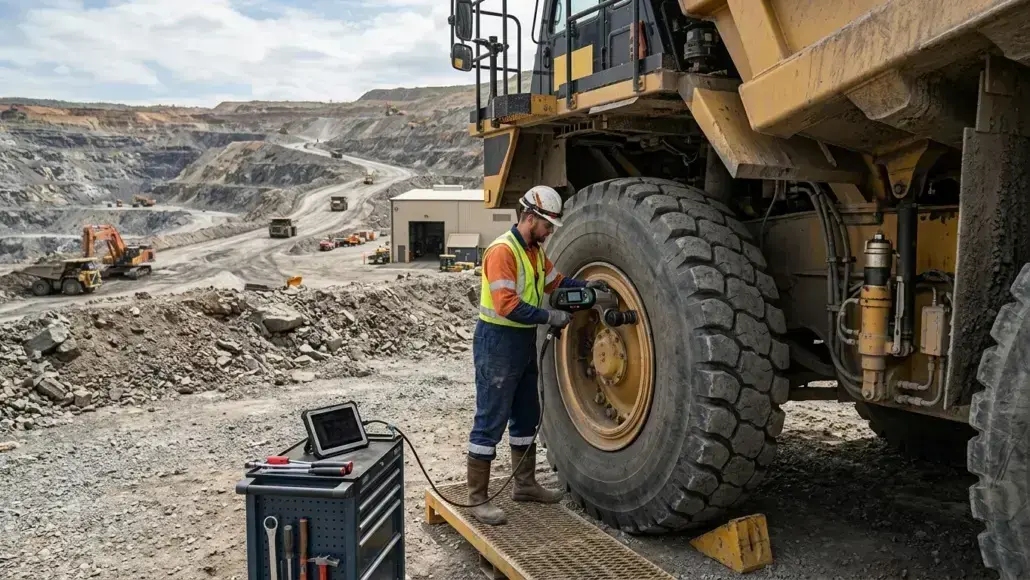
In high-stress mining environments, precision is essential for ensuring the long-term reliability of heavy machinery. For example, during the reassembly of a haul truck’s planetary wheel-end, dozens of high-strength fasteners must be tightened to precise torque and angle specifications to ensure even load distribution. Using traditional torque wrenches, technicians have no way of verifying whether they have achieved the exact target tension, as thread friction and user technique can cause significant variations. Smart connected tools solve this issue by utilizing advanced strain gauges and gyroscopic sensors to measure both the torque and the rotational angle simultaneously. As the technician applies force, the tool provides real-time visual, auditory, and haptic feedback, shifting from yellow to green when the target parameter is met. This precision prevents both under-tightening, which leads to vibrational loosening, and over-tightening, which causes thread yield, thereby ensuring the structural safety and operational integrity of the heavy machinery under the most demanding field conditions.
Boosting Mining Efficiency Through Real-Time Quality Control
Deploying smart hand tools in the maintenance workshop leads to immediate improvements in mining efficiency by streamlining repetitive quality control and auditing processes. Traditionally, when a critical machine assembly was completed, a quality assurance inspector had to manually check and log each bolt’s tightness using a separate torque verification process. This manual audit was time-consuming, prone to record-keeping errors, and delayed the equipment’s return to active service. Smart connected tools automate this entire process by wirelessly transmitting assembly data directly to the site’s computerized maintenance management system (CMMS). As each bolt is tightened, the tool creates a digital record containing the unique asset ID, technician ID, exact torque applied, and a timestamp. This automated logging eliminates manual paperwork, speeds up the quality control process, and allows maintenance teams to return assets to production faster, significantly increasing overall mining productivity and operational readiness.
Ergonomics and Workforce Safety in Modern Extraction
Beyond physical precision and digital connectivity, smart hand tools are designed with a strong focus on ergonomics, protecting the safety and well-being of the modern mining workforce. Mining technicians frequently work in confined spaces, extreme temperatures, and awkward physical positions, making them highly susceptible to musculoskeletal injuries and fatigue. Advanced smart tools utilize lightweight carbon fiber and high-strength composite materials to reduce physical strain during long maintenance shifts. Additionally, many smart tools feature advanced vibration damping systems and balanced centers of gravity, reducing the physical shock and vibrational energy transmitted to the technician’s hands and wrists. By reducing physical fatigue, these ergonomic improvements help technicians maintain high focus and precision throughout their shifts, lowering the likelihood of errors and workplace accidents. Some smart tools even feature posture and hand-angle sensors that warn the user when they are applying force in an ergonomically unsafe manner, helping prevent repetitive strain injuries.
Integrating Digital Maintenance for Automated Audit Trails
In highly regulated mining environments, maintaining a rigorous, auditable record of all equipment servicing is a critical legal and operational requirement. The integration of smart hand tools with digital maintenance systems provides a seamless, tamper-proof audit trail for every repair and overhaul performed. For instance, when servicing high-voltage electrical enclosures on electric-drive mining shovels, technicians must use calibrated insulated tools to ensure compliance with strict electrical safety standards. Smart insulated tools can automatically verify their calibration status and log every electrical measurement and physical torque value during the service routine. This electronic record provides instant proof of compliance with regulatory standards, simplifying safety audits and reducing the risk of costly regulatory fines. Furthermore, in the event of an unexpected equipment failure, engineers can review the digital assembly logs to determine if the joint was built to specification, helping them identify root causes and improve future maintenance protocols.
Real-Time Asset Identification and Configuration Sync
One of the key technical features of modern smart hand tools is their ability to identify the specific machinery component being serviced using radio frequency identification (RFID) or integrated barcode scanners. When a technician approaches a high-value asset, such as a multi-stage slurry pump or a dragline hoist gear, they scan the asset’s digital tag using the smart tool. The tool instantly synchronizes with the central computerized maintenance management platform, retrieving the exact engineering specifications, torque patterns, and bolt sequences required for that specific serial number. This immediate configuration sync ensures that the technician never has to search through massive paper manuals or rely on outdated memory, which can lead to disastrous assembly errors. By automating the retrieval of engineering tolerances and syncing them directly to the tool’s electronic control board, the mining operation can guarantee that every maintenance step is executed in perfect alignment with manufacturer specifications, significantly improving machinery life and minimizing post-maintenance failures in the field.
Future Horizons for Connected Workforces in Resource Extraction
As mining operations continue to adopt digital mining technologies, the role of smart hand tools will expand further, integrating with augmented reality (AR) and artificial intelligence (AI). In the near future, maintenance technicians wearing smart safety glasses will receive real-time, visual overlay instructions directly in their field of view. These AR systems will guide the technician through complex assembly sequences, showing exactly which bolt to tighten next, while the smart tool wirelessly communicates with the headset to verify each step in real time. If a step is skipped or executed incorrectly, the system can instantly pause the process and provide interactive guidance to correct the mistake. This integration of AR and smart tools will accelerate technician training, reduce the time required for complex repairs, and establish an incredibly reliable, safe, and efficient maintenance standard that supports high-yield mining operations worldwide, leading to major leaps in mining productivity.
Addressing the Technical Skills Gap and Training Accelerators
The introduction of smart tooling also provides a powerful solution to one of the most critical challenges facing the global mining industry: a growing technical skills gap. As experienced senior technicians retire, mine operators are often forced to hire younger, less-experienced workers who require substantial training before they can safely service complex, heavy machinery. Smart hand tools act as training accelerators by embedding operational guardrails directly into the workflow. For example, a smart torque wrench can be pre-programmed with a step-by-step instructional sequence for a specific machine repair. As the junior technician works, the tool’s digital screen displays step-by-step instructions, ensuring they follow the exact engineering protocol. By providing this active guidance, smart tools prevent mistakes, build confidence in new workers, and allow junior technicians to perform at the level of seasoned professionals much sooner than would otherwise be possible, boosting overall mining efficiency.
Optimizing Tool Calibration and Asset Lifecycle Management
To ensure the ongoing accuracy and safety of maintenance work, hand tools must be calibrated regularly, which can be an administrative challenge across a massive mine site. Traditional manual tracking of tool calibration is highly vulnerable to oversight, resulting in the accidental use of out-of-calibration tools on critical components. Smart hand tools address this issue through built-in calibration tracking and automated lockouts. When a tool is approaching its calibration due date, its onboard microcontroller can display warning messages, and if the date passes without calibration, the tool can automatically disable itself. Furthermore, when connected to the site’s digital maintenance network, the smart tools can automatically report their calibration status and usage count during daily battery charging. This proactive asset management ensures that only fully certified and accurate tools are deployed in the field, safeguarding heavy machinery and protecting the operation from liability and mechanical failure. Modern tool management software can also track load cycles to predict when the tool’s own physical components might fail due to stress.