









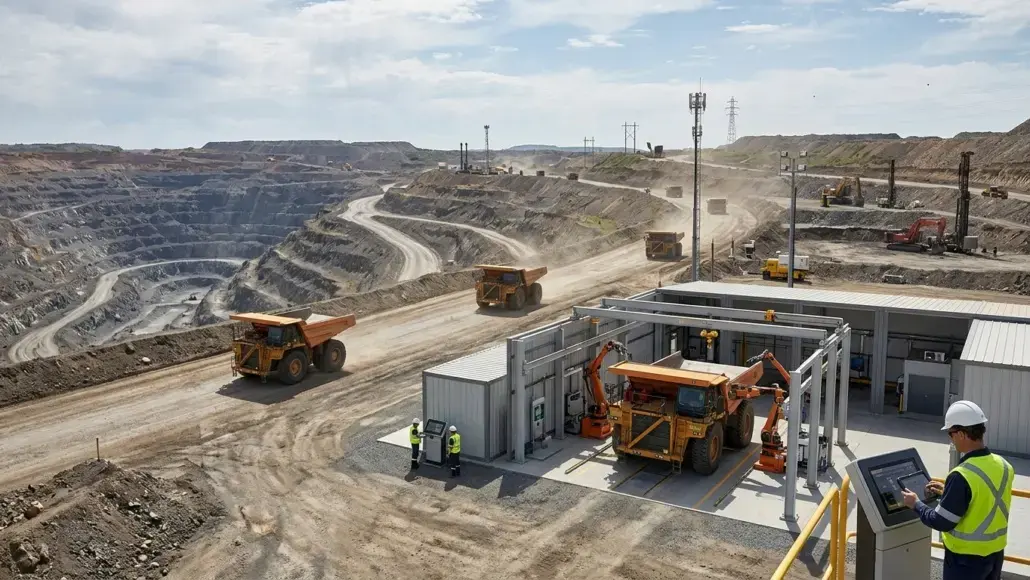

The global mining industry is undergoing a structural shift driven by the rapid adoption of digital mining and automated technologies. To remain competitive in an environment characterized by declining ore grades, rising labor costs, and increasingly stringent safety regulations, resource extraction companies are actively restructuring their operational workflows. At the heart of this operational evolution is the deployment of specialized, automation ready hardware transforming mine maintenance across open-pit and underground operations. This highly advanced hardware, which includes integrated sensor packages, ruggedized edge computing controllers, smart actuators, and CAN bus telemetry systems, is specifically engineered to operate in the harshest environments. By turning physical industrial equipment into highly intelligent, self-monitoring nodes, this hardware is revolutionizing how heavy machinery is monitored, diagnosed, and repaired, shifting the maintenance paradigm from a reactive chore to a highly optimized predictive science that underpins modern mining automation.
The Shift From Reactive Servicing to Predictive Maintenance
For generations, mine maintenance was divided into two costly categories: reactive, run-to-failure repair cycles and rigid, calendar-based preventive servicing. Reactive maintenance is inherently inefficient, as it leads to unexpected machinery breakdowns that can halt a mine’s production line for hours or days. Calendar-based maintenance, while safer, often results in the premature replacement of expensive, perfectly functional components, driving up operational costs. The integration of modern automation hardware has resolved these inefficiencies by enabling continuous, real-time predictive maintenance workflows. By continuously tracking physical indicators such as acoustic signatures, vibration frequencies, thermal patterns, and oil chemistry, automation ready hardware allows maintenance engineers to monitor the precise degradation rate of critical components. This data-driven approach ensures that parts are serviced only when they actually require maintenance, maximizing component lifespans, reducing waste, and significantly reducing unnecessary maintenance interventions across all active mining sectors.
Core Technologies in Modern Automation Hardware
Understanding the impact of automation ready hardware requires examining the advanced components embedded within modern mining machinery. Modern haul trucks, drill rigs, and crushing plants are equipped with high-resolution piezoelectric accelerometers, non-contact infrared thermal sensors, and optical oil particulate sensors. These hardware components are designed to withstand extreme physical environments, often holding IP67 or IP69K ruggedization ratings to resist high-pressure water, abrasive dust, and heavy vibrations. The data collected by these sensors is processed at the machine level using high-capacity edge computing controllers, which filter out environmental noise and identify subtle mechanical anomalies. By performing this data processing directly on the machine, the system can identify immediate threats such as a sudden temperature spike in a hydraulic pump bearing and take preventive action, such as throttle limiting or safe shutdowns, long before the issue can escalate into a catastrophic failure.
Empowering Predictive Servicing and Real-Time Infrastructure Monitoring
The implementation of automation hardware enables seamless predictive servicing, which dramatically improves the efficiency of maintenance planning and resource allocation. Instead of waiting for a machine to break down, the onboard hardware communicates with the mine’s centralized SCADA (Supervisory Control and Data Acquisition) system, warning maintenance planners when a component’s health index drops below a predefined threshold. This early warning allows the maintenance team to schedule repairs during planned, natural pauses in production, such as shift changes or material blasting windows. Furthermore, the system automatically alerts warehouse inventories to confirm that the required replacement parts are in stock, and generates precise digital work orders detailing the exact tools and procedures required for the repair. This seamless, automated coordination reduces machine downtime, ensures that maintenance tasks are executed safely and efficiently, and keeps the overall mining operation running smoothly with minimal manual intervention.
Minimizing Catastrophic Equipment Failures in Aggressive Environments
In aggressive environments like deep underground mines and remote open-pit sites, a major equipment failure can be incredibly difficult and expensive to resolve. For example, if a massive gear reducer on a primary conveyor belt fails unexpectedly, transporting a heavy replacement unit to the remote site can take several days and require specialized heavy-lift cranes. Onboard automation hardware mitigates this risk by providing continuous structural and mechanical health monitoring. By identifying micro-fractures in rotating shafts through acoustic emission sensors and detecting bearing wear via high-frequency vibration analysis, the hardware alerts the team to minor defects weeks before a physical failure would occur. This long warning window allows operators to plan methodical, safe repairs, avoiding the massive costs, logistical headaches, and extreme safety hazards associated with emergency, unplanned field repairs in challenging environments.
Artificial Intelligence and Machine Learning Integration at the Edge
The next evolution of automation ready hardware is the integration of light artificial intelligence and machine learning models directly at the component level. Modern edge-processors are now powerful enough to run light neural networks that analyze complex, high-frequency vibrational profiles and predict the remaining useful life (RUL) of mechanical parts in real-time. This edge-AI capability is particularly critical in underground shafts or remote regions where continuous internet or central network connectivity is unavailable. The hardware does not need to send gigabytes of raw sensor data to a cloud database; instead, it performs the complex calculations locally and only transmits a lightweight health status update. This localized computation represents a major step forward, bypassing bandwidth limitations and providing near-zero latency response times. This localized intelligence allows the heavy machinery to identify complex fault patterns such as the subtle combination of shaft misalignment and gear micro-pitting and execute protective actions instantly, guaranteeing structural safety and maximizing uptime under any operating condition.
Accelerating the Growth of Digital Mining and Autonomous Workflows
As mining operations transition toward fully autonomous workflows, the role of automation ready hardware becomes even more critical. In mines operating autonomous drill fleets and driverless haul trucks, there are no human operators onboard to feel an unusual vibration or hear an abnormal engine noise. In these digital mining environments, the mechanical assets must be fully self-monitoring. Automation hardware acts as the sensory nervous system for these autonomous machines, continuously feeding data to artificial intelligence algorithms that coordinate fleet operations. If an autonomous truck’s edge-controller detects an abnormal temperature spike in its braking system, the fleet management software can automatically redirect the vehicle to the maintenance workshop and adjust the schedules of the remaining trucks to maintain consistent production. This integration of physical hardware and intelligent software is essential for building a truly resilient, automated, and highly productive modern mining enterprise under the banner of mining automation.
Strategic Integration Paths for Legacy Mining Infrastructure
One of the key advantages of modern automation ready hardware is its versatility and retrofitting capability. While purchasing new, factory-integrated smart machinery is ideal, mining companies can also retrofit their existing, legacy fleets with specialized automation hardware kits. This upgrade path allows operators to bring older, purely mechanical assets into the digital mining age without the immense capital cost of full fleet replacement. By retrofitting legacy haul trucks and crushing circuits with smart vibration sensors and digital flow meters, mines can establish a consistent, unified maintenance standard across their entire fleet. This standardization simplifies technician training, reduces inventory complexity, and ensures that every machine on-site regardless of age benefits from the safety, efficiency, and reliability of predictive maintenance, paving the way for sustained profitability and operational success in the global resource extraction sector.
The Economics of Scalability and System Interoperability
Implementing automation hardware on a broad scale requires careful consideration of communication protocols and system interoperability. A typical mine site operates a diverse range of industrial equipment from various manufacturers, each running on proprietary internal software. For automation ready hardware to be truly effective, it must support open, standardized industrial communication protocols, such as Modbus, OPC UA, and CANopen. This interoperability ensures that telemetry data from a Japanese-made excavator, an American-made haul truck, and a German-made crusher can be consolidated into a single, unified maintenance dashboard. When data flows seamlessly across these different systems, reliability engineers can analyze cross-system trends, such as how the vibration frequency of a crusher impacts the structural wear of downstream conveyor components. This unified view allows for holistic optimization of the extraction system, transforming isolated data points into actionable intelligence that drives major gains in equipment uptime and process efficiency.
Cybersecurity in Connected and Automated Mining Ecosystems
As mine maintenance becomes increasingly dependent on connected hardware and automated telemetry streams, protecting these digital assets from cyber threats has become a major priority. A malicious actor gaining unauthorized access to a mine’s telemetry network could feed false data to the SCADA system, tricking maintenance crews into shutting down perfectly functional machinery or, worse, disabling critical temperature and pressure warning limits. To mitigate these security risks, modern automation hardware features advanced cybersecurity protocols, including hardware-based encryption, secure boot capabilities, and encrypted data transmission. Telemetry networks are built with strict segmentations, separating operational technology (OT) from corporate information technology (IT) networks, and utilizing multi-factor authentication for any remote access. By securing these data channels, mining enterprises can confidently adopt automated diagnostic workflows, knowing that their critical machinery and operational data are safe from cyber interference and corporate espionage. Furthermore, regular vulnerability assessments and firmware updates are automated to prevent old security gaps from being exploited, ensuring that the hardware remains secure throughout its entire operational lifetime.