








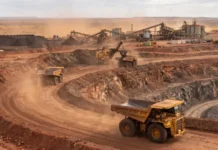
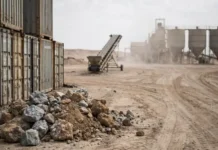
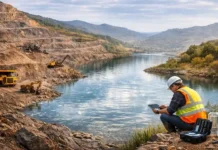
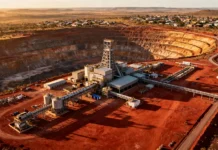
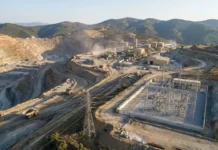
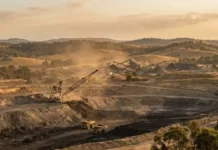
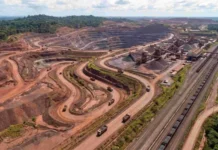
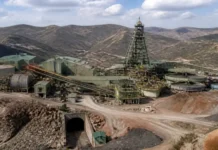
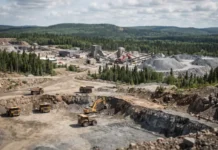
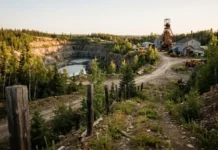
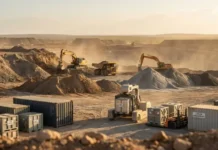
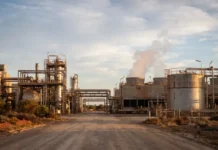
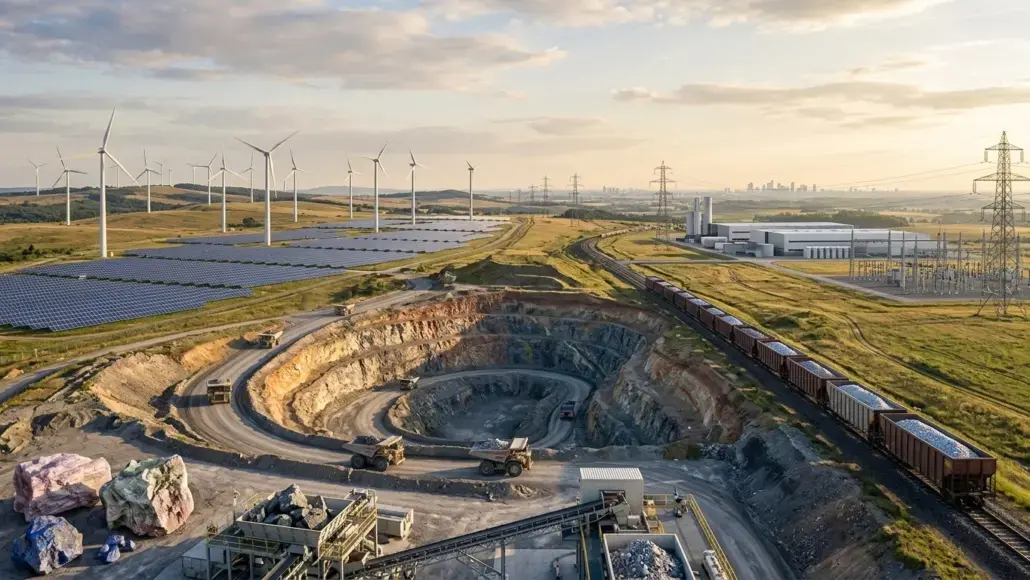

The global landscape of energy production is undergoing its most significant transformation since the Industrial Revolution. As nations move away from carbon-intensive fossil fuels, the focus has shifted toward a mineral-intensive infrastructure. The success of this systemic overhaul depends on a steady, secure, and sustainable supply of critical minerals. These elements are the building blocks of modern clean energy technologies, ranging from solar panels and wind turbines to the lithium-ion batteries that power electric vehicles. Without a drastic expansion in mining and refining capabilities, the ambitious targets set by international climate agreements will remain out of reach.
The Geopolitics of Mineral Resource Security
Securing these resources is no longer just an industrial necessity but a cornerstone of national security and economic stability. Historically, energy security was defined by access to oil and gas reserves. Today, it is increasingly defined by the ability to source and process critical minerals like lithium, nickel, cobalt, and rare earth elements. The concentration of these resources in specific geographic regions has created a complex web of dependencies. For instance, a significant portion of the world’s cobalt is mined in the Democratic Republic of Congo, while the refining and processing of rare earths are heavily centralized in East Asia. This concentration poses risks to the global supply chain, making it vulnerable to trade tensions, political instability, and logistical bottlenecks.
To mitigate these risks, many developed economies are implementing domestic policies aimed at diversifying their supply chains. This involves both domestic exploration and the formation of strategic partnerships with mineral-rich nations. The goal is to create a “China-plus-one” strategy or a more resilient network that can withstand regional shocks. Investment is flowing into new mining projects in Australia, Canada, and South America, while also exploring the potential of recycling and urban mining to recover valuable materials from decommissioned electronics and batteries.
The Role of Investment in Scaling Production
Scaling up the extraction of critical minerals requires massive capital infusion. The mining industry is notoriously capital-intensive, with long lead times between initial discovery and commercial production often spanning a decade or more. Investors are now looking at the mining sector through a new lens, recognizing that “green” minerals are the primary growth engine of the future. Venture capital and private equity are increasingly targeting junior mining companies that specialize in battery metals. Furthermore, major automotive manufacturers and tech giants are entering into direct off-take agreements or even taking equity stakes in mining firms to ensure their future production lines are not idled by material shortages.
This influx of capital is driving innovation in extraction techniques. Traditional mining is often criticized for its environmental footprint, but the current wave of investment is also prioritizing ESG (Environmental, Social, and Governance) standards. Technologies like direct lithium extraction (DLE) and more efficient smelting processes are being developed to reduce water usage and carbon emissions. By aligning financial incentives with sustainable practices, the industry is attempting to prove that the “green” transition will not be built on environmentally destructive practices.
Technological Advancements in Battery Metals
The energy transition is largely a story of energy storage. High-capacity batteries are the essential link that allows intermittent renewable energy from wind and solar to be used reliably. As battery technology evolves, the specific mix of minerals required also changes. While lithium remains the constant, the ratios of nickel, manganese, and cobalt are being optimized to improve energy density and safety while lowering costs. The rise of lithium iron phosphate (LFP) batteries, which do not require nickel or cobalt, is one example of how the industry is adapting to mineral scarcity and high prices.
However, even with these shifts, the absolute volume of minerals needed is staggering. The International Energy Agency (IEA) has projected that mineral demand for clean energy technologies will need to quadruple by 2040 to meet the goals of the Paris Agreement. This creates a permanent upward pressure on the supply chain. Manufacturers are responding by investing in research and development for solid-state batteries and other next-generation storage solutions that might utilize different mineral profiles, but for the next decade, the industry remains firmly tethered to the current slate of critical minerals.
Infrastructure Integration and the Smart Grid
The minerals we extract are not just sitting in car batteries; they are being integrated into the very backbone of our electricity grids. Grid modernization is a silent partner in the energy transition. Smart grids require an immense amount of copper and aluminum to handle the bidirectional flow of electricity and the integration of decentralized renewable sources. Copper, in particular, is the “metal of electrification.” Its superior conductivity makes it indispensable for wiring, transformers, and the vast networks of charging stations required for electric vehicles.
As cities transition to smart infrastructure, the demand for these “old school” minerals is seeing a resurgence. This isn’t just about building more of the same; it’s about building more intelligent systems. These systems use advanced sensors and controls which themselves require specialized minerals to optimize energy distribution. The synergy between critical mineral supply and grid modernization ensures that the energy we produce is used as efficiently as possible, further accelerating the transition away from fossil fuels.
Environmental and Social Governance in Mining
As the world demands more minerals, the scrutiny on the mining industry has intensified. The irony of mining “clean energy” minerals through “dirty” processes is not lost on the public or regulators. To maintain their social license to operate, mining companies are adopting rigorous ESG frameworks. This includes transparent reporting on water usage, tailings management, and land reclamation. More importantly, it involves genuine engagement with local communities and indigenous groups who are often the most directly impacted by mining operations.
Social governance also extends to the labor force. Ensuring fair wages, safe working conditions, and the elimination of child labor particularly in the artisanal mining sectors of Africa—is a global priority. Brands that rely on these minerals are being held accountable for their entire supply chain. This transparency is facilitated by new digital tools, such as blockchain-based tracking, which provides a “digital passport” for minerals from the mine to the final product. Consumers are increasingly willing to pay a premium for products that can prove their components were ethically sourced.
Circular Economy and Mineral Recycling
While mining will provide the bulk of the minerals needed in the short term, the long-term sustainability of the energy transition relies on the circular economy. Recycling must become a major source of critical minerals. Currently, the recycling rates for lithium and other battery metals are relatively low compared to traditional metals like steel or aluminum. However, as the first generation of mass-market EVs reaches the end of its life, a “wall of batteries” is approaching.
Dedicated recycling facilities are being built to process these spent batteries and recover up to 95% of the valuable materials inside. This not only reduces the need for new mines but also creates a more localized supply chain, as recycling can happen closer to the manufacturing hubs. The development of a robust recycling infrastructure is the final piece of the puzzle, ensuring that the critical minerals driving our growth today will continue to power the world for generations to come.
Conclusion
The transition to a clean energy future is a physical reality that requires a massive reallocation of natural resources. Critical minerals are the literal foundation of this new era. By focusing on supply chain security, technological innovation, and ethical mining practices, the global community can ensure that the move toward sustainability is both rapid and responsible. The challenges are significant ranging from geopolitical tensions to environmental concerns but the momentum behind the energy transition is now irreversible. As we continue to refine our ability to discover, extract, and recycle these vital elements, we pave the way for a more resilient and decarbonized global economy.