








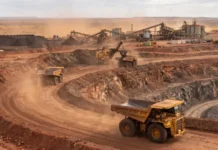
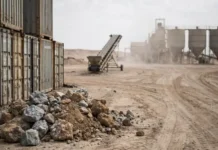
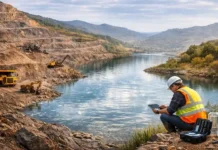
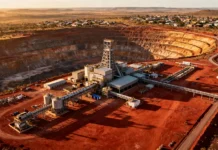
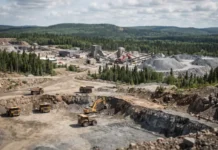
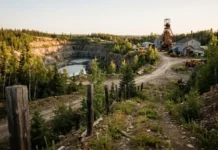
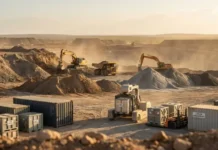
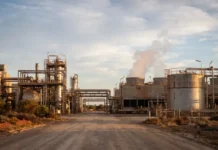

The global mining and resource extraction sector is undergoing a massive technical evolution, driven by the need to operate more efficiently, sustainably, and safely in increasingly remote and challenging locations. As easily accessible mineral deposits are depleted, mining companies are forced to go deeper underground and operate in geographically isolated environments where traditional supply chains and logistics networks struggle to keep up. To address these operational challenges, the integration of digital manufacturing supporting next generation mining has emerged as a disruptive and powerful solution. By linking advanced fabrication technologies, such as additive manufacturing, computer-aided engineering, and automated quality control, with real-time digital networks, the mining industry can revolutionize how spare parts are sourced, customized, and maintained. This digital shift not only lowers the capital tied up in replacement part inventories but also accelerates mining innovation and supports the ongoing growth of highly automated, smart mining operations globally.
The Convergence of Advanced Fabrication and Modern Extraction
For decades, the physical procurement of spare parts for heavy mining machinery was a complex and slow process. When a custom component such as a specialized high-pressure slurry valve, a custom hydraulic cylinder, or a critical gear wheel failed at a remote site, the mine had to order a replacement from a global equipment manufacturer, resulting in weeks of shipping delay. Today, the integration of digital manufacturing technologies allows for the direct fabrication of complex, high-tolerance parts on demand, utilizing 3D digital models as the primary input. By replacing slow, traditional casting and machining processes with advanced additive manufacturing and precision CNC systems, mining operators can produce high-quality parts either at regional hubs or directly at the mine site. This convergence of digital design and advanced fabrication is changing the face of mine logistics, allowing operations to reduce their reliance on distant supply chains and maintain consistent, uninterrupted production cycles.
Transforming the Mining Supply Chain with Additive Manufacturing
One of the most immediate benefits of digital manufacturing is its capacity to transform the modern mining supply chain. Traditional asset management practices required mining companies to store millions of dollars worth of replacement parts in massive on-site warehouses, tying up valuable working capital and introducing significant warehousing overheads. Over time, stored components can degrade due to moisture, dust, and temperature variations, resulting in potential quality issues when they are finally deployed. Digital manufacturing solves this issue by enabling a digital inventory model, where physical spare parts are replaced with highly detailed, cloud-stored 3D CAD files. When a specific component is needed, the digital file is sent to an on-site or regional 3D metal printer, which uses advanced selective laser melting (SLM) or wire arc additive manufacturing (WAAM) to print the component layer by layer. This on-demand production reduces warehousing costs, eliminates shipping delays, and ensures that replacement parts are always brand-new and free from storage-related degradation.
Accelerating Mining Innovation Through Precision Prototyping
The integration of advanced digital fabrication tools has also accelerated the pace of mining innovation, allowing research and development teams to design, test, and implement new machinery concepts in a fraction of the time previously required. In traditional engineering workflows, creating a custom prototype component required building complex, expensive casting molds and tooling setups, which could take months to complete. If a design flaw was identified during testing, the mold had to be discarded and rebuilt, driving up R&D budgets. Using digital prototyping tools and rapid additive manufacturing, engineers can print a functional steel or composite prototype in a matter of days. This agility allows for iterative testing under real field conditions, helping design teams refine geometries and metallurgies rapidly. Consequently, mining companies can deploy advanced custom equipment tailored to the unique geological conditions of their specific ore bodies, significantly boosting extraction efficiency and overall equipment performance.
Smart Mining Ecosystems Enabled by Cloud Production Technologies
As mining operations transition toward the smart mining paradigm, the physical machinery on-site must be supported by a highly agile, interconnected digital backend. Digital manufacturing platforms connect directly with the mine’s computerized maintenance management systems (CMMS), utilizing predictive maintenance algorithms to coordinate part production automatically. For instance, if an automated vibration sensor on a crushing mill identifies a microscopic bearing wear pattern, the predictive system can calculate the exact date the bearing will require replacement. The system then automatically issues a digital manufacturing request, triggering a regional 3D printer to fabricate the exact custom bearing and ship it to the site just in time for the scheduled maintenance shutdown. This integration of edge diagnostics, cloud-based manufacturing, and automated logistics minimizes unplanned downtime, ensures that maintenance operations are conducted with maximum precision, and establishes a highly resilient digital mining ecosystem.
The Future of Distributed Manufacturing Networks in Global Mining
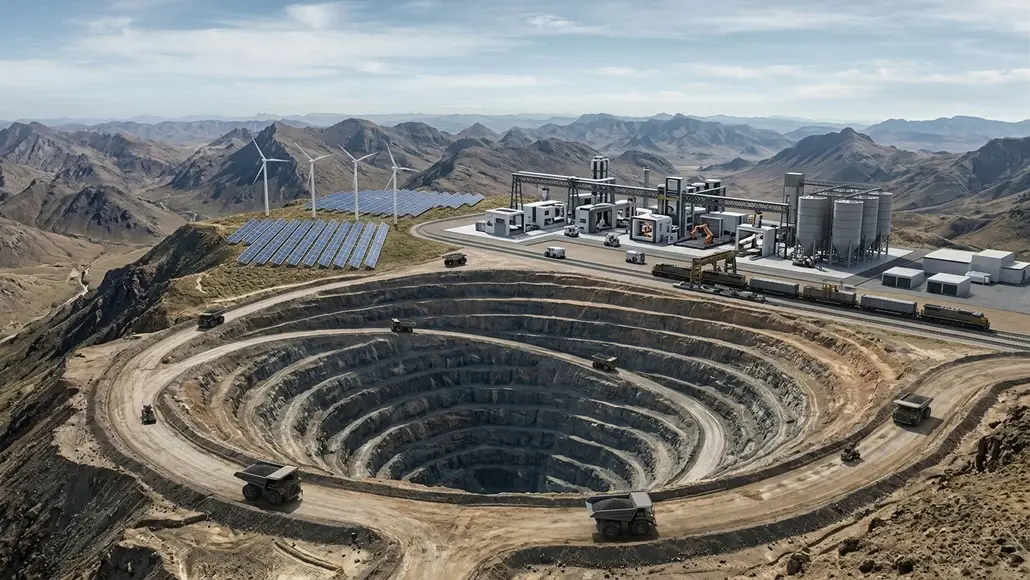
Looking further ahead, the long-term potential of digital manufacturing lies in the creation of highly integrated, distributed production networks. In this model, physical manufacturing is no longer concentrated in a few distant factories; instead, it is distributed across a web of interconnected smart micro-factories located near key mining centers worldwide. These regional micro-factories utilize identical, cloud-managed manufacturing technologies, ensuring that a part printed in Australia, Chile, or Canada meets the exact same high quality-assurance standards. When a critical mechanical component is needed, the digital manufacturing request is routed to the closest micro-factory with available machine capacity, dramatically reducing transportation times and minimizing the carbon emissions associated with global freight. This distributed approach provides a powerful shield against global supply chain shocks, such as natural disasters or geopolitical disruptions, securing operational continuity for next-generation mines under any circumstances.
Industrial Automation and Cyber-Physical Production Systems
Modern digital manufacturing facilities utilize sophisticated cyber-physical production systems where physical fabrication machinery is deeply integrated with digital monitoring networks and automated quality control protocols. High-precision CNC mills, multi-axis laser cladders, and robotic welding stations are equipped with array sensors that track tool wear, temperature variations, and material stress during the production cycle. This real-time telemetry is analyzed by artificial intelligence systems to ensure that every manufactured part matches the target design tolerances with absolute precision. Any minor thermal or mechanical anomaly during the fabrication process is instantly corrected by the machine’s automated control board, eliminating defects and ensuring consistent quality. This level of automated precision is essential for producing high-tolerance mining components, such as multi-stage hydraulic pumps and high-speed turbine shafts, which must operate flawlessly under extreme pressures and mechanical loads in the field.
Elevating Quality Control Standards in Part Manufacturing
One of the primary concerns for mining engineers when adopting on-demand, digitally manufactured spare parts is ensuring that these components meet or exceed the rigorous safety and durability standards of original equipment manufacturer (OEM) parts. To address these concerns, digital manufacturing utilizes advanced non-destructive testing (NDT) and automated quality verification protocols. During the additive manufacturing process, high-resolution optical cameras scan each layer of metal powder as it is melted by the laser, instantly identifying any microscopic porosity or void formation. Once the part is complete, automated laser scanners measure its physical geometry, comparing it to the 3D CAD design to verify that all dimensions are within tolerance. Additionally, metallurgical labs perform hardness profiling and spectroscopic analyses to confirm that the alloy composition matches the exact engineering requirements, ensuring that every digitally manufactured component delivered to the field possesses the required fatigue resistance and physical durability.
Reducing Lead Times and Mitigating Inventory Overheads
In highly competitive global commodity markets, mining profitability is closely tied to operating cost management and capital utilization. Tying up millions of dollars in stagnant physical inventories is a major drain on financial efficiency, particularly for remote sites where carrying excess spare parts is common practice. Digital manufacturing provides a powerful tool for optimizing working capital by reducing part lead times and enabling lean, just-in-time inventory models. Instead of storing massive steel castings and complex component assemblies indefinitely, mines can maintain a digital catalog of verified CAD designs and order parts on demand from regional digital fabrication centers. This lean approach lowers warehousing overhead, reduces the risk of part obsolescence, and allows mining companies to deploy their capital more strategically toward core operational improvements, digital technology upgrades, and workforce training programs that further enhance productivity and sustainability.
Embracing Sustainable Materials and Green Manufacturing Technology
Beyond physical precision and logistics optimization, digital manufacturing technology offers significant environmental benefits, helping mining companies align with global sustainability goals and carbon reduction targets. Traditional manufacturing methods, such as casting and subtractive machining, generate substantial material waste, with up to seventy percent of the raw steel block being machined away as scrap during part production. Additive manufacturing, by contrast, is a highly efficient, near-net-shape process that builds components layer by layer, utilizing only the exact amount of metal powder needed for the design and reducing raw material waste to less than five percent. Additionally, fabricating spare parts regionally or on-site dramatically reduces the carbon emissions associated with transporting heavy components across global shipping lanes. By adopting green digital manufacturing technologies and utilizing recycled metal alloys, next-generation mining enterprises can minimize their ecological footprint while maintaining high standards of operational reliability.