
















In the high-stakes environment of industrial manufacturing and heavy mining, the durability of tools and equipment is a primary determinant of operational success. Steel, while inherently strong, requires precise modifications to its internal structure to withstand the extreme stresses of crushing, drilling, and high-speed machining. This is where the science of advanced heat treatment methods becomes indispensable. By subjecting metal components to carefully controlled cycles of heating and cooling, engineers can tailor their mechanical properties, such as hardness, toughness, and wear resistance, to meet specific functional requirements. Mining Frontier sees this mastery of thermal processing technology as a cornerstone of modern metallurgy, ensuring that the tools of industry can perform reliably in the most demanding conditions on Earth.
The Principles of Thermal Processing Technology
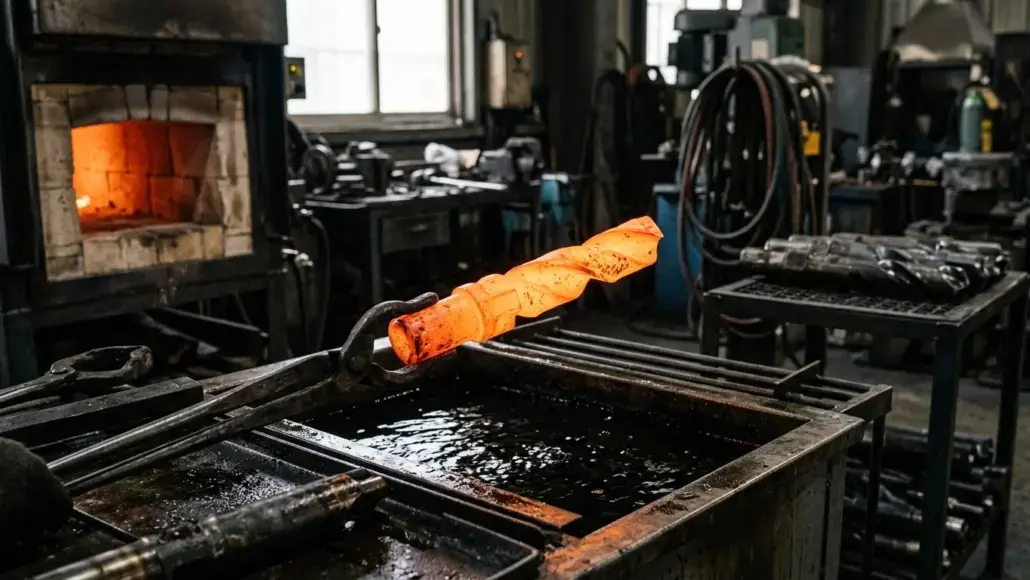
At its core, thermal processing technology is about manipulating the microstructure of steel to achieve a desired balance of properties. Steel is a complex material whose crystalline structure changes depending on its temperature. By heating a component to a specific critical point and then cooling it at a controlled rate, metallurgists can encourage the formation of specific phases, such as martensite for hardness or pearlite for ductility. Advanced heat treatment methods utilize sophisticated furnaces and cooling media, including oil, water, polymers, and high-pressure gases, to achieve these transformations with extreme precision. The goal is to create a part that is hard enough to resist wear but tough enough to avoid brittle failure under impact.
Mastering Steel Hardening Techniques for Heavy Industry
One of the most critical applications of heat treatment is the hardening of steel tools. Modern steel hardening techniques have evolved far beyond the simple quench-and-temper methods of the past. Today, processes such as vacuum hardening and induction hardening allow for a level of control that was previously unimaginable. Vacuum hardening, for example, prevents oxidation and decarburization by heating the parts in an oxygen-free environment, resulting in a cleaner and more consistent surface. Induction hardening, on the other hand, uses electromagnetic fields to heat only the surface of a part, allowing for the creation of a hard, wear-resistant outer case while maintaining a tough, ductile core. This combination is ideal for components like gears and shafts that must endure both surface abrasion and high structural loads.
The Role of Industrial Metal Heating in Tool Production
The success of any heat treatment process is heavily dependent on the quality of the industrial metal heating equipment. Modern heat treatment facilities utilize high-precision furnaces equipped with advanced sensors and automated control systems. These systems ensure that the temperature is uniform throughout the heating chamber, preventing the thermal gradients that can lead to warping or cracking. Furthermore, the ability to control the atmosphere within the furnace allows for specialized processes like carburizing and nitriding, where carbon or nitrogen is diffused into the surface of the steel to further enhance its hardness. By integrating these advanced heating solutions into the production line, manufacturers can achieve a degree of repeatability that is essential for high-volume tool manufacturing.
Enhancing Performance Through Metallurgy Heat Treatment
The field of metallurgy heat treatment is constantly advancing, driven by the development of new alloys and the need for even higher performance. One significant trend is the rise of cryogenic treatment, where steel parts are cooled to temperatures as low as minus one hundred and ninety degrees Celsius after traditional hardening. This process helps to complete the transformation of retained austenite into martensite, resulting in a more stable and wear-resistant microstructure. Additionally, the use of sub-critical annealing and stress relieving processes helps to remove internal tensions created during machining or welding, preventing the premature failure of tools in the field. By applying these sophisticated metallurgy heat treatment protocols, engineers can push the boundaries of what steel can achieve.
Achieving Significant Tool Life Extension
The ultimate objective of advanced heat treatment methods is tool life extension. In the mining industry, where the replacement of a single drill bit or crusher plate can cost thousands of dollars and result in hours of downtime, the value of a more durable tool is immense. Properly heat-treated tools can last significantly longer than their untreated counterparts, leading to direct savings on maintenance and procurement costs. Furthermore, tools that maintain their sharpness and structural integrity for longer periods contribute to a more efficient and productive operation. By investing in high-quality heat treatment, companies can ensure that their equipment remains in peak condition, even when facing the most abrasive and difficult geological conditions.
The Importance of Precision Quenching Systems
The quenching stage, the rapid cooling of the metal, is perhaps the most critical part of the heat treatment cycle. The speed and uniformity of the quench determine the final hardness and the level of internal stress within the part. Advanced heat treatment methods now utilize high-pressure gas quenching (HPGQ) in vacuum furnaces, which offers a cleaner and more environmentally friendly alternative to traditional oil quenching. GHPQ allows for the precise control of the cooling rate by adjusting the pressure and velocity of the gas, minimizing distortion and ensuring a consistent result across a batch of parts. For complex tools with intricate geometries, this level of control is essential for preventing the formation of soft spots or thermal cracks that would compromise the tool’s performance.
Quality Control and Monitoring in Heat Treatment
To ensure the reliability of heat-treated components, modern facilities implement a rigorous program of quality control and process monitoring. Every heat treatment cycle is meticulously documented, with sensors recording the temperature, time, and atmosphere throughout the process. After treatment, parts are subjected to a variety of tests, including Rockwell or Vickers hardness testing, metallurgical cross-section analysis, and non-destructive testing such as ultrasonic or magnetic particle inspection. This data-driven approach allows manufacturers to verify that every tool meets the required specifications before it is shipped to the customer. For critical mining applications, where a tool failure can have serious safety implications, this level of quality assurance is non-negotiable.
Future Horizons in Thermal Processing Technology
The future of advanced heat treatment methods lies in the integration of digital technology and artificial intelligence. Smart furnaces are being developed that can automatically adjust their cycles based on the specific chemistry of the steel being treated, as detected by on-board sensors. We may also see the rise of hybrid processes, where heat treatment is combined with additive manufacturing (3D printing) to create parts with locally tailored properties. For example, a part could be printed with a soft, tough core and then heat-treated to have an extremely hard surface in specific high-wear areas. As these technologies mature, the capabilities of thermal processing technology will continue to expand, providing the mining industry with even more durable and high-performance tools.
Sustainability and Energy Efficiency in Heat Treatment
Like all industrial processes, heat treatment is facing pressure to become more energy-efficient and sustainable. Modern furnaces are being designed with superior insulation and heat recovery systems that capture waste energy to preheat the incoming parts or the combustion air. Furthermore, the shift from gas-fired to electric furnaces allows for the use of renewable energy sources, significantly reducing the carbon footprint of the operation. By adopting these green technologies and focusing on process optimization, the heat treatment industry is proving that it can meet the demands of modern manufacturing while still protecting the environment. This commitment to sustainability is essential for the long-term health of the global metallurgical sector.
In conclusion, the application of advanced heat treatment methods is a vital factor in the production of durable steel tools and components. Through the continuous improvement of thermal processing technology, the mastery of steel hardening techniques, and the implementation of rigorous metallurgy heat treatment protocols, the industry is setting new standards for durability and performance. These advancements ensure that the mining and manufacturing sectors have the reliable tools they need to succeed in a challenging world. Mining Frontier notes that by continuing to innovate and embrace the latest scientific and digital tools, the heat treatment industry will remain a key driver of industrial excellence for years to come.