







A new report says China ought to think about turning coal waste, including fly ash, into an important resource for critical metals such as germanium, aluminium, lithium as well as gallium. That, along with its vast coal and waste reserves and industrial strength, can be a turning point for the country.
The idea is that coal is not only a great source of fuel, but it also has small quantities of precious metals in it. For a country such as China which mines and burns massive amounts of the material, disregarding this resource is equivalent to throwing money on the table.
Explains Dai Shifeng, a member of the Chinese Academy of Sciences and professor at China University of Mining and Technology-Beijing, “The coal refuse contains a variety of metal elements and could become an important source of critical metal supply.”
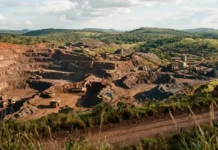
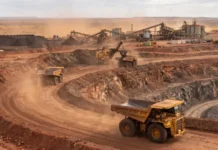
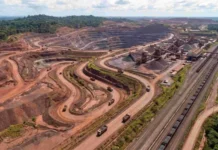
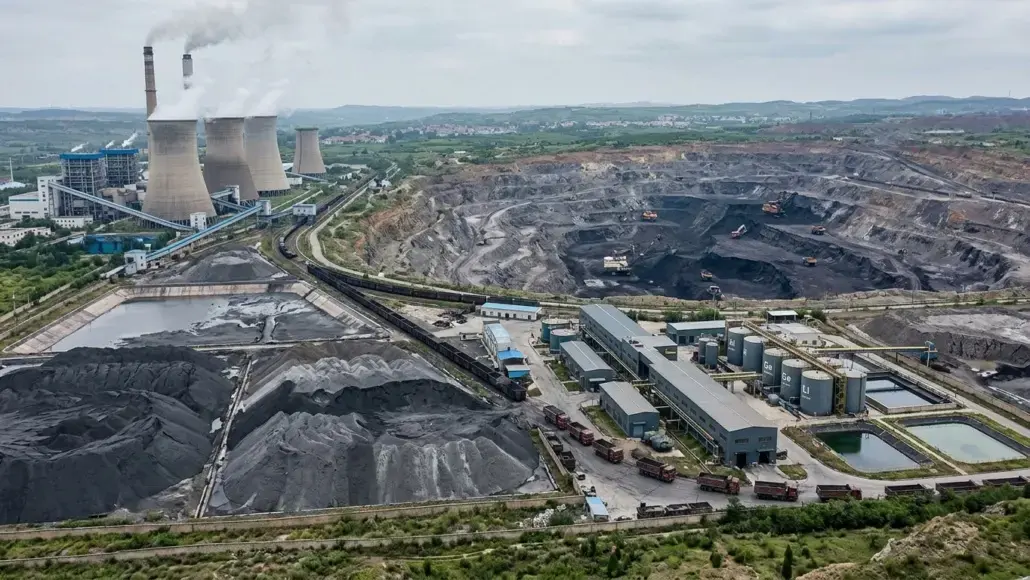
What is recommended is not only the utilisation of fly ash, which is the waste left after the combustion of coal, but also what is commonly referred to as gangue. This is the rocky junk that usually gets mixed in with the coal as it gets mined.
Waste coal to metal resource
Coal occurs in seams or layers, often interbedded alongside layers of non-coal. They are frequently filtered out and just dumped as waste. As for fly ash, once the carbon is burnt away, the ash that remains is full of small mineral fragments that are often captured in smokestacks.
In the past, this ash has been dumped as industrial waste, mixed into cement or piled up. However, chemically speaking, this ash often has unexpectedly high levels of rare earth metals, aluminium compounds, etc.
These metals are critical for some advanced sectors like batteries, semiconductors, optics, motors, along with military applications. China has already been a leading supplier of many conventional mining and supply products, so any novel way to make money for old rope could be an important possible revenue stream.
Further, China already has the industrial base to employ waste materials such as fly ash and gangue to be a potential source for metals. Its huge coal infrastructure, coal-to-chemical plants as well as processing plants are easily adaptable to bear the weight.
The report explains that on-board facilities for regular washing, chemical processing and power generation are already available on coal production lines of China, offering a strong industrial basis for resource recovery. In short, China knows how to do this and has the capability to do it. The coal waste has already been highly concentrated where it ought to be for processing, i.e., concentrated within industrial areas.
Such a move would not just help feed the exploding EV, battery as well as electronics industries of China, but also assist it in meeting its goals of reducing reliance on imports. It would also help these individuals reduce waste, get the most value for their money out of coal mining and consumption, and assist them in effectively vertically integrating their supply chains.
Seems obvious; however, there is a catch – not all coal is identical, and different mines have distinct geological conditions with very different mineral traces within the coal produced.
At power plants, coal from various sources can be mixed, and the resultant fly ash may differ significantly in structure. This means, in fact, that one batch of fly ash might be loaded with something such as gallium while another has barely any.
That would render the extraction of critical metals from coal waste erratic and possibly not economically feasible if the process of extraction is costly.
The report further said that as the new energy industry develops rapidly, the need for critical metals is increasing, so the extraction of critical metals from coal waste is highly probable, and China’s expertise in germanium extraction offers a firm foundation for the extraction of various other metals.