














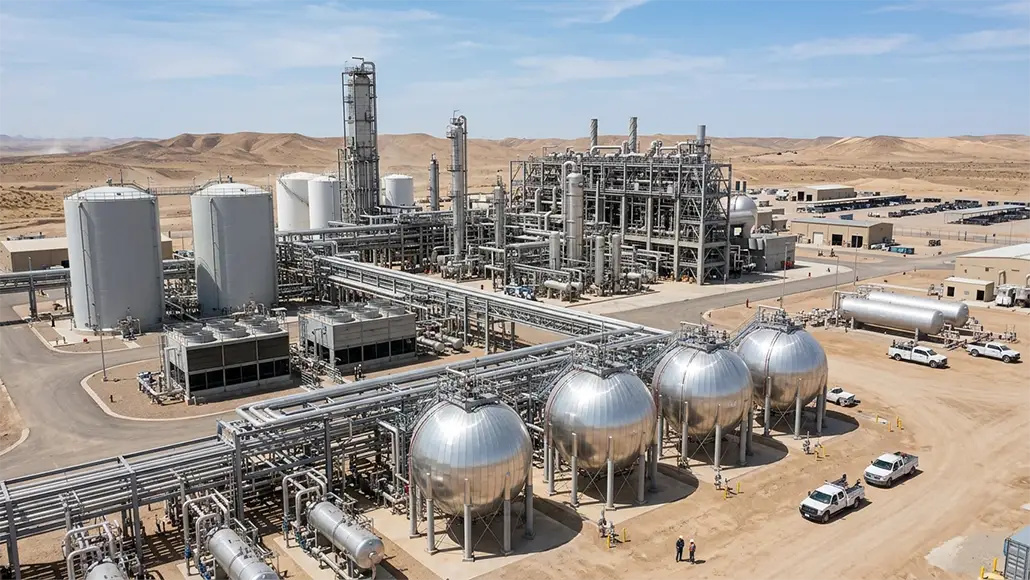

The gas that powers the world’s MRI scanners and keeps AI chips cool is suddenly in critically short supply. There could be six ASX-listed companies that could be in the right place at the right time.
All in all, the crisis in Iran is a human tragedy. The drone and missile strikes that shut down Qatar’s Ras Laffan Industrial City in early March 2026 and the effective blockade of the Strait of Hormuz, which has thereafter followed, have indeed resulted in death, displacement, and economic dislocation on a scale the world is still measuring.
But crises go on to have more consequences that ripple into places that are unexpected such as global helium supply. A gas that most people have never thought about but is crucial to the hospitals where they are diagnosed, the chips that power their phones, and the AI systems they increasingly rely on.
The gas is helium.
Why helium is important
Helium is not just the party balloon gas of popular imagination, or at least not only that. It is irreplaceable in industry and medicine.
The biggest single use, by revenue, is health care. Every single MRI scanner in every single hospital in the world is cooled by liquid helium. The gas cools the superconducting magnets inside the machines to a temperature of minus 268.9 degrees Celsius, just above absolute zero. Nothing else can perform that task at a viable cost. For now, there is no workaround, no substitute material. Scanners go dark when Helium runs low.
Outside of medicine, helium is also indispensable to the production of semiconductors, where it cools silicon wafers during the extreme ultraviolet lithography processes that create the most advanced chips. It locks up all hard drives larger than 10 terabytes. It cools the dilution refrigerators in quantum computers. It puts the squeeze on SpaceX’s cryogenic fuel tanks. NASA alone uses roughly 75 million cubic feet per year.
Helium, however, cannot be fully recycled like oil or rare earth metals. Once it gets loose into the atmosphere, it goes up until it hits the upper parts of the air and is lost to space. It is the second most abundant element in the universe and one of the most strategically concentrated on Earth.
Supply Shock
The Ras Laffan facility in Qatar was the world’s largest single helium production facility. Its closure, and the blockade of the Strait of Hormuz, took about 30% of global helium supply out of the market at a stroke, says Professor Eric May of the University of Western Australia’s Future Energy Exports CRC.
Transit times and each voyage are increased by 10 to 14 days and about 3,500 nautical miles for ships passing the Cape of Good Hope. That extra time at sea means that the liquid helium boils off, and so less volume actually arrives at its destination. The production outage as well as the logistics squeeze are feeding off each other.
Spot prices for Grade A helium were estimated at about US$390 per thousand cubic feet in 2024, with a price forecast of $350-$600 a year later. Industry analysts have pointed to estimates of as high as $2,000 per thousand cubic feet in today’s market. Samsung and SK Hynix, which imported around 65% of their helium from Qatar, are among the most prominently exposed. The NHS and similar health systems in Europe and Asia face the same constraint, slower, as hospital helium buffers are depleted.
The pressure on buyers to secure supply from non-Gulf locations that are geopolitically stable has never been greater.
The chance
Often problems look like something else from another angle. The crisis has compressed a decade of market education into weeks for a clutch of ASX-listed small-caps developing helium assets in the US, Africa, and Australia, as well as a critical gas infrastructure play.
Big industrial buyers, semiconductor companies, and medical gas distributors are actively looking for supply from sources that are not geographically hostage to the Strait of Hormuz.