



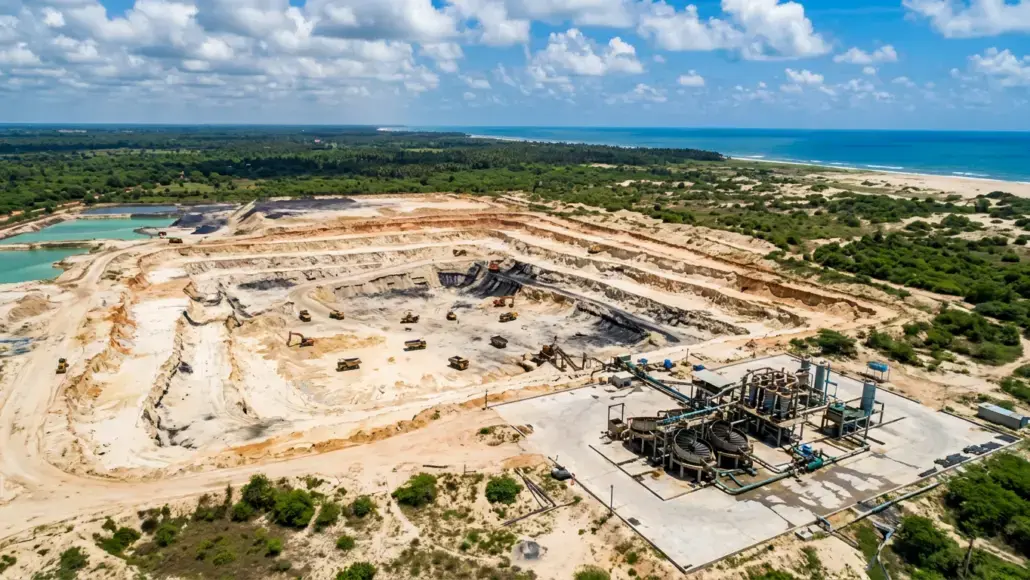

India and Russia are inching towards a wider strategic alliance when it comes to critical minerals and rare earths processing, as both nations look to bolster supply-chain security for clean energy as well as advanced manufacturing industries. Officials involved in ongoing discussions say the draft structure is anticipated to concentrate on collaboration throughout the mineral value chain, which includes exploration, extraction, and refining as well as advanced materials processing. The discussions come as India ramps up efforts to safeguard supplies of lithium, rare earth elements – REEs and permanent magnet materials that are critical for electric vehicles, electronics, and renewable energy systems as well as defence technologies.
Rare earth processing focus
It is worth noting that rare earth metallurgy and magnet manufacturing technologies are likely to be a major collaboration area. India happens to have heavy reserves of rare earth-bearing minerals, including reserves of monazite, but is heavily reliant on imports for sophisticated processing and high-performance permanent magnets that include neodymium-iron-boron – NdFeB magnets. India’s growing industrial goals could see it team up with institutions and firms in Russia engaged in rare earth research and in processing nuclear materials as prospective technology and investment partners.
Backing India’s manufacturing aspirations
These partnership talks on critical minerals and rare earths are part of India’s larger efforts to bolster its domestic critical mineral as well as magnet-manufacturing capacity. The Indian government has initiated programmes so as to achieve import independence for components utilised in electric mobility, electronics, wind energy, and strategic sectors.
Industry experts say that long-term access when it comes to processed rare earth materials is growing more crucial as worldwide demand for high-performance magnets keeps steadily increasing.
Wider geopolitical context
The increasing emphasis on critical minerals is part of a broader global concern regarding supply chain concentration as well as geopolitical risk. As China now controls much of the rare earth refining as well as magnet manufacturing ecosystem globally, many countries are searching for alternative sources and technology partners. As part of its long-term energy transition strategy, India has also been scouting for overseas lithium possibilities in South America and Africa.
Why it is important
Energy transition – Lithium and rare earths are vital for electric vehicles, batteries, and wind turbines, along with advanced electronics.
Industrial approach – Developing domestic processing capacity can help India move up the manufacturing value chain.
Supply-chain robustness – By diversifying sources and refining partnerships, reliance on centralised global supply networks is diminished.