








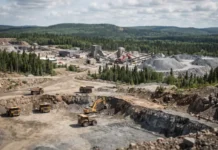
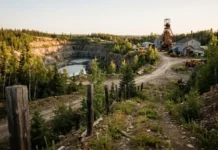
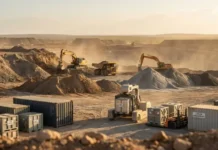
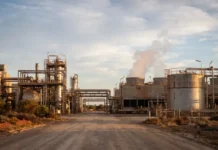

The mining industry is entering a new frontier where the most valuable tool for a geologist is no longer just a rock hammer, but a sophisticated algorithm. For decades, the rate of new mineral discoveries has been in steady decline, while the cost of exploration has continued to rise. However, the advent of AI powered exploration is fundamentally changing this dynamic. By leveraging machine learning, predictive analytics, and massive datasets, exploration companies are now able to see deep into the Earth’s crust with unprecedented clarity. This technological leap is not just improving the efficiency of the discovery process; it is essential for finding the next generation of critical mineral deposits required for the global energy transition.
The Challenge of Finding Deep and Hidden Deposits
Most of the “easy” mineral deposits those located near the surface and easily identifiable through traditional prospecting have already been discovered. What remains are deposits that are buried under hundreds of meters of “cover” (soil, rock, or vegetation) or those located in remote and geologically complex regions. Finding these hidden resources requires a more nuanced approach than traditional geophysics. The data is often noisy, fragmented, and spread across disparate formats, from handwritten logs of the 1920s to modern satellite hyperspectral imagery.
AI powered exploration thrives on this complexity. Machine learning algorithms can ingest millions of data points, including geological surveys, magnetic maps, gravity data, and core sample chemistry. These algorithms are trained to recognize the subtle patterns and “geochemical fingerprints” that are associated with high-grade mineralization. By identifying these patterns in regions where they were previously overlooked, AI can pinpoint promising drilling targets with a much higher probability of success. This reduces the need for expensive “blind” drilling, which has traditionally been the biggest financial drain on exploration budgets.
Predictive Analytics and the Reduction of Geological Risk
Geological risk the uncertainty of whether a deposit exists in a specific location is the primary deterrent for investment in new mining projects. AI is systematically lowering this risk by providing more accurate predictive models. These models do not just say “where” to look; they provide a statistical probability of discovery based on historical success rates and multi-layered data analysis. This allows exploration teams to prioritize their resources on the highest-probability targets, effectively shortening the timeline from initial exploration to deposit definition.
For junior mining companies, this “precision exploration” is a game-changer. It allows them to demonstrate the value of their properties to investors and potential partners with much greater confidence. Instead of presenting a vague prospect, they can present a data-driven model that quantifies the potential resource. This transparency is attracting new types of capital into the sector, including tech-focused venture funds that are comfortable with the “high-tech, high-reward” nature of AI-driven mineral discovery.
Integrating Multi-Source Data for a Holistic View
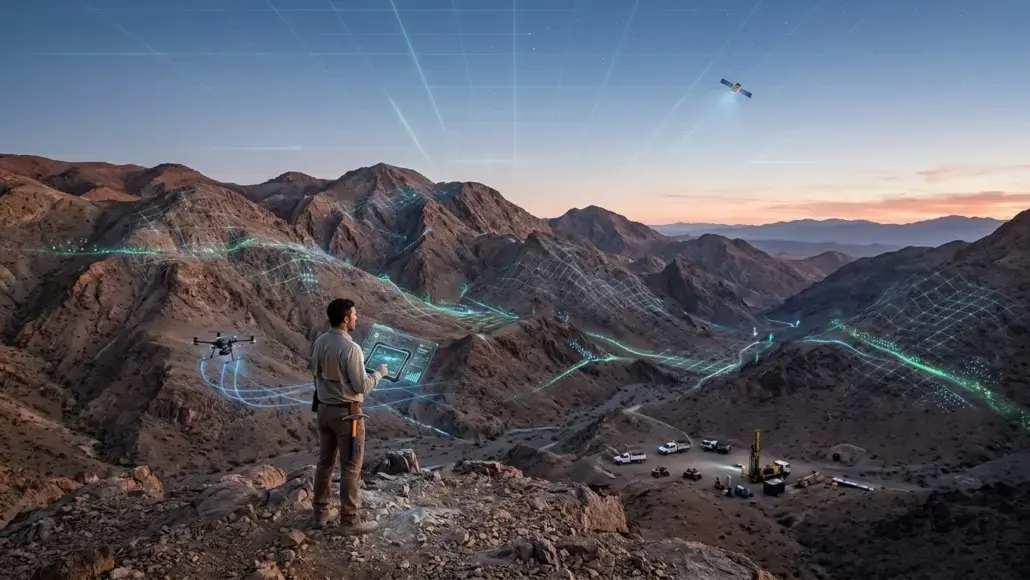
One of the greatest strengths of AI in the mining sector is its ability to integrate “big data” from vastly different sources. Traditional exploration often happens in silos, with geophysicists, geochemists, and field geologists working on separate datasets. AI provides a unified platform where these different threads are woven together. For example, an AI model can combine real-time satellite imaging with historical soil sampling data and regional tectonic history to create a four-dimensional model of how a mineral deposit may have formed and where it might be located today.
Hyperspectral imaging from drones and satellites is a particularly powerful input for these models. These sensors can detect subtle changes in mineralogy and vegetation that are invisible to the human eye but indicative of underlying mineralization. AI can process these massive image datasets in seconds, flagging anomalies that would take a human team months to analyze. This speed and scale allow for the rapid screening of thousands of square kilometers of territory, identifying the “needles in the haystack” that hold the potential for world-class mineral deposits.
Automation in the Field: From Data to Decision
The impact of AI is also being felt in the physical aspects of exploration. Automated drilling rigs, equipped with sensors that provide real-time downhole data, are becoming more common. This data is fed directly into AI models, allowing the exploration team to adjust their drilling strategy on the fly. If a drill bit hits a specific geological formation, the AI can instantly recalculate the optimal path to intercept the target zone. This “smart drilling” reduces waste, lowers fuel consumption, and speeds up the data collection process.
Furthermore, AI is being used to automate the logging of core samples. Traditionally, a geologist would spend hours manually describing the rock types and structures in a core tray. Now, high-resolution cameras and X-ray fluorescence (XRF) scanners can automatically identify the minerals and textures, creating a digital record that is more consistent and objective than human observation. This digital core can then be re-analyzed by different AI models as new theories of ore formation emerge, ensuring that no valuable information is lost.
Enhancing Efficiency and Environmental Sustainability
Efficiency in exploration is not just about saving money; it’s about reducing the environmental footprint. By being more precise about where and how they drill, exploration companies can significantly reduce land disturbance. Instead of clearing large areas for multiple exploratory pads, they can use a “surgical” approach based on AI-verified targets. This is particularly important for gaining social and regulatory approval in environmentally sensitive regions.
Moreover, the speed of AI powered exploration allows companies to react more quickly to changes in the global market. If the demand for a specific mineral, like germanium or gallium, suddenly spikes, AI models can be rapidly re-run to identify potential sources in existing mine tailings or unexplored concessions. this agility is a critical component of a resilient supply chain. The ability to find the right minerals at the right time with the least amount of waste is the ultimate goal of the AI revolution in mining.
The Future of the Geological Workforce
As AI takes over the more repetitive and data-heavy tasks, the role of the geologist is evolving. Rather than being replaced, geologists are becoming “data architects” and strategic decision-makers. The human element remains essential for interpreting the results of an AI model and making the final call on a multi-million dollar drilling program. Geologists must now understand both the physical principles of the Earth and the mathematical principles of the algorithms.
This shift is driving a transformation in geoscience education. Universities are increasingly integrating data science and coding into their geology curricula, preparing the next generation of professionals for a tech-driven industry. The result is a more diverse and innovative workforce that is better equipped to solve the monumental challenges of modern mineral discovery. By combining human intuition with artificial intelligence, the mining industry is ensuring that it remains a high-tech pillar of the global economy.
Conclusion
AI powered exploration is more than just a trend; it is a fundamental shift in how we interact with the Earth’s resources. As the demand for critical minerals continues to outpace traditional discovery rates, the precision and scale offered by AI are our best hope for bridging the gap. By lowering geological risk, integrating complex datasets, and automating field operations, we are not just finding more minerals; we are finding them more responsibly and efficiently. The future of mining will be defined by those who can harness the power of data to unlock the secrets of the subsurface, ensuring a steady supply of the materials needed for a sustainable and prosperous world.