






















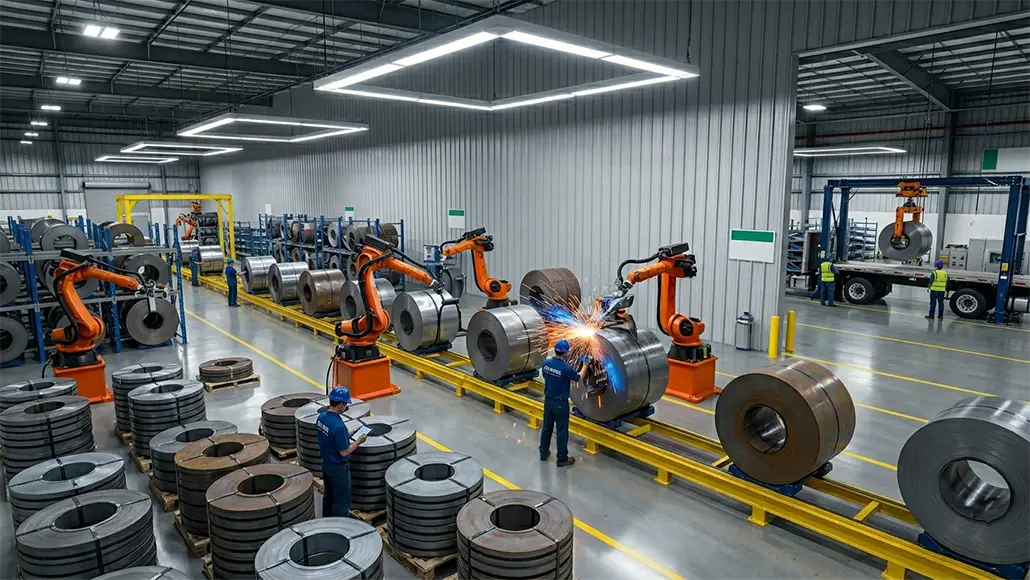

The US Department of Commerce has started a US tariff adjustment process that could lower Section 232 duties on qualifying steel and aluminium imports from Mexico and Canada if producers agree to increase US primary steel or aluminium capacity related to automotive and medium- and heavy-duty vehicle supply chains.
The action, which is published in the Federal Register on April 23, 2026, permits certain steel and aluminium producers with operations in Mexico or Canada to submit documentation so as to obtain tariff relief under Presidential Proclamation 10984. The adjustment is for firms that supply, directly or indirectly, to US automobile or medium- and heavy-duty vehicle producers and engage in new US production capacity.
The US tariff adjustment process enables the US Department of Commerce to cut tariffs on steel and aluminium by half of the applicable rate. But it cannot be less than 25% after adjustment. Note that the benefit applies only to imports which qualify for special consideration under the USMCA and that were either melted and poured or smelted and cast in Mexico or in Canada.
Apparently, the measure may bring relief to Mexican steel and aluminium suppliers integrated into North American automotive supply chains, especially those providing manufacturers of automobiles, auto parts, medium- and heavy-duty vehicles, and associated components. Access to the lower tariff, however, is conditional. Producers will need to show that their commitments will increase US primary steel or aluminium production capacity and promote key vehicle-related industries.
The policy comes as Mexico’s auto industry continues to attract substantial investment in spite of tariff ambiguity and the move toward advanced manufacturing. MBN says the sector has attracted US$21 billion of investment as companies transition to technology-driven projects, underscoring the role of Mexico as a major production and supplier base for North America’s vehicle industry.
That investment context is important since the new US tariff regime does not just reward regional integration. It ties tariff relief to the ability of the company to prove North American origin and compliance with the USMCA as well as future capacity commitments within the United States. This means Mexican suppliers may increasingly need to stay highly competitive in the US market by keeping business operations in Mexico and coordinating part of their investment strategy with US industrial policy.
Eligible companies may file project-by-project documentation describing proposed investment plans, production sites, expected capacity, objectives, suppliers, contractors, raw materials and expected hiring with regard to the new US capacity, the Commerce Department said. Applications must also detail the qualifying status of the company, including its production of steel or aluminium in Mexico or Canada and the U.S. auto manufacturers it supplies to.
The notice follows Proclamation 10984 issued in October 2025 that enforced additional tariffs on imports of medium- and heavy-duty vehicles, parts and buses under Section 232 of the Trade Expansion Act of 1962. The proclamation mentioned national security concerns and provided the commerce secretary authority to change tariffs on certain steel and aluminium imports coming from Mexico and Canada if producers make additional commitments to increase US production capacity.
In February 2026, the Federal Register went on to publish procedures for importers of medium- and heavy-duty vehicles that qualify for USMCA preferential treatment in order to determine US content. This framework enables qualifying vehicles from Mexico and Canada to apply extra tariffs only to their non-U.S. content, thereby strengthening the importance of USMCA compliance when it comes to tariff treatment.
For Mexico, the policy comes as an opportunity as well as a limitation. Eligible producers may decrease tariff exposure when they meet US requirements and conform with USMCA rules of origin on the one hand. However, the benefit is conditional on commitments to increase production capacity in the United States, which means Mexican as well as Canadian suppliers will need to ensure that their future investment plans are aligned with the US industrial policy priorities.
This comes as Washington continues tightening its Section 232 tariff regime on metals. In April 2026, the White House extended actions impacting imports of aluminium, steel and copper, saying Section 232 duties on aluminium and steel articles and derivatives would typically apply to the entire customs value of imported products.
The tariff-adjustment mechanism might assist in relieving cost pressures in regional supply chains for makers of autos as well as heavy trucks, especially the ones that purchase steel and aluminium inputs from Mexico and Canada. Companies will have to file extensive documentation, reach milestones established by the Commerce Department and demonstrate that the qualifying imports are connected to the new US production capacity.