The global aluminium market is entering a period in which supply flexibility is becoming increasingly important. Demand continues to expand across electrification, renewable-energy infrastructure, transport and packaging, while producers are facing tighter operating conditions, limited spare capacity, higher energy costs and disruptions across supply chains. These pressures are making the global aluminium market more sensitive to changes in production and logistics.
The price outlook reflects this tightening environment. The World Bank projects aluminium prices to rise by around 22% in 2026 to an annual average of approximately $3,200 per tonne. The forecast reflects tight supply conditions and resilient demand, with additional pressure from higher energy costs and production and shipping disruptions. The World Bank also expects demand to continue growing through electrification technologies such as solar installations, wind turbines, power transmission infrastructure and energy storage, alongside established uses in transport and packaging.
Physical availability has also come under pressure. Global primary aluminium production declined year on year in early 2026, while disruption to production and logistics has reduced the industry’s ability to quickly replace lost tonnes. The International Aluminium Institute has highlighted the impact of production interruptions on global supply, adding to concerns about the availability of primary metal.
At the exchange level, inventories provide another indication of tighter conditions. London Metal Exchange aluminium stocks fell to around 250,000 tonnes in August 2026, their lowest level in 36 years, according to Reuters. With less readily available metal held in visible inventories, unexpected production losses or shipping disruptions can have a larger effect on premiums, delivery times and procurement decisions.
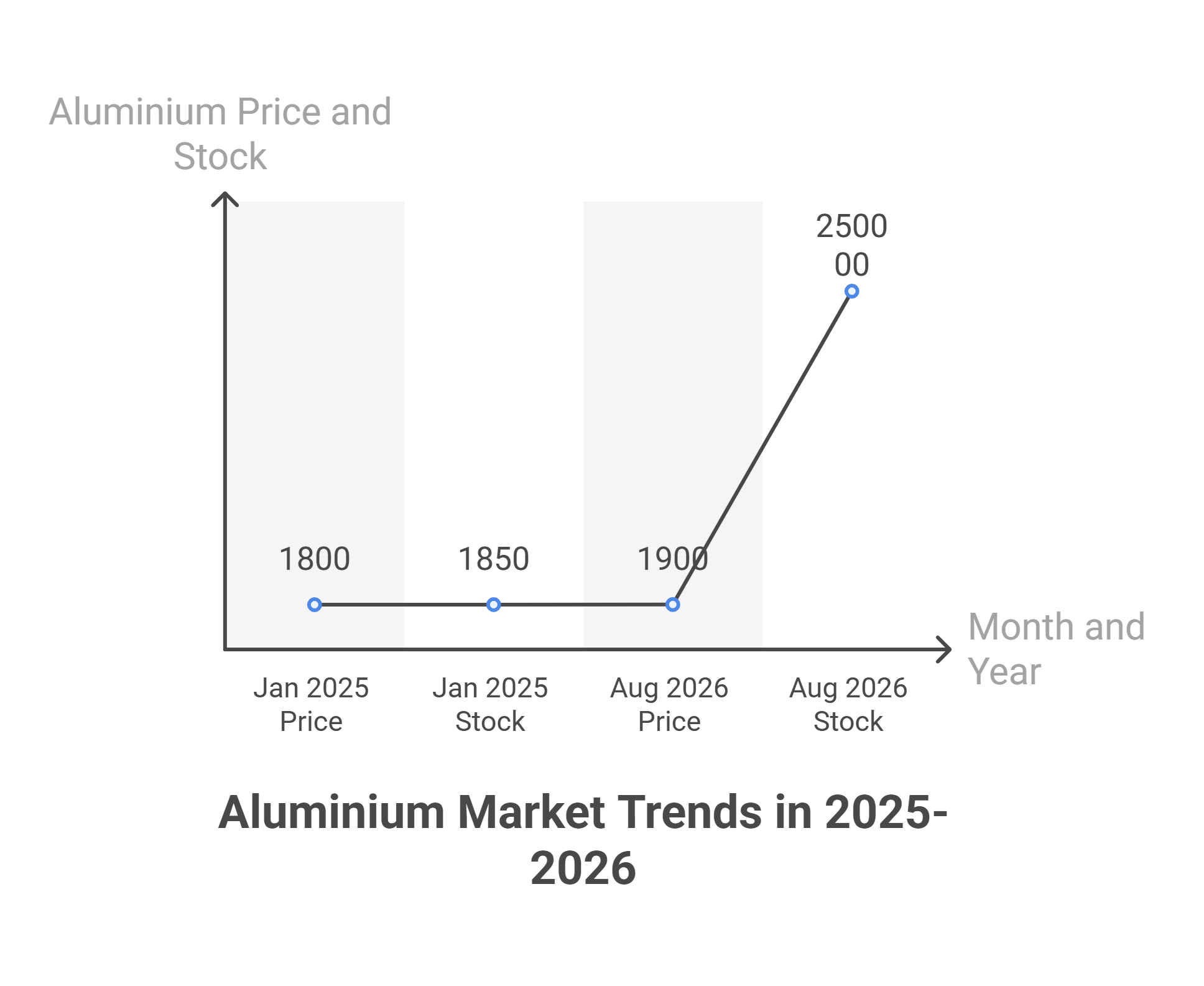
Key Takeaway: Historically low visible inventories are increasing the aluminium market’s sensitivity to supply disruptions and supporting upward pressure on prices.
Limited Spare Capacity is Increasing Supply Risk
The challenge extends beyond current inventories. Aluminium smelting requires large and continuous quantities of electricity, while new capacity requires significant capital investment and long development timelines. This limits the industry’s ability to respond immediately when existing production is disrupted.
High utilisation can make the problem more pronounced. When producers are already operating close to available capacity, there is less room to increase output without new investment or the restart of previously inactive facilities. For the global aluminium market, this means relatively small changes in production can have an outsized impact when inventories are already low.
Energy availability is also becoming a strategic consideration. Aluminium production is highly energy-intensive, meaning electricity costs and reliability can directly influence whether smelting capacity remains competitive. Producers therefore need to assess not only the cost of adding capacity but also the security and long-term economics of the power required to operate it.
The result is a market in which supply resilience is becoming more valuable. Producers must increasingly consider input inventories, energy security, operational reliability and access to logistics alongside headline production volumes. For the global aluminium market, the combination of resilient demand, limited spare capacity and historically low visible stocks is creating an environment in which strategic supply decisions are becoming increasingly important.
Tighter Supply is Changing Producer Priorities
A tightening supply environment is changing how aluminium producers approach investment and operations. When available metal is limited and smelters are already running at high utilisation, simply increasing output becomes more difficult. Producers therefore have stronger incentives to protect existing capacity, secure critical inputs, improve operating efficiency and develop additional sources of supply.
Recent market conditions illustrate the scale of the challenge. A CRISIL analysis estimates that the global aluminium supply deficit could widen to around 1.5–2.0 million tonnes in 2026, compared with an average deficit of less than 0.5 million tonnes over the previous five years. The same analysis indicates that global smelting capacity is operating above 90% utilisation, leaving limited spare capacity to compensate for unexpected production losses.
Capacity Expansion is Becoming More Strategic
High utilisation rates can support stronger margins when aluminium prices increase, but they also expose producers to operational disruptions. New smelter capacity requires large amounts of capital, reliable electricity and long development periods, meaning additional tonnes cannot be brought into the market quickly when a supply deficit emerges.
This is encouraging a greater focus on the productivity of existing assets. Improving energy efficiency, increasing equipment availability and reducing unplanned downtime can provide additional effective capacity without requiring an entirely new smelter. Digital process monitoring, predictive maintenance and improved process control can therefore become strategic tools rather than simply operational upgrades.
Investment decisions are also increasingly shaped by the cost and availability of electricity. Primary aluminium production is highly energy-intensive, making competitive and reliable power an important determinant of long-term smelter economics. Producers with efficient operations and stable access to key inputs can be better positioned to maintain output when market conditions become volatile.
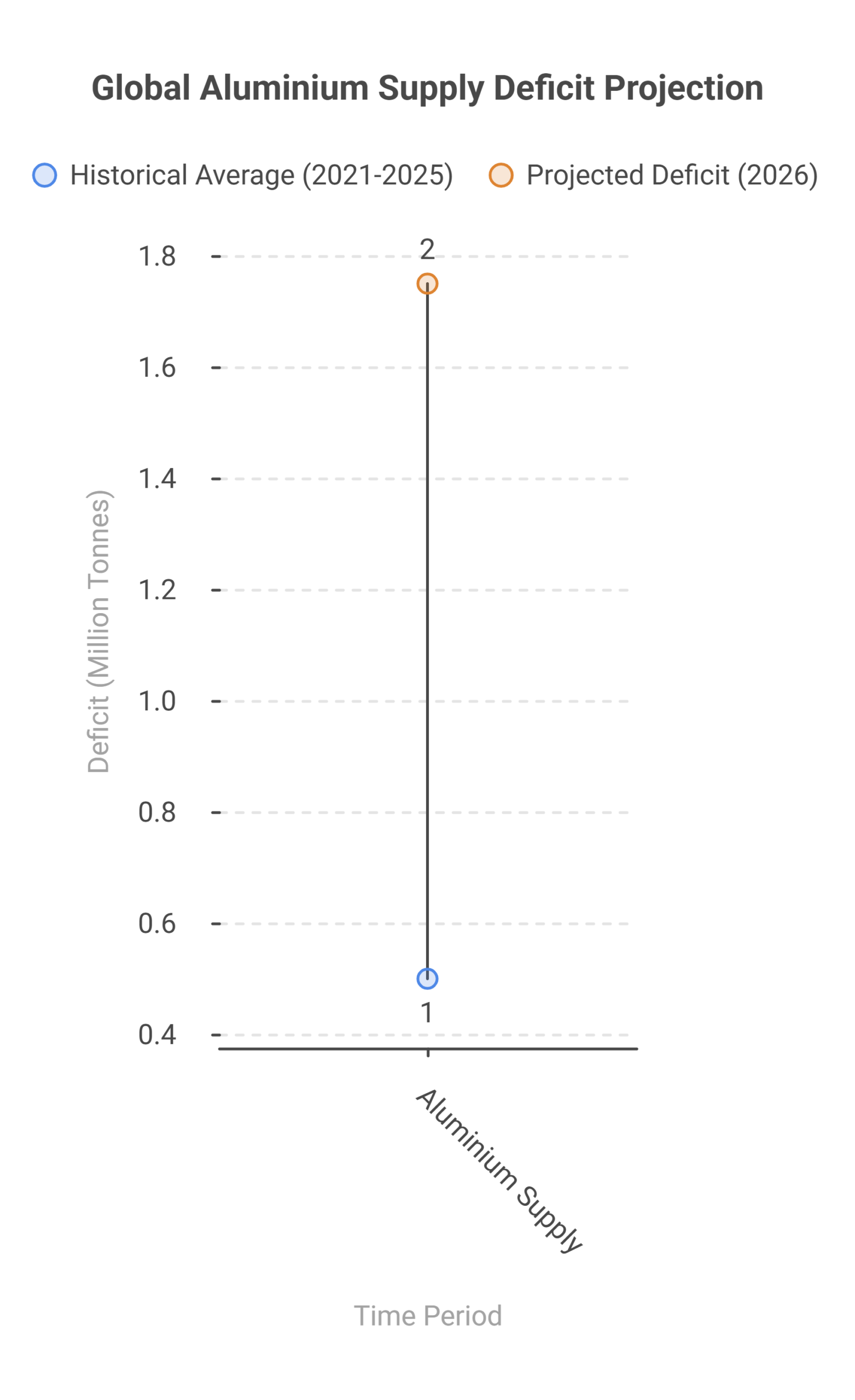
Key Takeaway: A larger projected supply deficit combined with utilisation above 90% leaves limited room for producers to replace lost output quickly.
The pressure is also increasing the strategic importance of secondary aluminium. Recycled metal can provide an additional supply stream without requiring the same energy intensity associated with primary production. S&P Global reported that aluminium scrap premiums had increased by 28% during 2026, reflecting stronger demand for recycled material amid the primary supply squeeze.
Recycling is Moving Toward Supply Security
Greater reliance on recycled aluminium can help producers and consumers reduce exposure to primary-market shortages, but access to suitable scrap is becoming an important consideration in its own right. The quality, availability and processing of scrap determine how effectively secondary material can substitute for primary aluminium across different applications.
This is changing the role of recycling within the global aluminium market. Instead of being viewed primarily through the lens of sustainability, secondary aluminium is increasingly becoming a supply-security tool. Greater collection rates, improved sorting and better remelting capabilities can increase the amount of usable metal available to the market while reducing the energy required to produce aluminium from primary raw materials.
For producers, this creates a more diversified approach to supply. Investments in primary capacity remain important, but improving asset efficiency and developing stronger recycling links can provide additional resilience. The global aluminium market is therefore moving toward a model where supply security depends on a combination of primary production, secondary metal, operational efficiency and reliable access to essential inputs.
The shift also has implications for downstream customers. When inventories remain low and production is highly utilised, buyers may place greater value on long-term supply agreements, diversified sourcing and predictable delivery rather than relying entirely on short-term market availability. This can make supply-chain relationships more strategic and encourage producers to compete on reliability and product capability as well as volume.
In this environment, the global aluminium market is not simply rewarding producers that can add tonnes. It is increasingly favouring strategies that improve resilience across the entire supply chain, from raw-material access and energy efficiency to production reliability and recycling.
Supply Constraints are Reshaping Producer Strategy
The tightening aluminium market is pushing producers to look beyond production growth alone. High utilisation, low visible inventories and constraints around energy, raw materials and new capacity are increasing the value of operational efficiency and supply-chain resilience.
For producers, the strategic focus is therefore shifting toward maintaining reliable output, improving existing assets, securing critical inputs and expanding access to recycled metal. These measures can provide greater flexibility when new primary capacity cannot be added quickly.
The global aluminium market is consequently becoming more dependent on resilience across the entire value chain. As structural demand continues to grow, producers that can combine reliable supply, efficient operations and greater material flexibility may be better positioned to navigate a market with less room for disruption.