

















Renewable Energy Growth is Broadening Aluminium Applications
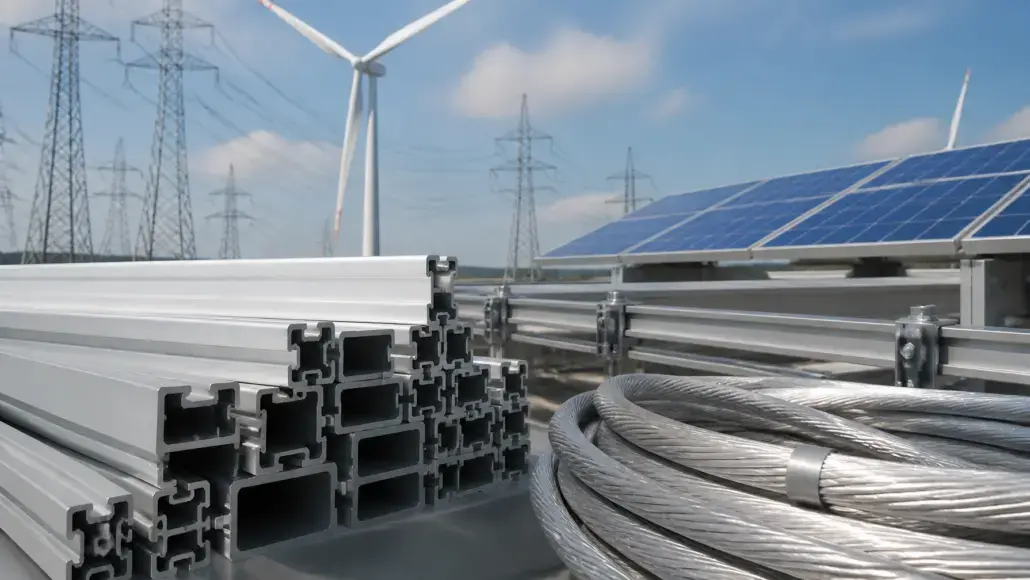
The aluminium opportunity created by renewable energy extends well beyond solar module frames and power-transmission equipment. As renewable systems become larger and more integrated into electricity networks, demand is emerging across wind components, energy storage, electrical equipment and supporting infrastructure. This is creating a broader base for renewable energy aluminium demand, with growth increasingly linked to the build-out of the wider power system rather than individual renewable technologies.
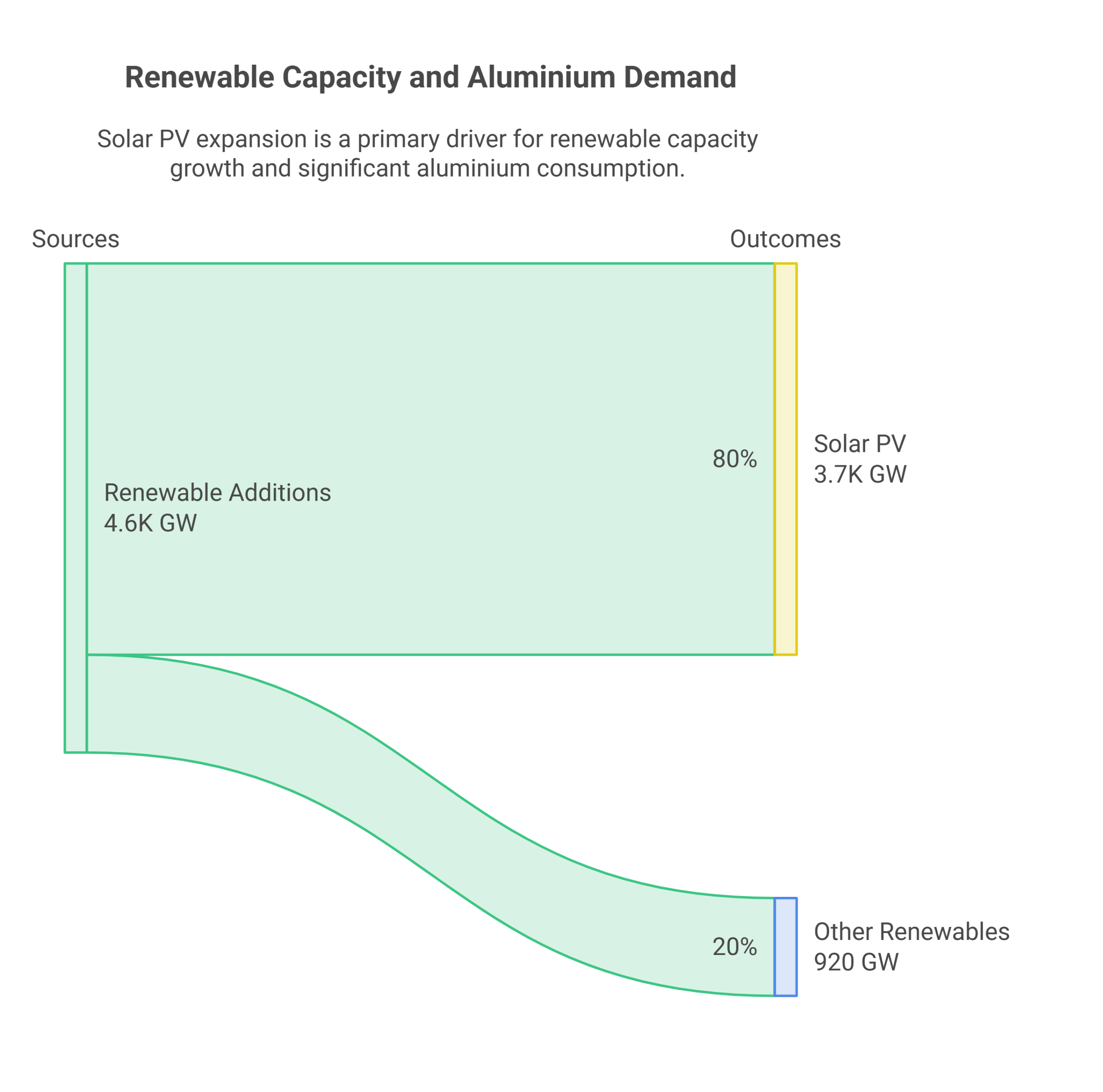
The pace of deployment is expected to remain strong. The International Energy Agency forecasts that global renewable power capacity will increase by almost 4,600 GW between 2025 and 2030, roughly doubling the capacity added during the previous five-year period. Solar PV is expected to account for almost 80% of total renewable capacity expansion, while cumulative onshore wind additions are forecast to reach 732 GW during the same period.
Wind and Storage are Expanding the Demand Base
Wind power creates aluminium requirements across electrical and structural applications, while continued improvements in system design can influence the quantities and specifications required. The IEA expects annual global wind capacity additions to reach around 160 GW in 2025, following an increase of almost 40% from the previous year. This continued growth provides another route for aluminium producers and downstream manufacturers to participate in renewable infrastructure expansion.
Energy storage is adding another dimension. Battery storage capacity additions increased by around 40% in 2025, reaching almost 110 GW, making storage the fastest-growing power technology during the year. Aluminium is used in battery components including current collectors and casings, while broader storage infrastructure also creates requirements for electrical and structural materials. As renewable generation becomes more dependent on flexible power systems, storage growth can therefore provide an additional source of aluminium consumption.
The development of these applications also changes the product mix required from aluminium suppliers. Renewable infrastructure can require specific alloys, dimensional tolerances, surface treatments and fabricated forms rather than undifferentiated primary metal. The International Aluminium Institute’s analysis of the solar sector, for example, identifies the use of 6-series aluminium alloys across applications including module frames and racking, demonstrating how renewable deployment can translate into more specialised downstream requirements.
Circularity is Becoming Part of the Demand Equation
The growth of renewable infrastructure is also creating a future requirement for recovering aluminium from equipment reaching the end of its operating life. The International Aluminium Institute estimates that cumulative end-of-life photovoltaic material could reach 1.7 million tonnes by the early 2030s, increasing rapidly to 60–78 million tonnes by the 2050s. Aluminium recovery from these systems could therefore become increasingly important as the installed renewable base matures.
This creates a second opportunity for the aluminium industry. Greater use of recycled material in new renewable equipment could help reduce the material footprint of future installations while creating additional demand for collection, sorting, remelting and downstream processing.