


















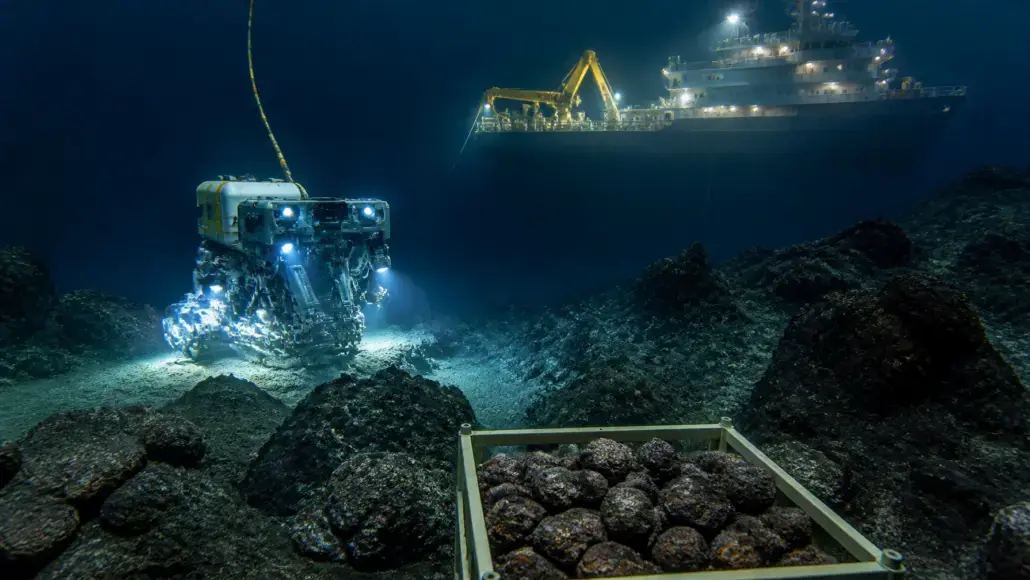

The United States is advancing a domestic regulatory pathway for seabed mining in international waters as the federal government moves to secure access to critical minerals found on the deep ocean floor. A Congressional Research Service report published in May 2026 examined how Washington is pursuing this approach, which has drawn both support and opposition within Congress and warnings from the International Seabed Authority.
US Expands Seabed Mining Licensing Framework
Executive Order 14285, issued on April 24, 2025, directed federal agencies including NOAA to advance seabed mining activities as part of a broader national effort to secure reliable supplies of critical minerals. The order framed seabed mining in international waters as a matter of national security and economic security.
Because the United States is not a party to UNCLOS or the 1994 Agreement that modified it, the country cannot submit applications for seabed mining contracts through the International Seabed Authority. Instead, the administration is relying on the Deep Seabed Hard Mineral Resources Act, passed in 1980, which authorised NOAA to issue exploration licences and commercial recovery permits to US citizens for deep-seabed mining in areas beyond national jurisdiction.
NOAA issued four exploration licences in 1984, all covering areas in the Clarion-Clipperton Zone. Only two of those licences remain active today, both held by Lockheed Martin, and they are expected to expire on June 2, 2027. On January 21, NOAA issued a new final rule creating a consolidated licence and permit application process. TMC USA submitted a consolidated application on January 22, and NOAA determined that application fully compliant on May 1.
Since the executive order was issued, NOAA has received more than 10 applications for seabed mining licences and permits. Five of those applications had been determined fully compliant as of the report’s publication. However, a fully compliant determination does not guarantee a licence or permit will be issued. Four of the five compliant applications overlap with areas designated by the International Seabed Authority, and The Metal Company’s two applications overlap with ISA contract areas held by Nauru and Tonga, both UNCLOS parties.
Critical Minerals Drive Offshore Mining Push
The Clarion-Clipperton Zone is estimated by the US Geological Survey to contain more cobalt, manganese and nickel than all known land deposits combined. These critical minerals are central to the rationale behind seabed mining in international waters, with the US government viewing offshore mineral resources as essential to reducing dependence on foreign supply chains.
More than 40 countries had announced opposition to deep-seabed mining by June 2026. The ISA Secretary-General warned that unilateral action “sets a dangerous precedent that could destabilize the entire system of global ocean governance.” The ISA also cautioned that proceeding outside the UNCLOS framework “may incur legal, diplomatic, economic, security, financial and reputational risks.”
Within Congress, some members have introduced bills to codify aspects of the executive order, citing the need for reliable critical-mineral supplies independent of foreign adversary control. Others have introduced legislation to restrict offshore mining. One bill would instruct the President to call for an international seabed mining moratorium until the ISA adopts a regulatory framework, while another would prohibit NOAA from authorising seabed mining in international waters until more is known about environmental impacts. A separate Senate resolution calls for UNCLOS ratification to be considered.
The growing number of applications moving through the US regulatory process signals increasing industry interest in seabed mining in international waters, though the path from a compliant application to an approved licence or permit remains subject to further review.