







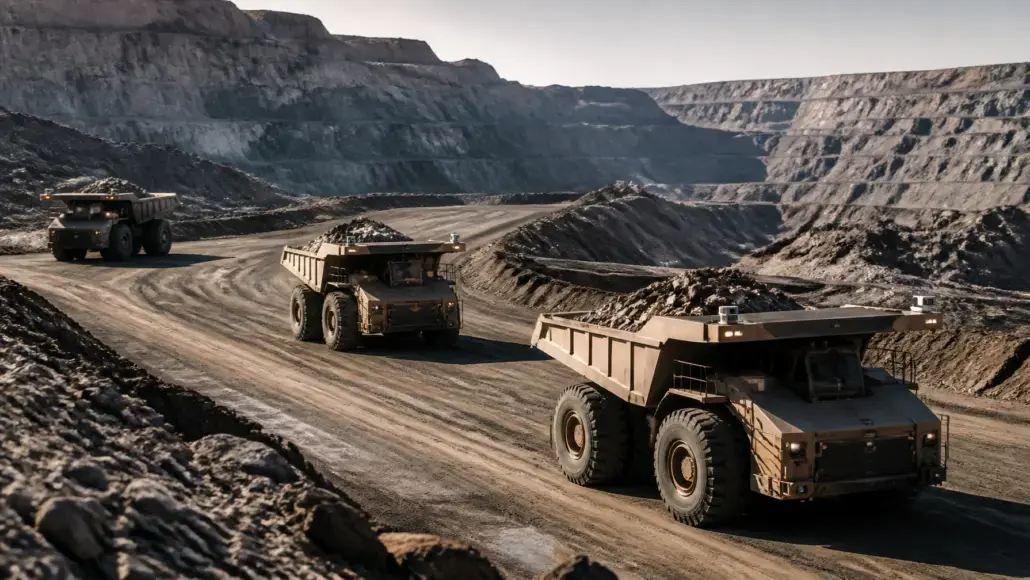

Mining automation is increasingly moving beyond individual autonomous machines toward systems in which multiple vehicles and production assets can operate as part of a coordinated fleet. Autonomous haul trucks can already perform defined tasks with limited direct intervention, but achieving broader operational gains requires those machines to work in coordination with loading equipment, unloading points, haul roads and fleet-management systems.
This is making autonomous mining fleets an increasingly important part of mining automation. The focus is shifting from whether a machine can complete a task independently to whether a fleet can continuously allocate work, manage routes and respond to changing production conditions.
From Autonomous Trucks to Coordinated Fleets
Fleet coordination introduces a more complex operational problem because the decisions affecting one machine can influence the performance of several others. A truck arriving late at a loading point can affect shovel utilisation, while congestion on a haul road can increase cycle times across multiple vehicles. Similarly, a change in crusher availability can leave several trucks waiting unless assignments are adjusted in response.
Modern fleet-management approaches are therefore increasingly designed around continuous information exchange. Equipment telemetry, travel times, machine availability and production requirements can be used to determine how vehicles should be assigned and routed. This creates a more dynamic operating environment than fixed dispatch schedules.
Research into unmanned mining fleet management illustrates the scale of this challenge. One 2025 study examined a real-world mining operation with 117 trucks, 17 loading points, 3 unloading points and 17 shovels, using real-time information to coordinate fleet scheduling.
The study highlights why autonomous mining fleets require coordination at the system level. With more machines operating simultaneously, the objective is not simply to maximise the productivity of one vehicle, but to keep the wider production process balanced.
Interoperability is Becoming Essential to Fleet Automation
Coordination also depends on different systems being able to communicate reliably. ISO 23725:2024 establishes requirements for interoperability between autonomous haulage systems and fleet-management systems, covering areas such as communication protocols, telemetry, map sharing and task assignments.
This is important because autonomous equipment and central fleet-management platforms cannot operate effectively as isolated systems. The fleet-management layer needs visibility into machine status and production conditions, while autonomous vehicles need accurate instructions and information about their operating environment.
As a result, autonomous mining fleets increasingly depend on a combination of vehicle autonomy, real-time communication and centralised or distributed fleet intelligence. The development is shifting mining automation from machine-level capability toward coordinated operational performance.
The longer-term direction is a mining environment where machines can respond to changing conditions collectively rather than operating independently. Autonomous mining fleets therefore represent an important next stage in mining automation, connecting autonomous equipment with the scheduling, routing and production systems required to coordinate an entire operation.
Real-Time Coordination is Improving Fleet Utilisation
The value of autonomous mining fleets increasingly depends on how effectively machines can coordinate their movements and assignments in real time. As the number of autonomous vehicles operating within a mine increases, fixed schedules become less effective at responding to changes in traffic, loading conditions, equipment availability and travel times. Fleet-management systems are therefore becoming an important layer for coordinating autonomous equipment.
This is making autonomous mining fleets increasingly dependent on real-time operational data. Information from trucks, loading equipment, haul roads and unloading points can be combined to adjust assignments and routes as conditions change. The objective is to reduce idle time, maintain production flow and use available equipment more efficiently.
Real-Time Coordination is Improving Fleet Utilisation
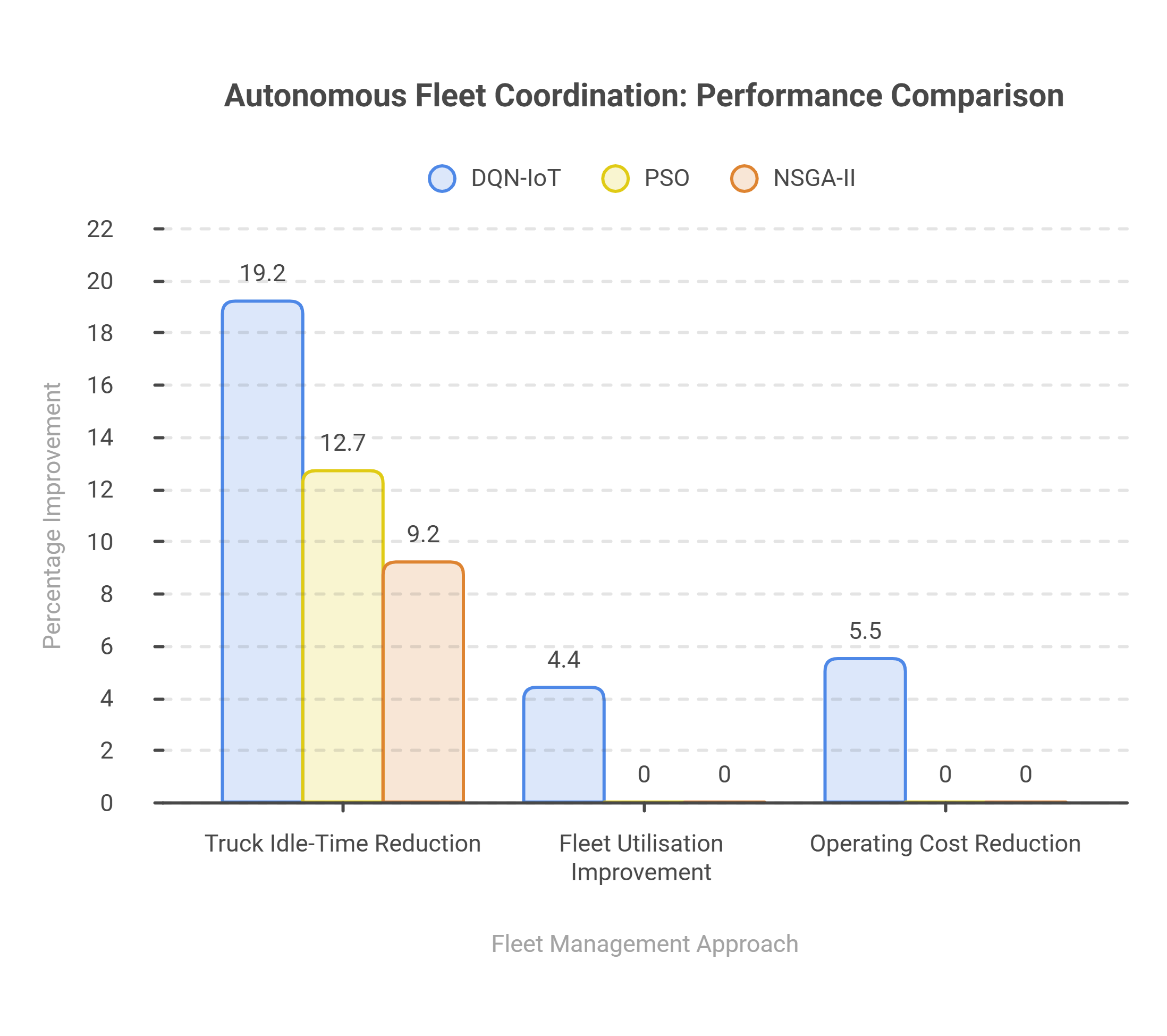
Research is providing measurable evidence of the potential impact. A 2025 study examining a real-world mining operation with 117 trucks found that its deep reinforcement learning and Internet of Things-based fleet-management model reduced truck idle time by 19.2%, improved fleet utilisation by 4.4% and reduced operating costs by 5.5% in the tested scenario.
The same study compared the approach with other optimisation methods, which produced smaller reductions in idle time. This suggests that continuous access to operational information can improve fleet scheduling when conditions change rapidly.
Travel-time prediction is another important component. Research using machine learning and beacon data in underground mines reported reductions of up to 34% in travel-time prediction error on ascending routes and 18% on descending routes. More accurate travel-time estimates can help fleet systems make better decisions about truck assignments and expected arrival times.
Autonomous mining fleets also need to coordinate physical movement. Research into multi-agent control for autonomous haul trucks found approximately 20% higher energy efficiency in a tested three-vehicle intersection scenario compared with the comparison method. This demonstrates how coordination can extend beyond dispatching into traffic and motion planning.
Fleet Coordination is Expanding Beyond Dispatch
The operational impact can extend across the production chain. When information about crusher availability is incorporated into fleet-management systems, trucks can be redirected instead of continuing toward an unavailable unloading point. One documented case cited a reduction in truck idle time at a crusher from 210 hours per month to 38 hours per month.
These examples show why autonomous mining fleets are increasingly being treated as coordinated production systems rather than collections of independent vehicles. The ability to continuously exchange information allows dispatching, routing and traffic decisions to respond to operational conditions.