






















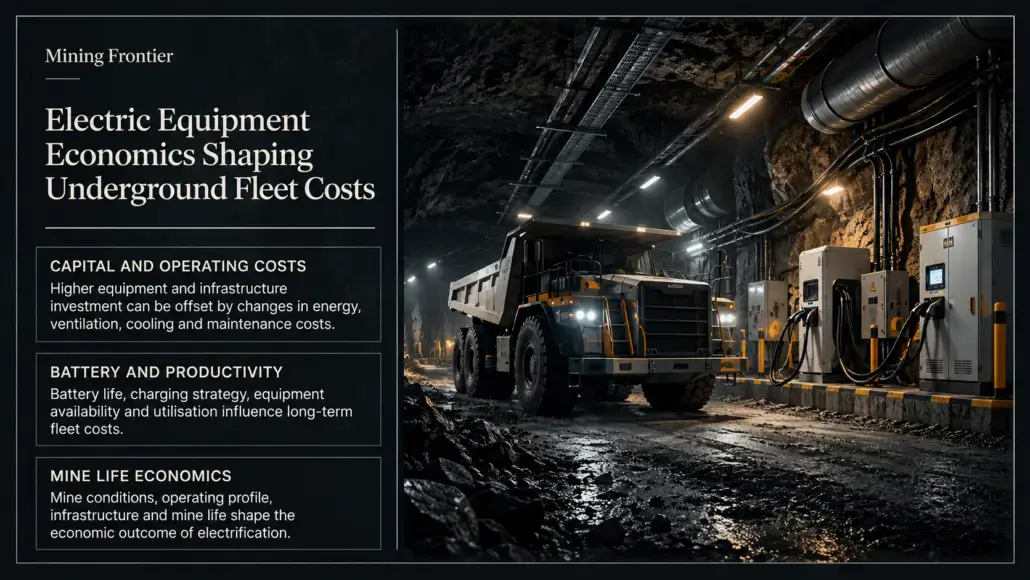

The economic case for underground electrification begins with a cost structure that differs from conventional Internal Combustion Engine (ICE) fleets. Battery Electric Vehicle (BEV) operations can require higher upfront spending on equipment, batteries, charging systems and supporting electrical infrastructure, while offering potential reductions in energy, ventilation, cooling and maintenance costs over the operating life of the mine. This makes electric equipment economics a mine-level calculation rather than a comparison of vehicle purchase prices alone. Sandvik’s Total Cost of Ownership (TCO) analysis similarly identifies equipment capital costs, energy, maintenance, ventilation and cooling as interconnected variables that can materially change the economics of a BEV fleet.
Capital Cost Drivers
For an underground operation, the initial investment can extend across several parts of the system:
- Electric equipment: BEV trucks, loaders and other mobile machines can carry higher acquisition costs than comparable diesel equipment.
- Battery systems: Battery packs add a separate capital component and introduce future replacement considerations.
- Charging infrastructure: Chargers, charging bays and associated electrical equipment become part of the mine’s infrastructure requirement.
- Electrical infrastructure: Brownfield operations may also require modifications to power distribution and mine facilities.
The Cosmos Electrification Study illustrates how these costs interact. Its model found that the direct cost of purchasing, operating and maintaining the BEV fleet represented the largest cost difference against its diesel base case. Additional spending on mine development for workshops and charging bays, as well as charging equipment for ancillary and lift vehicles, also contributed to the difference.