














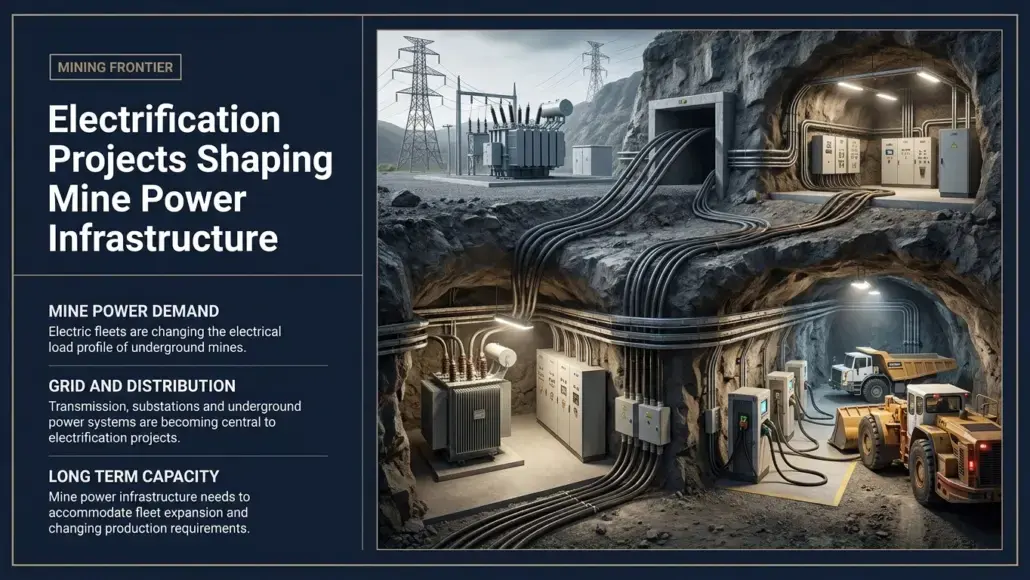

The expansion of electric fleets is changing how underground mines assess their electrical demand. mine power infrastructure that was originally designed around fixed processing equipment, ventilation, pumping and smaller mobile loads may need to support significantly different demand patterns as battery-electric trucks, loaders and other machines become part of daily production. The change is not only about the total amount of electricity consumed. The timing and concentration of demand can also influence how power is distributed across the mine.
Several factors can affect the electrical requirements of an electrified fleet:
- Number and type of electric machines
- Charging demand across different operating periods
- Available capacity in existing substations and feeders
- Mine depth and the location of production areas
- Planned expansion of the electric fleet
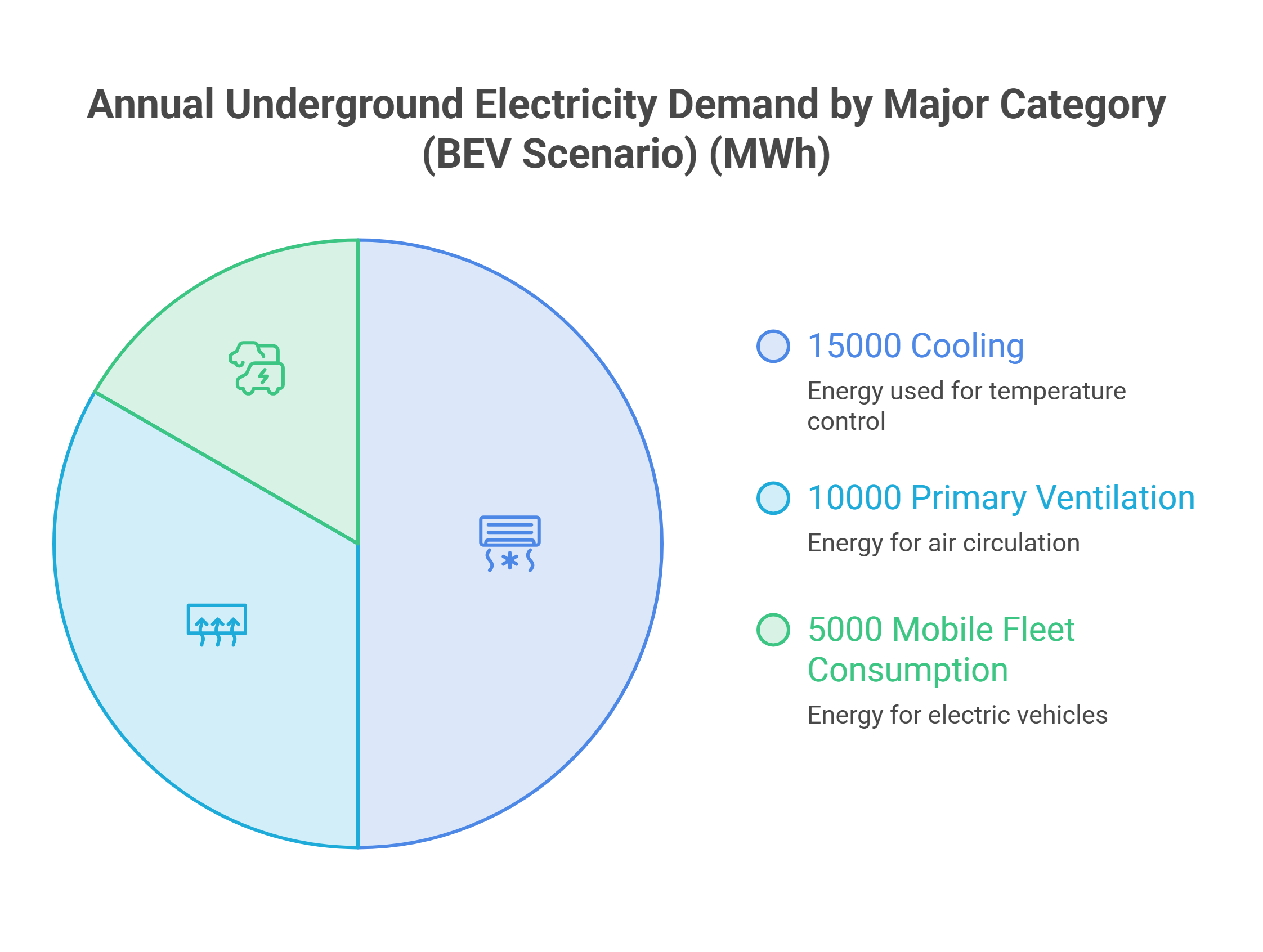
The Cosmos Electrification Study provides a useful mine-level example. Its modelling showed that an all-electric operation could require substantial additional power for mobile equipment while reducing other electricity loads, particularly cooling. This demonstrates that electrification can change the composition of mine electricity demand, rather than simply increasing every category of consumption.
Existing Infrastructure Facing New Load Requirements
The challenge can be greater at established underground mines where electrical systems were designed around an earlier operating model. Additional electric equipment can introduce larger and more variable loads, creating a need to reassess transformers, underground substations, feeders, cables and protection systems. The Australian Coal Research Programme (ACARP) research on battery-electric vehicle charging infrastructure also identifies load-flow studies, transformer requirements and power limitations as important considerations when adapting mine electrical systems.
The infrastructure review can therefore extend across several areas:
- Transformer capacity and loading
- Feeder and cable capacity
- Underground distribution arrangements
- Electrical protection and power quality
- Capacity available for future equipment deployment
This makes mine power infrastructure an important part of electrification planning rather than a secondary utility consideration. The requirements can also differ significantly between brownfield operations that must adapt existing systems and greenfield projects that can design electrical capacity around the expected electric fleet from the beginning.
As mines move toward larger electric fleets, mine power infrastructure increasingly has to be considered alongside production planning, equipment deployment and future mine development rather than as a separate engineering requirement.
Grid Connections and Substations Becoming Core Project Infrastructure
As underground electrification expands, mine power infrastructure increasingly has to extend beyond existing distribution systems and connect the mine to sufficient external power. New grid connections, transmission capacity and substations can become major components of an electrification project, particularly where existing supply was designed around a predominantly diesel-powered mobile fleet.
The infrastructure requirements can extend across several stages:
- Grid or transmission connection
- Main mine substation
- Medium-voltage distribution
- Underground transformers and substations
- Feeders and cables serving production areas
The McIlvenna Bay project in Saskatchewan provides a clear example of this wider infrastructure approach. Its development plan includes a new 110/138 kilovolt transmission line, an on-site substation and associated mine distribution infrastructure, with battery-electric vehicle charging incorporated into the wider project. This illustrates how electrification can be linked to power infrastructure decisions that extend well beyond individual charging points.
Power Distribution Expanding with Mine Development
The electrical system also needs to accommodate changing demand as production areas expand and more electric equipment is introduced. The Cosmos Electrification Study modelled an all-electric operation with a maximum demand of 27.5 megawatts, design power of 31.4 megawatts and average power of 24.3 megawatts. The study also identified additional underground transformers, substations and cabling as part of the infrastructure required for the modelled electric operation.
Power planning therefore needs to consider both the scale and location of future demand:
- Capacity required by the planned electric fleet
- Power available at different underground levels
- Transformer loading and feeder capacity
- Changes in demand between production periods
- Additional infrastructure required as the mine expands