


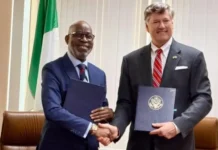
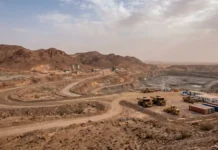
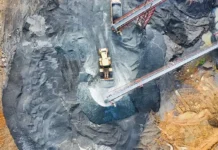
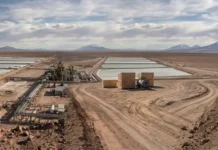






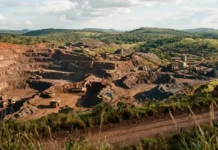
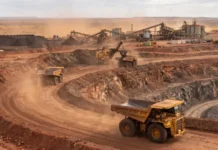
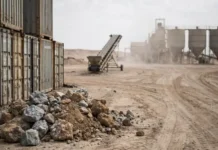

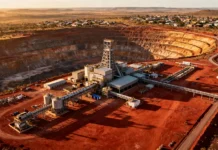
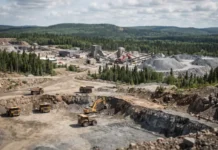
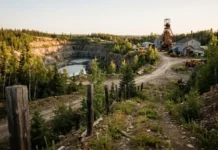

The Republic of Niger and Madaouela Mining Company SA have formally executed a Mining Convention for the Madaouela uranium project, establishing the legal, fiscal, regulatory and operational framework that will govern the project’s future development. The agreement was signed in Niamey, marking the formal resolution of a prolonged dispute between Niger and the project’s operator over the uranium asset located in the Agadez region.
The Madaouela uranium project has been at the centre of a complex dispute dating back to 2024, when Niger revoked the operator’s exploitation permit and returned the asset to the state. That decision prompted international arbitration proceedings. Under the newly executed Mining Convention, the parties have agreed to a restructured arrangement that replaces the previous contested framework and sets defined terms for how uranium mining at the site may proceed going forward.
Niger’s mines ministry said in a statement that the country had prioritised dialogue and negotiation to open a new chapter centred on partnership and development. The statement did not provide detailed financial or contractual terms beyond the revised ownership structure.
New Ownership Structure and Legal Framework Under the Mining Convention
Under the terms of the Mining Convention, the Republic of Niger now holds a 40 percent interest in the Madaouela uranium project, up from a previous 20 percent stake. The project operator retains a 60 percent interest and remains responsible for operational oversight under the agreed framework. This shift reflects a broader trend across the Sahel region, where governments are seeking greater control over natural resources to increase state revenues from Niger mining and extractive industries.
The formal execution of the agreement also triggers steps to discontinue the historical arbitration proceedings that had been filed at the International Centre for Settlement of Investment Disputes. The parties had agreed in February 2025 to suspend those proceedings while pursuing a negotiated settlement, and in September 2025 they extended the pause by a further six months. With the Mining Convention now in place, the arbitration is expected to be formally wound down as part of the broader resolution.
The restructured relationship between Niger and the operator effectively ends the uncertainty that had surrounded the uranium mining asset since the permit revocation in 2024.
Next Steps for the Madaouela Uranium Project
With the Mining Convention formally executed, the focus for the Madaouela uranium project now shifts to the technical and resource-related work required to assess future development pathways. The immediate next steps include resource verification, technical review and an evaluation of potential approaches for advancing the project under the new framework.
No construction schedule, production timeline, financing arrangement or development cost has been announced. The project’s development status remains at an early stage, and any future decisions on how to progress Niger uranium extraction at the site will depend on the outcomes of the technical assessments now underway.
The process to formally discontinue the historical arbitration proceedings is also expected to advance in the coming months, closing the legal chapter that preceded the current agreement. The Mining Convention provides the foundation, but the path from framework to active uranium mining operations will be shaped by the results of the forthcoming reviews and the terms ultimately agreed for project financing and execution.