


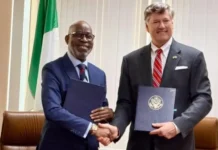










Nigeria and the United States have signed a framework agreement aimed at increasing mining investment in Nigeria and supporting development across the country’s mineral value chain.
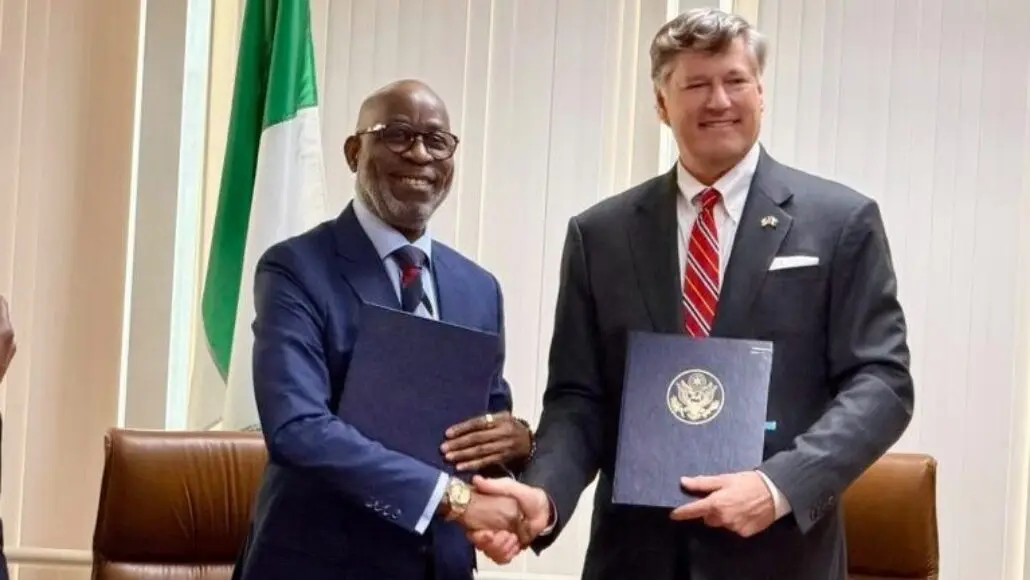
The agreement was signed by Nigeria’s Minister of Solid Minerals Development, Dele Alake, and US Deputy Secretary of State Christopher Landau at the Nigerian Mission House in New York. The framework is intended to use government-to-government cooperation as a foundation for business-to-business transactions and greater mining investment in Nigeria’s solid minerals sector.
The agreement covers geological data and exploration, mineral development and processing, infrastructure, and technical capacity. These areas are intended to support the development of Nigeria’s mineral resources while creating opportunities for greater value addition within the country.
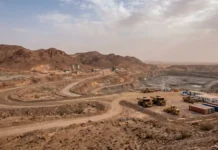
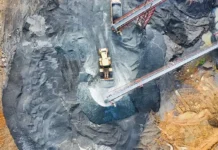
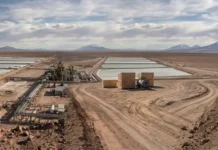
Nigeria’s government estimates the country’s mineral resources at about $700 billion. The framework forms part of efforts to attract foreign capital and strengthen the country’s position across the mineral value chain, with mining investment expected to support activity ranging from resource development to processing and related infrastructure.
Framework Covers Exploration, Processing and Infrastructure
The scope of the agreement extends across several areas relevant to mining development. Cooperation on geological data and exploration is intended to support efforts to identify and assess mineral opportunities, while mineral development and processing could encourage activity beyond the extraction of raw materials.
Infrastructure and technical capacity are also included in the framework, broadening its focus to the systems and capabilities required to develop mineral projects and support downstream operations. Nigeria has placed greater emphasis on local processing and value addition as part of its efforts to expand the economic contribution of the mining sector.
The framework also provides a basis for stronger commercial links between Nigerian and US businesses. Rather than identifying individual projects within the agreement itself, the governments have positioned it as a structure through which viable opportunities can subsequently be developed.
This creates potential scope for mining investment across exploration, mineral development, processing infrastructure and technical services, depending on the projects and commercial arrangements that emerge from the framework.
The agreement therefore establishes a broader platform for US companies and Nigerian counterparts to evaluate opportunities within the country’s mineral sector and develop commercial relationships around specific projects.
Implementation to Focus on Viable Mining Projects
The agreement establishes a framework for cooperation, but it does not by itself confirm specific mining projects, completed investments or committed financing for individual developments.
Nigeria’s government has indicated that the next stage will involve identifying viable projects, mobilising investment and building commercial partnerships. The stated objective is to translate the framework into concrete activity across the country’s mineral sector.
The implementation phase will determine how the framework develops into actual mining investment and project activity. Areas identified for cooperation could support projects involving exploration, mineral processing, infrastructure development and technical capabilities, subject to further agreements between the relevant parties.
For Nigeria, the framework supports efforts to attract foreign participation while increasing domestic value addition. For US companies, it creates a government-supported channel for evaluating commercial opportunities within Nigeria’s mining sector and assessing potential mining investment opportunities. Further progress will depend on project identification, investment mobilisation and the formation of business-to-business partnerships under the framework.