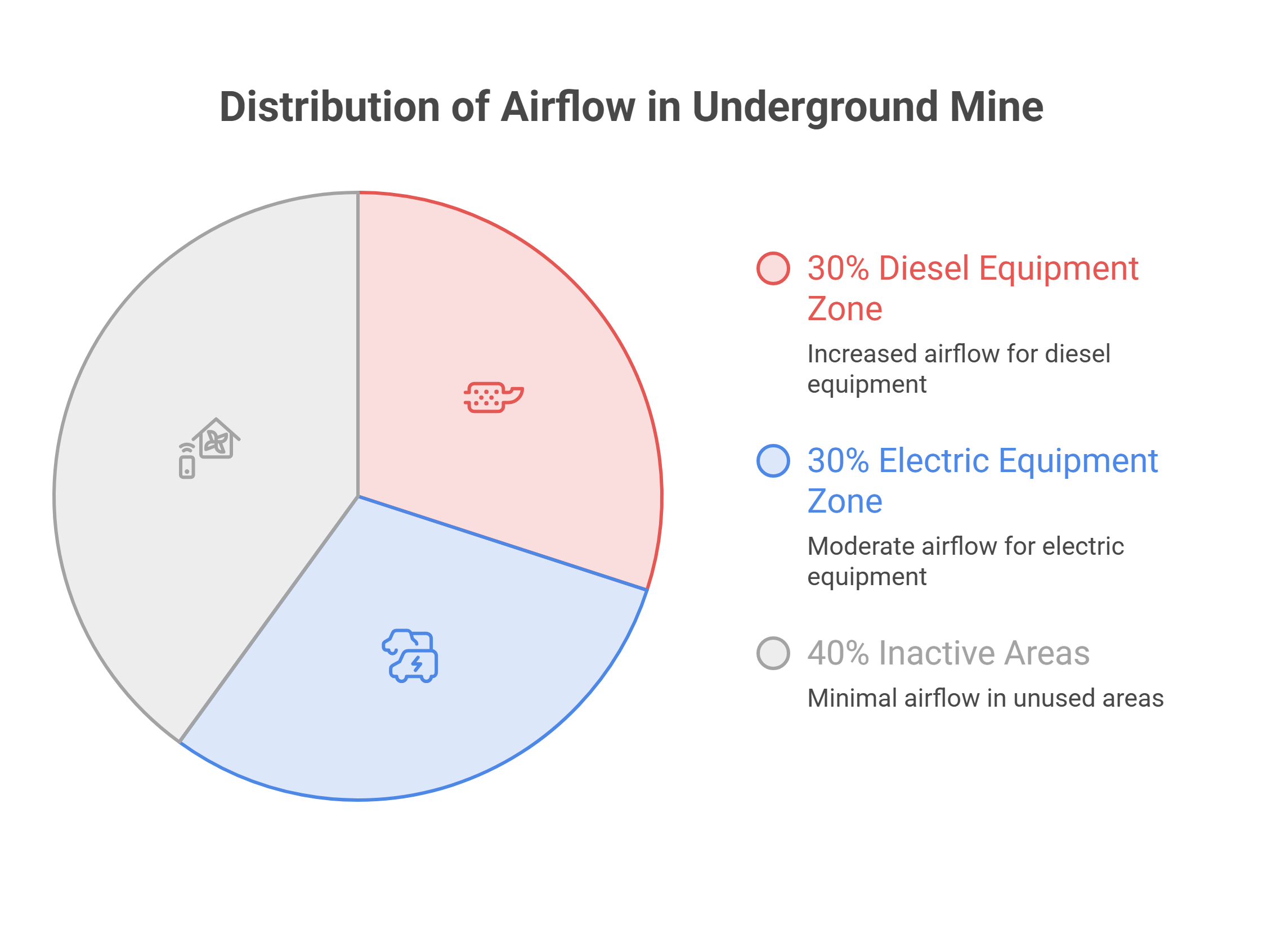










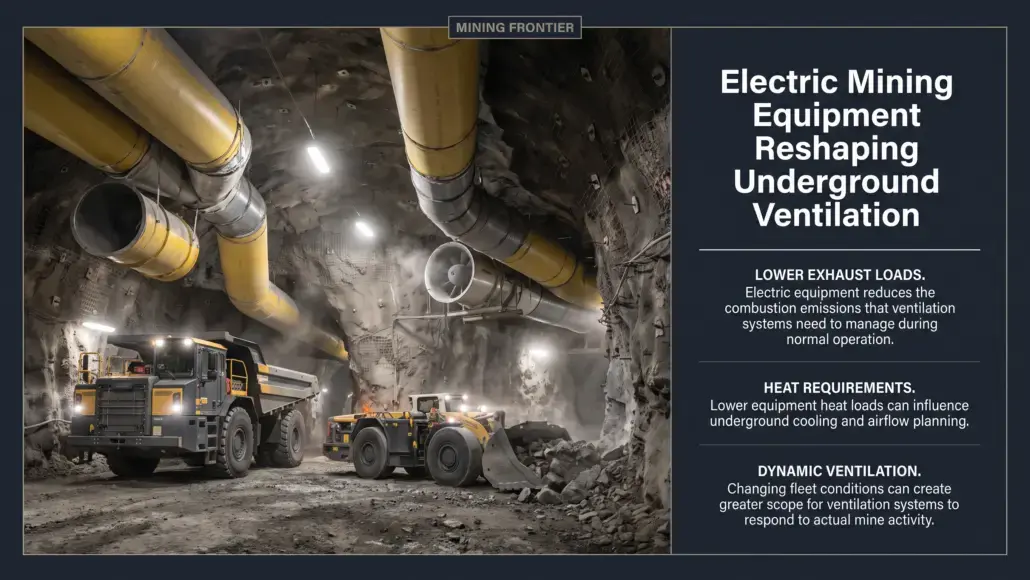
The shift toward electric mining equipment is changing the ventilation requirements associated with underground mobile fleets. Diesel machines contribute exhaust gases, diesel particulate matter and engine heat to the underground environment, creating additional airflow requirements to dilute contaminants and manage thermal conditions. Replacing some of this equipment with battery-powered machines can reduce those loads, although ventilation remains necessary for workers, blasting, dust, heat and other underground conditions.
Regulatory frameworks illustrate how closely ventilation requirements can be tied to diesel equipment. Ontario’s underground mining rules, for example, calculate airflow requirements for diesel-powered equipment according to certified airflow values or engine power where certification is unavailable. As diesel equipment is reduced, some of the ventilation demand directly associated with combustion can therefore change.
The effect depends on the mine and its fleet. Key variables include:
- The number and type of diesel machines being replaced
- The operating power and duty cycles of those machines
- Mine depth and ambient underground temperature
- Production areas where diesel equipment remains active
- Existing airflow and cooling requirements
Research at Sweden’s Malmberget mine is providing field evidence of this change, with preliminary work indicating that replacing diesel-powered machines with battery-powered equipment can reduce ventilation requirements and ventilation energy consumption in the studied area.
Heat Loads Creating New Ventilation Planning Considerations
Heat is another important part of the equation. Electric mining equipment does not produce the same engine and exhaust heat associated with diesel machines during normal operation, which can affect the thermal load underground. This becomes particularly relevant in deeper mines, where ventilation and refrigeration systems already have to manage heat from rock, depth and other equipment.
A 2025 study examining electrification in heat-constrained underground mines found that introducing battery-electric fleets could delay additional refrigeration requirements in modelled mine scenarios. The study also examined how fleet electrification could alter ventilation and cooling demands across different operating conditions.
Electric mining equipment therefore changes more than the source of propulsion. It can alter the environmental loads that ventilation systems are designed to manage, creating scope for mine operators to reassess airflow, cooling and future infrastructure requirements.
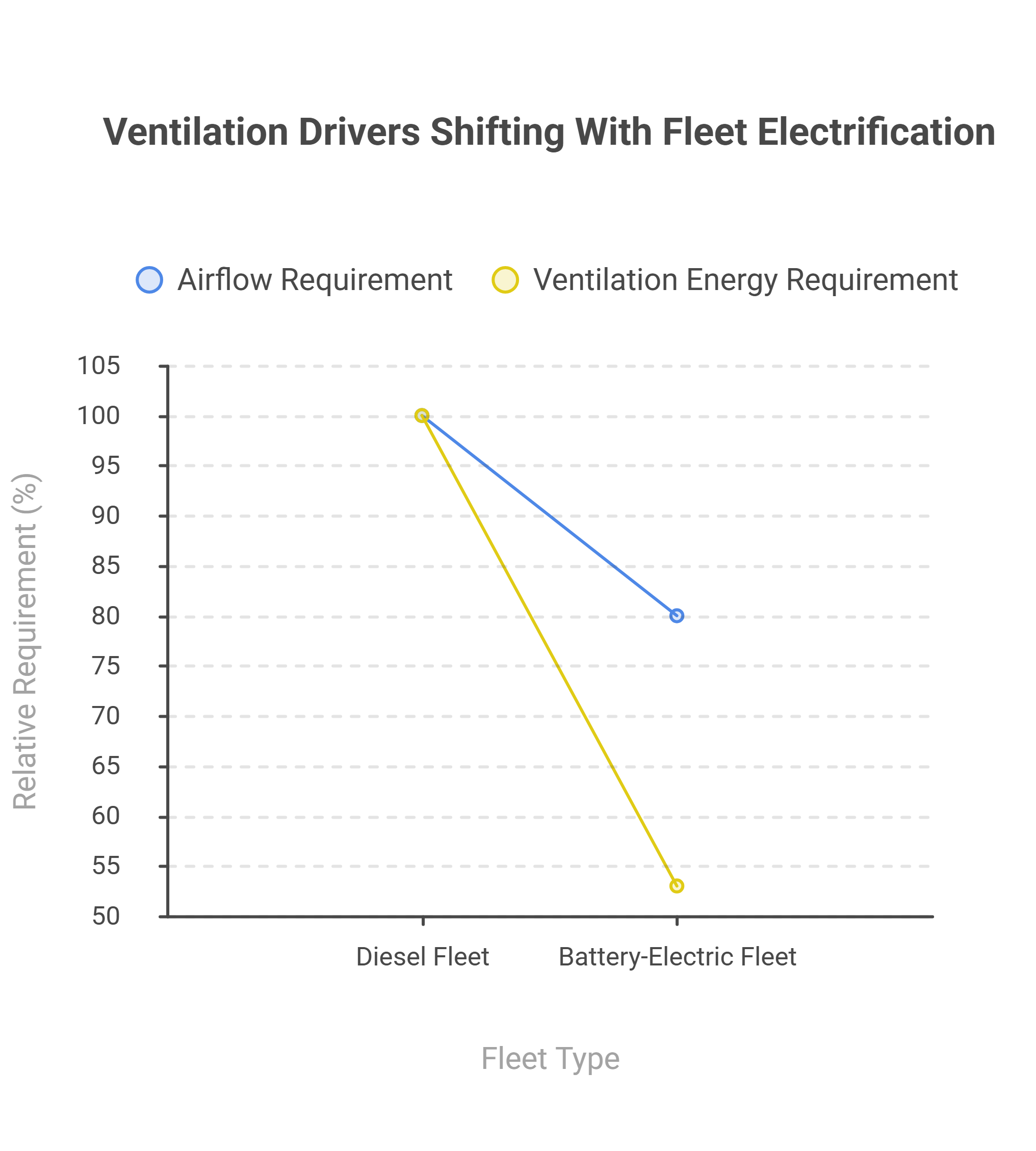
Battery-electric fleets can reduce ventilation loads associated with diesel exhaust and heat, while ventilation remains necessary for other underground operating and safety requirements.