











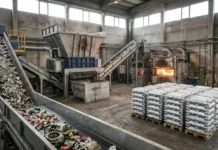
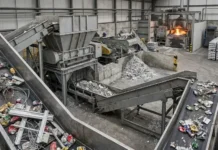


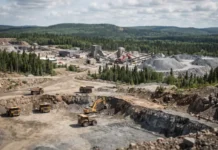


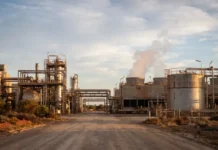

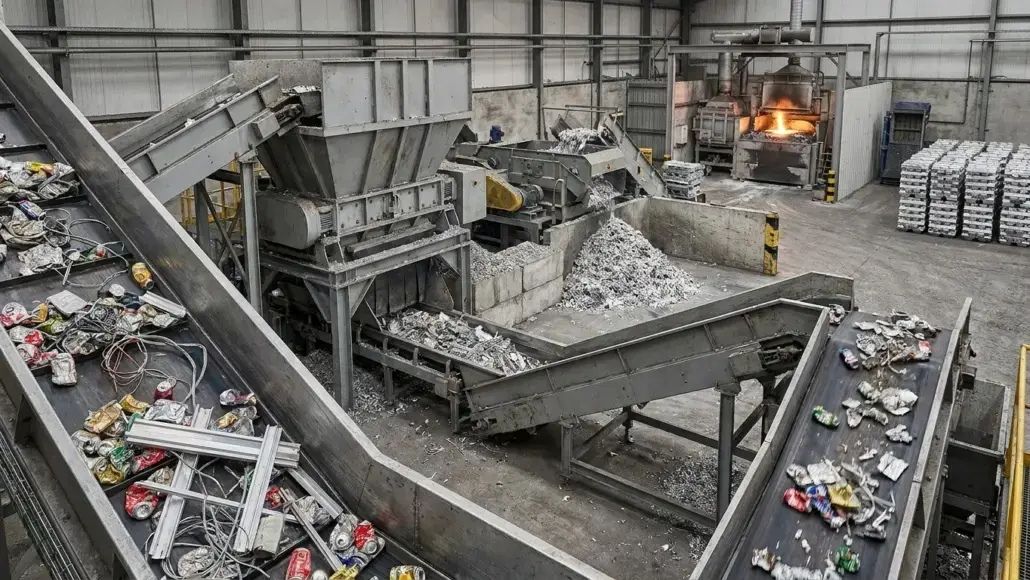

The growth of aluminium recycling is creating a larger network of material flows between consumers, collection systems, recyclers, remelters and manufacturers. Aluminium products can remain in use for many years before returning to the recycling stream, meaning the availability of secondary metal depends increasingly on how effectively regions collect and process material once products reach the end of their useful lives.
This is making aluminium scrap processing an increasingly important part of regional supply chains. The International Aluminium Institute estimates that more than 30 million tonnes of aluminium scrap are recycled globally each year, while almost 75% of the 1.5 billion tonnes of aluminium ever produced remains in use. This large stock of aluminium represents a significant future source of secondary material as products reach end of life.
Regional Scrap Flows are Becoming More Important to Aluminium Circularity
Post-consumer material is particularly important because it connects existing aluminium stocks with future production. The IAI recorded around 20 million tonnes of post-consumer scrap intake in 2019, representing almost 60% of total scrap intake. Packaging, transport and buildings are among the major sources of this material.
However, recovering scrap does not automatically mean that it will return to the same type or value of application. Material can contain different alloys, coatings and other components, creating requirements for sorting, separation and preparation before remelting. The location and availability of this processing capacity can therefore influence where recovered aluminium ultimately goes.
Regional recycling performance already varies considerably. Earlier IAI data put Europe’s Recycling Efficiency Rate at 81%, while North America’s Recycling Input Rate was 57%. China was reported as producing more than 10 million tonnes of aluminium from scrap annually in the cited dataset. These differences reflect variations in collection systems, manufacturing structures, scrap availability and processing capacity.
The regional dimension matters because a market can generate substantial volumes of scrap without having sufficient infrastructure to convert that material into high-quality secondary metal locally. Aluminium scrap processing therefore sits between scrap generation and circular material supply, determining how efficiently recovered aluminium can re-enter industrial production.
From Scrap Collection to Regional Supply
A more circular regional system requires several stages to operate together: collection, transportation, sorting, scrap preparation, remelting and distribution to downstream manufacturers. Weaknesses in any one of these stages can reduce the amount of material that remains within the productive cycle.
This makes aluminium scrap processing more than a recycling activity. Processing capacity can influence the quality, destination and economic value of recovered material, particularly as manufacturers seek reliable sources of secondary aluminium with consistent specifications.
As regional collection systems expand, the ability to process different scrap streams efficiently will become increasingly important. Aluminium scrap processing is therefore becoming a key link between existing aluminium stocks and the future circular supply of the metal.
Scrap Processing is Determining the Quality of Circular Supply
Increasing the volume of aluminium scrap entering the recycling system is only one part of building a more circular supply chain. The material also needs to be sorted, separated and processed into feedstock that can meet the requirements of secondary production. Differences in alloy composition, coatings and contamination can affect both recovery rates and the quality of the metal produced.
This is making aluminium scrap processing increasingly important to the value retained within regional recycling systems. Processing technologies determine whether collected scrap can return to higher-value applications or whether some of the material is diverted into lower-value uses.
Scrap Quality is Becoming a Processing Challenge
Different aluminium products generate different scrap streams. Beverage cans, automotive components, construction materials and industrial products can contain different alloy systems and combinations of coatings or other materials. Recovering these streams efficiently requires separation processes capable of identifying and directing material toward appropriate treatment.
Sorting and delacquering are particularly important in closed-loop recycling. The International Aluminium Institute’s research into can-to-can recycling found that combining improved metallurgy, sorting and delacquering can increase metal recovery by up to 18%, while reducing energy use and emissions by around 15% in the studied recycling pathway.
These figures demonstrate how processing quality can influence the performance of a recycling system. Better preparation can increase the volume of aluminium that remains usable while reducing the losses associated with contamination and unsuitable material streams.
Aluminium scrap processing can therefore determine whether recovered material remains suitable for demanding applications or is redirected into less stringent uses. This distinction becomes more important as manufacturers seek greater volumes of secondary aluminium without compromising material specifications.
Processing Capacity is Supporting Regional Circularity
The location of processing capacity also matters. Scrap is generated across cities, industrial areas and manufacturing centres, while remelting and advanced separation facilities may be concentrated in specific regions. Where local processing capacity is limited, collected scrap may need to travel longer distances before it can be converted into secondary metal.
A stronger regional system can connect collection networks with sorting, preparation and remelting facilities, keeping more material within the same industrial ecosystem. This does not mean every region needs to develop every processing capability, but it does increase the value of strategically located facilities that can handle the scrap generated nearby.
The environmental advantage of recycling provides an additional incentive. Aluminium recycling can require substantially less energy than primary production, making improvements in recovery and processing efficiency relevant not only to material circularity but also to resource and energy use.
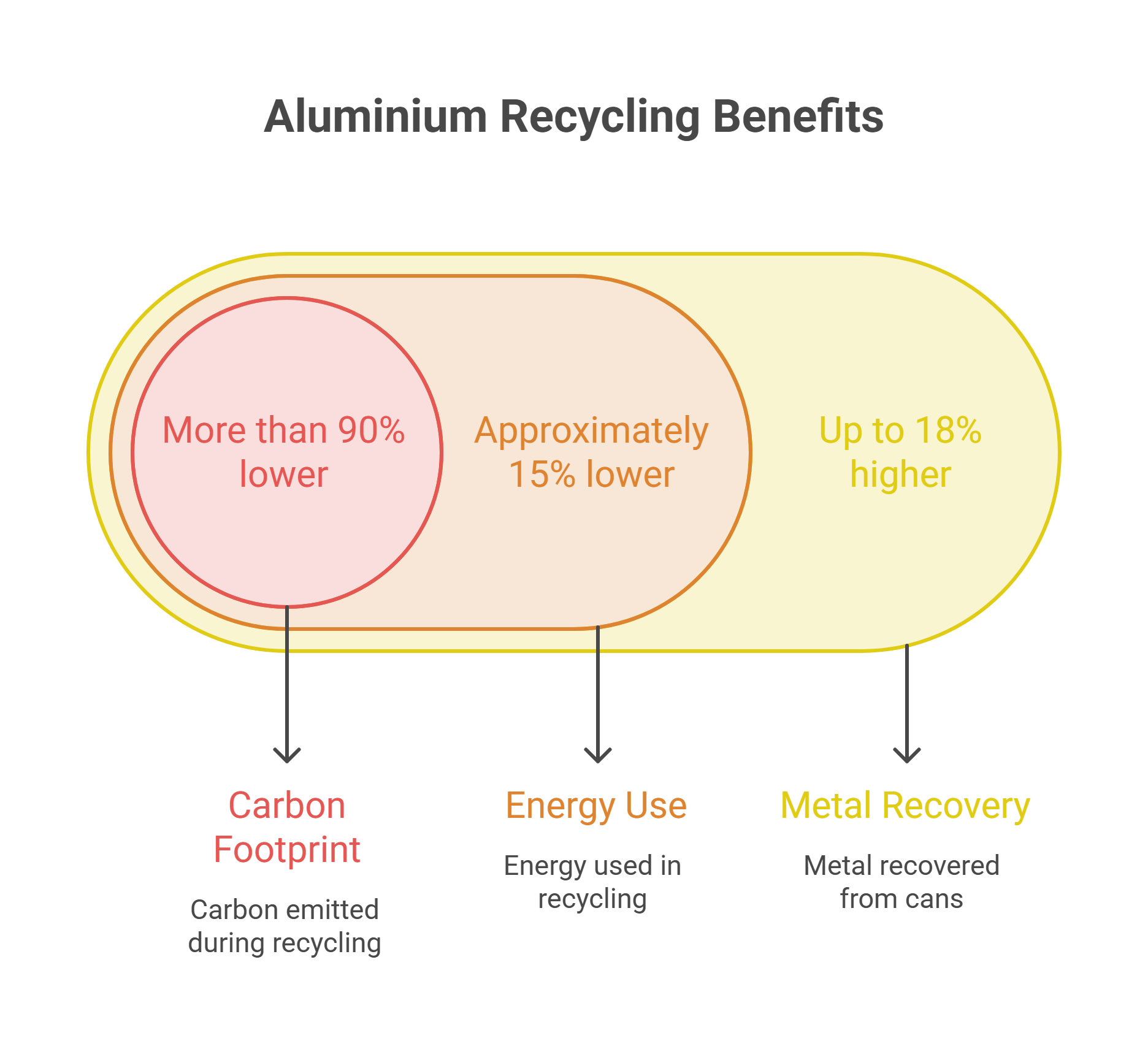
Key Takeaway: Improved sorting, delacquering, metallurgy and process control can increase aluminium recovery while improving the environmental performance of the recycling pathway.
The evidence indicates that recycling capacity alone is not enough to strengthen circular supply. Aluminium scrap processing needs to preserve material quality while efficiently directing different scrap streams into appropriate production routes. As regional recycling systems develop, processing capability will increasingly determine how much recovered aluminium can remain in productive circulation.
Regional Processing Can Strengthen Aluminium Circularity
The development of regional recycling systems is increasingly dependent on the ability to connect scrap collection with effective sorting, preparation and remelting capacity. Recovering more aluminium creates greater supply potential, but that material needs to be processed efficiently if it is to return to production at a useful quality.
This makes aluminium scrap processing an important link between end-of-life material and secondary aluminium supply. Better processing can improve recovery, reduce material losses and help keep more aluminium within productive regional cycles.
As recycling systems mature, aluminium scrap processing is likely to become increasingly important to how regions manage their existing aluminium stocks. Stronger connections between collection networks, processing facilities and downstream manufacturers can support greater material circularity while reducing the amount of recoverable aluminium that is lost or diverted to lower-value applications.