The aluminium industry is entering a period in which recycled metal is expected to play a larger role in meeting future demand. Aluminium can remain in use for decades across buildings, vehicles, packaging, transport and industrial equipment, creating a substantial stock of material that can eventually return to the production cycle. As demand continues to grow, this existing stock is becoming an increasingly important source of future supply.
This is strengthening the role of the aluminium recycling supply chain. More than 30 million tonnes of aluminium scrap are recycled globally each year, while the International Aluminium Institute estimates that almost 75% of all aluminium ever produced remains in use. That large installed base creates a long-term source of secondary metal as products reach the end of their useful lives.
Aluminium Recycling is Becoming a Larger Source of Metal Supply
The scale of this change can be seen in projections for post-consumer scrap. The International Aluminium Institute estimates that aluminium produced from post-consumer scrap could rise from around 22 million tonnes in 2021 to between 66 million and 80 million tonnes annually by 2050 across different scenarios. At the same time, total aluminium supply is expected to increase substantially, meaning recycled material will need to contribute alongside primary production rather than simply replace it.
This creates a stronger strategic role for secondary aluminium. Unlike primary production, which depends on extracting and refining bauxite, recycled aluminium can return material already in circulation to productive use. The energy requirement for recycling can also be up to 95% lower than producing primary aluminium, strengthening the economic and environmental rationale for expanding secondary supply.
However, the growth of recycled metal depends on more than the volume of aluminium reaching end of life. Material has to be collected, sorted, processed and returned to manufacturers in forms that meet the requirements of downstream applications. aluminium recycling supply chain development is therefore closely connected to the infrastructure supporting scrap recovery.
Post-Consumer Scrap is Expanding the Secondary Resource Base
Post-consumer scrap is particularly important because it represents aluminium recovered from products after their useful life rather than material generated during manufacturing. The International Aluminium Institute recorded around 20 million tonnes of post-consumer scrap intake in 2019, accounting for almost 60% of total scrap intake at the time. More recent scenario modelling shows the potential scale of this resource, with aluminium production from post-consumer scrap rising from 22 million tonnes in 2021 to between 66 million and 80 million tonnes by 2050, depending on the scenario.
The growing availability of this material could provide a significant source of future aluminium, but recovery rates and processing capabilities will determine how much of it becomes usable secondary metal. aluminium recycling supply chain development is consequently moving toward a more strategic role within the wider aluminium market.
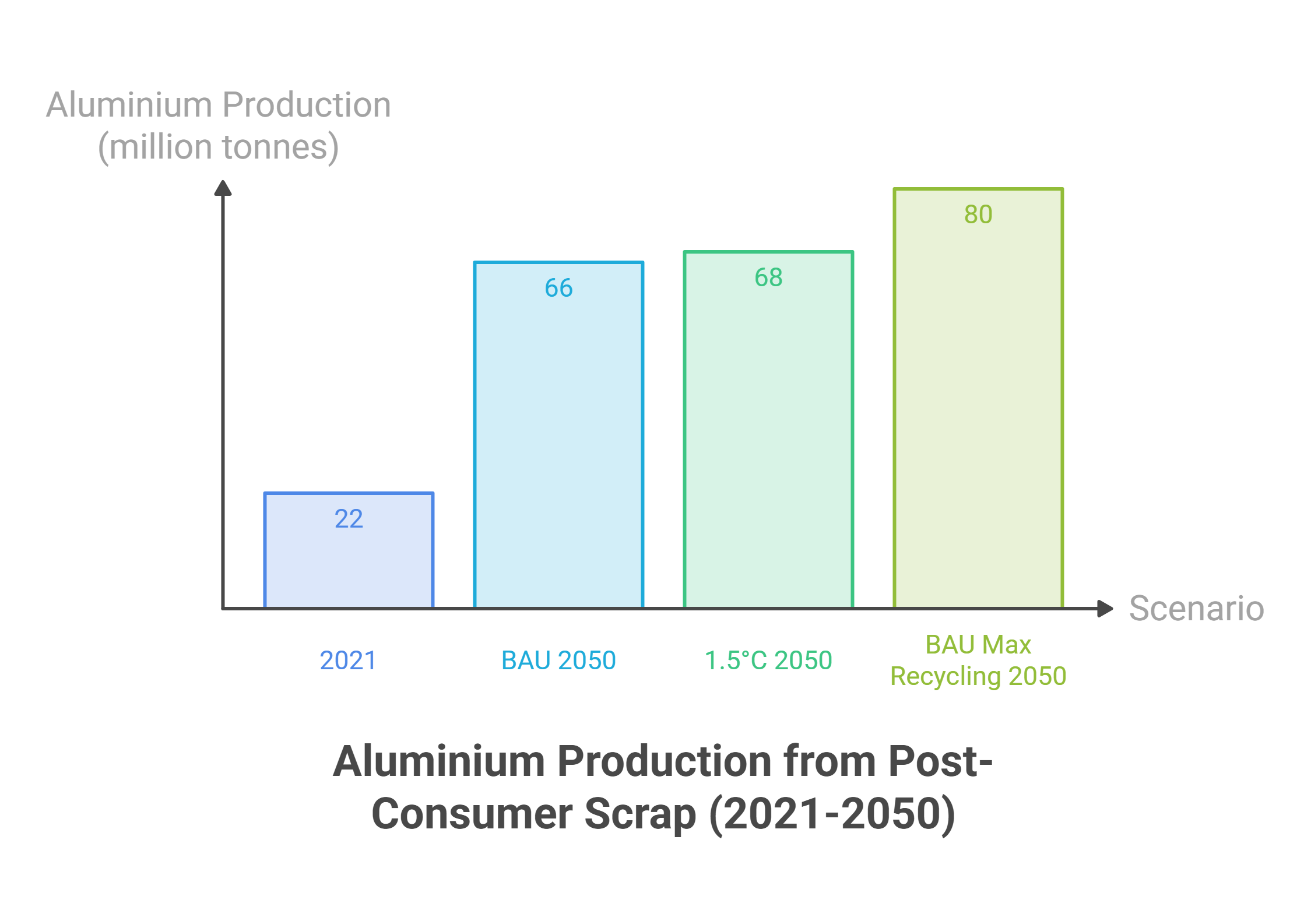
Key Takeaway: Post-consumer scrap is expected to become a significantly larger contributor to aluminium supply as overall demand continues to rise.
The trajectory points toward a market where secondary aluminium becomes increasingly important to supply planning. aluminium recycling supply chain development will therefore depend on how effectively the industry can recover existing metal stocks and convert them into reliable feedstock for future production.
Scrap Collection and Processing are Becoming Supply-Chain Priorities
The expansion of secondary aluminium supply depends on how effectively scrap can move from end-of-life products back into production. As demand for recycled metal increases, collection systems, sorting capacity and processing infrastructure are becoming increasingly important to the reliability of the wider aluminium market. The challenge is shifting from simply having aluminium available for recycling toward recovering it in a form that can be efficiently reused.
This is making aluminium recycling supply chain capacity increasingly important to producers and downstream manufacturers. The International Aluminium Institute estimates that global scrap collection rates would need to rise from around 70% to more than 90% by 2050 to maximise circularity. That would require substantial improvements in collection systems across sectors such as packaging, transport, construction and industrial manufacturing.
Scrap Collection is Becoming a Supply Constraint
The availability of suitable scrap depends heavily on how efficiently aluminium products are collected after use. Products can remain in circulation for long periods, while fragmented collection systems and difficult dismantling processes can delay their return to the production cycle.
Post-consumer material presents a particular challenge because it is more likely to contain mixed alloys, coatings or other materials that complicate recovery. Even when aluminium is successfully collected, it may require additional processing before it can be used for applications with tighter material specifications.
The International Aluminium Institute projects that a shortage of appropriately sorted aluminium scrap could become a significant constraint. By 2050, its analysis indicates a potential 60 million tonne shortage of sorted scrap, alongside a 19 million tonne surplus of unsorted scrap. This illustrates the difference between scrap availability and usable secondary feedstock.
The distinction is critical for the aluminium recycling supply chain. Increasing collection volumes alone will not necessarily create an equivalent increase in high-quality secondary metal. Sorting, separation and processing capacity need to expand alongside collection.
Processing Determines How Much Value Scrap Retains
Alloy separation is particularly important because different aluminium alloys have different compositions and performance characteristics. If mixed materials are processed together without adequate separation, the resulting metal may not be suitable for the same range of high-value applications.
This can lead to downcycling, where recovered aluminium remains in use but moves into applications with less demanding material requirements. Improving sorting and refining processes can therefore help preserve more of the material’s original value and expand the range of products that can incorporate recycled aluminium.
There is also a significant volume of material that never returns to the recycling loop. The IAI estimates that around 7 million tonnes of aluminium scrap are lost from the recycling cycle each year, with much of the material being unsorted or downcycled.
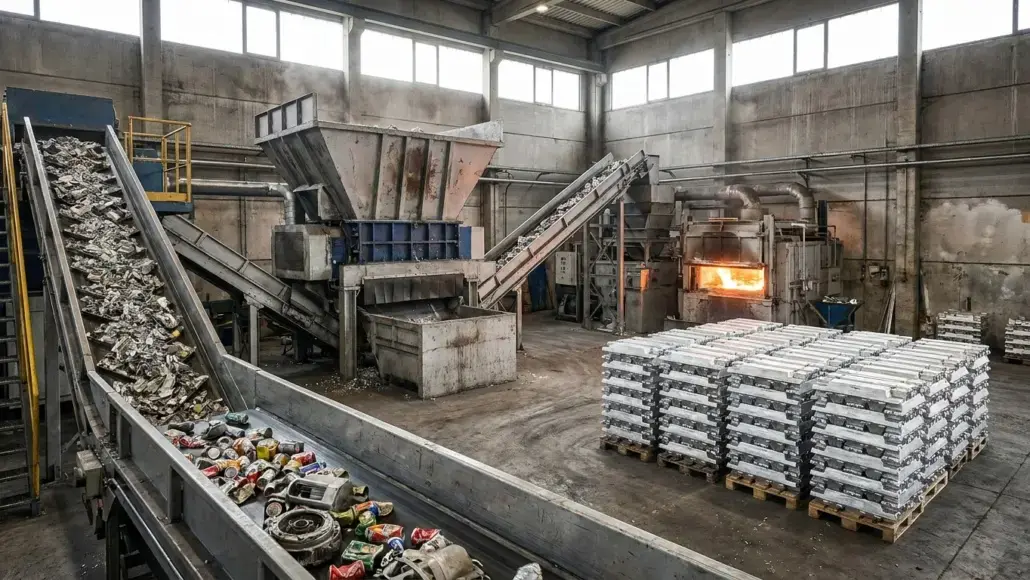
For the aluminium recycling supply chain, this creates an infrastructure challenge spanning collection, dismantling, sorting, remelting and quality control. Regional recycling systems will need to become more capable of directing different scrap streams toward appropriate processing routes.
The strategic importance of these systems will increase as more recycled aluminium is required to meet demand. A stronger aluminium recycling supply chain will depend not only on recovering more metal, but also on improving the quality, consistency and economic value of the material that reaches secondary production.
Secondary Aluminium is Moving Toward a More Strategic Supply Role
The growing importance of recycled aluminium is changing how the industry approaches future material supply. Rising demand, long product lifecycles and pressure to reduce the environmental impact of primary production are increasing the value of material already in circulation.
This makes aluminium recycling supply chain development increasingly important to supply security. Expanding collection, sorting and processing capacity can determine how much end-of-life aluminium is converted into reliable secondary feedstock rather than being lost, downcycled or left outside the recycling loop.
The longer-term shift is therefore from recycling as an end-of-life activity toward recycling as a strategic supply source. A stronger aluminium recycling supply chain can help the industry recover more existing metal, improve material circularity and provide an increasingly important source of aluminium alongside primary production.