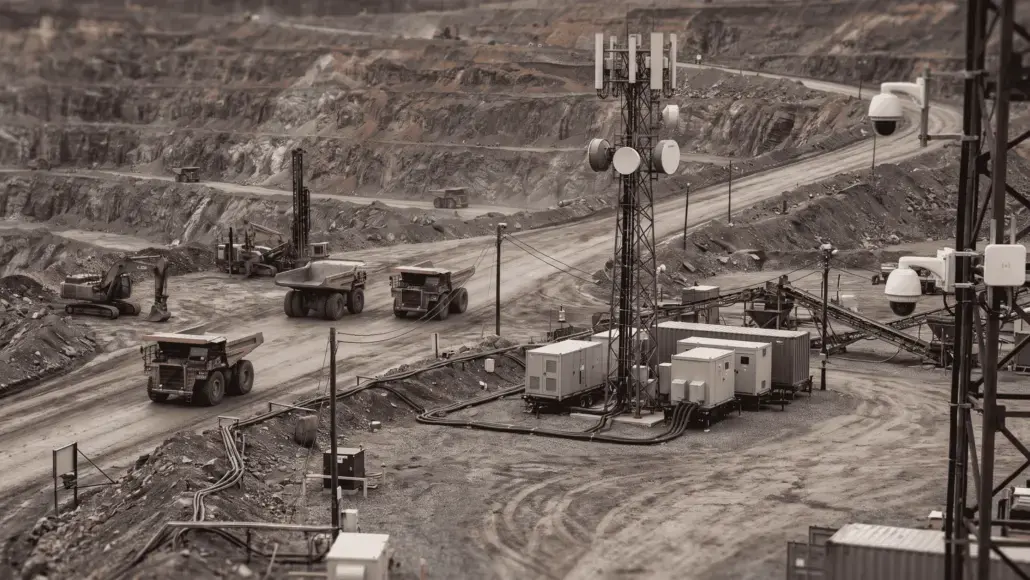
Mining operations are becoming increasingly dependent on reliable connectivity as more equipment, sensors and operational systems become digitally connected. Autonomous machines, remote-controlled equipment, industrial cameras and monitoring systems all generate continuous data that needs to move across large and often difficult operating environments.
This is making private 5G mining increasingly relevant as mines look for connectivity infrastructure that can support multiple operational applications at the same time. Unlike conventional wireless systems designed primarily for general connectivity, private cellular networks can be configured around the coverage, performance, security and traffic requirements of a specific mine.
Connectivity is Becoming Critical Infrastructure
The need for stronger connectivity is particularly evident in large and complex mining environments. Open-pit operations can cover extensive areas, while underground mines introduce tunnels, changing layouts and difficult radio conditions. As automation expands, connectivity interruptions can affect not only communications but also remote equipment operation, machine coordination and access to real-time operational information.
Private 5G provides a dedicated network environment that can combine wide-area coverage with controlled performance. In a documented remote-dozing deployment, an existing Wi-Fi network struggled to reliably connect more than two machines at distances of around 100 metres. A private 5G deployment subsequently provided coverage across up to 2.5 kilometres from a single radio, with uplink throughput of up to 175 Mbps in the reported configuration.
The difference illustrates why private 5G mining is increasingly being considered as operational infrastructure rather than simply another wireless connectivity option. Wider coverage and greater uplink capability can support applications that depend on continuous data exchange, particularly where moving or expanding physical network infrastructure is difficult.
Connected Equipment is Raising Network Requirements
The growth of autonomous and remotely operated equipment is increasing the amount and importance of data moving across mining sites. Machines can require connectivity for control signals, telemetry, video feeds, positioning, fleet coordination and equipment monitoring. Sensors add further streams of environmental and operational information.
A single network may therefore need to support several applications with different performance requirements. Remote operation can depend on predictable latency and stable uplink capacity, while monitoring systems may generate large volumes of sensor and video data.
This broader requirement is helping position private 5G mining within the development of connected mine infrastructure. The network becomes a common layer connecting machines, sensors and computing resources rather than serving one individual application.
The industry is still transitioning, however. Global private mobile network data recorded 134 mining deployments among 1,846 private network customers across 80 countries in August 2025, showing that adoption is established but still developing. The installed base also included substantial LTE and hybrid deployments, indicating that 5G is evolving alongside existing technologies rather than replacing them immediately.
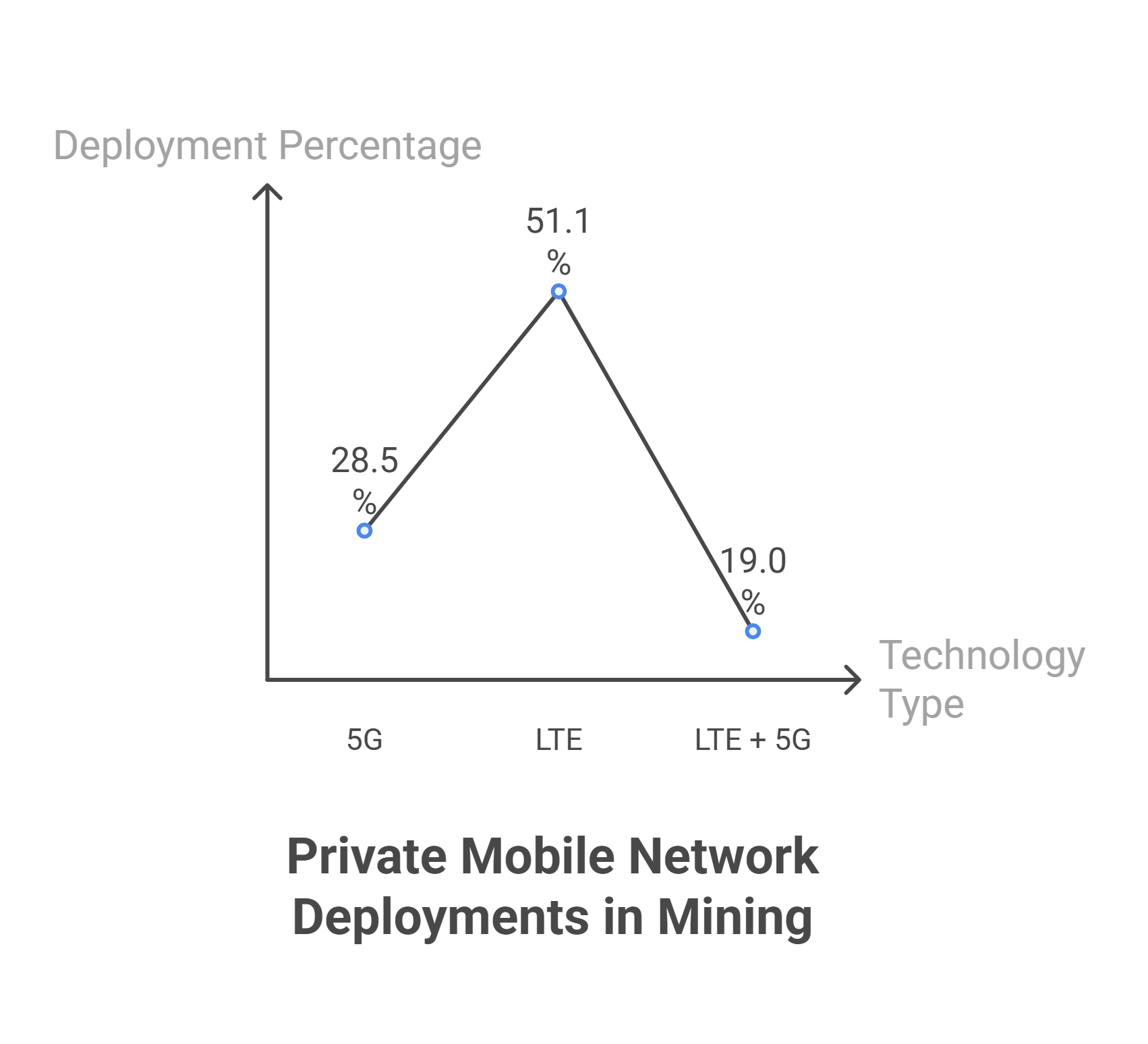
Key Takeaway: Private mobile networking is already established in mining, but the sector is transitioning gradually from LTE and hybrid deployments toward greater use of 5G.
As connected equipment becomes more widespread, reliable connectivity is becoming closely tied to the performance of mining automation and digital systems. Private 5G mining is therefore emerging as a foundation for connecting increasingly data-intensive operations, creating the network layer needed to support automation, remote control and real-time monitoring across the modern mine.
Private 5G is Connecting Automation, Data and Remote Operations
The growing use of autonomous equipment and remote operations is increasing the demands placed on mining connectivity. Trucks, dozers, drills, cameras and sensors can generate continuous streams of operational information, while remote-control applications require stable communication between machines and operators. This is making private 5G mining increasingly relevant as mines build connectivity infrastructure around more demanding industrial applications.
Private 5G is Supporting More Connected Operations
Remote equipment control is one of the clearest examples. In a documented mining deployment, private 5G provided connectivity across an area of up to 2.5 kilometres from a single radio, with uplink throughput of up to 175 Mbps and support for up to 12 dozers in the described configuration. The deployment replaced an existing Wi-Fi arrangement that had struggled to reliably connect more than two machines at around 100 metres.
The significance is not simply greater range. Remote operations require continuous transfer of control information and, in many cases, high-quality video. A network capable of maintaining stable uplink performance can provide the communication layer needed for operators to control equipment from a distance while maintaining visibility of the work environment.
Autonomous fleet operations create another requirement. Vehicles need to exchange information with fleet-management platforms and, in some applications, other machines. Positioning, telemetry, traffic information and task assignments can all depend on reliable connectivity. private 5G mining can provide a common network environment through which these different data flows can be managed.
Private 5G is Connecting Machines With Edge Computing
The role of the network also extends into computing. Mining applications increasingly combine connected equipment with edge processing so that operational data can be analysed close to where it is generated. This can be particularly useful for applications requiring rapid responses, such as machine monitoring, video analysis and automated control.
Research into private 5G for mining has examined network architectures combining dedicated 5G infrastructure with edge computing for applications such as teleoperation, fleet control and industrial IoT. In one technical study, remote-control applications were evaluated around end-to-end latency requirements of less than 20 milliseconds, illustrating the type of network performance that some automation scenarios may require.
This creates a direct relationship between connectivity and operational intelligence. Sensors and machines generate data, private networks transport it and edge systems can process it locally before the resulting information is used by operators or automated systems.
Private 5G is Supporting Multiple Applications on One Network
The broader opportunity is the ability to connect multiple mine technologies through a common infrastructure layer. A GSMA case study of a private 5G mining deployment in India combined a private RAN, dedicated core and edge computing with drone-based surveying, video, mission-critical communications and environmental IoT monitoring.
The deployment used a drone with a 10 kg payload for surveying and supported continuous monitoring of variables including temperature, humidity, pressure and hazardous gases. These applications demonstrate how a private network can serve operational, safety and monitoring functions simultaneously.
private 5G mining is therefore becoming less about deploying 5G for one isolated application and more about creating a connectivity platform for a broader connected mine.
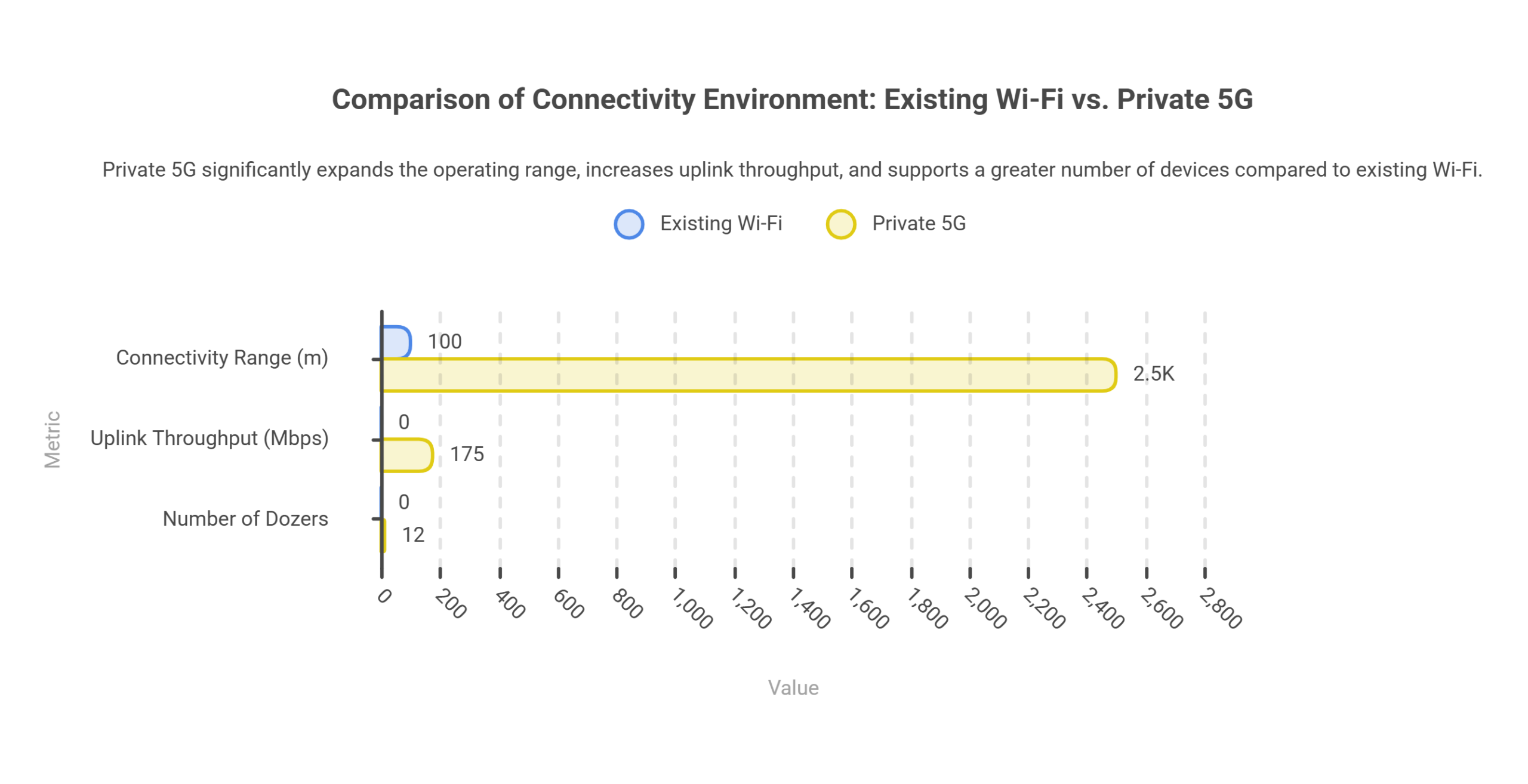
Key Takeaway: The documented deployment shows how private 5G can expand connectivity range and uplink capacity for remote mining equipment, supporting more data-intensive and geographically distributed operations.
As automation becomes more interconnected, reliable communication is becoming a prerequisite for coordinating machines, processing operational data and supporting remote intervention. private 5G mining can provide the connectivity layer that links these functions, allowing individual technologies to operate as parts of a more connected mining system.
Private 5G is Becoming the Connectivity Layer for Digital Mining
Mining operations are increasingly connecting autonomous equipment, remote-control systems, sensors, cameras and computing infrastructure. As these applications become more dependent on continuous data exchange, connectivity is becoming part of the operational architecture rather than a separate communications function.
This makes private 5G mining increasingly relevant to the development of connected mine environments. Dedicated cellular networks can provide controlled coverage and performance for applications that require reliable communication across large or complex operating areas.
The wider transition will depend on how effectively mines integrate connectivity with automation, edge computing and data systems. private 5G mining can provide the network foundation for these technologies, supporting more continuous communication between equipment, operators and digital systems. As connected operations expand, private 5G mining is therefore becoming an increasingly important component of the infrastructure required to build more automated, data-driven mines.