









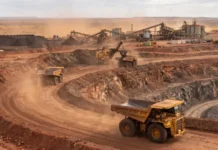


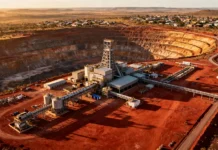
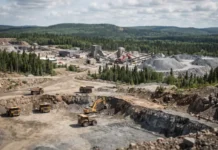



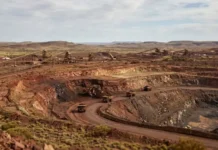
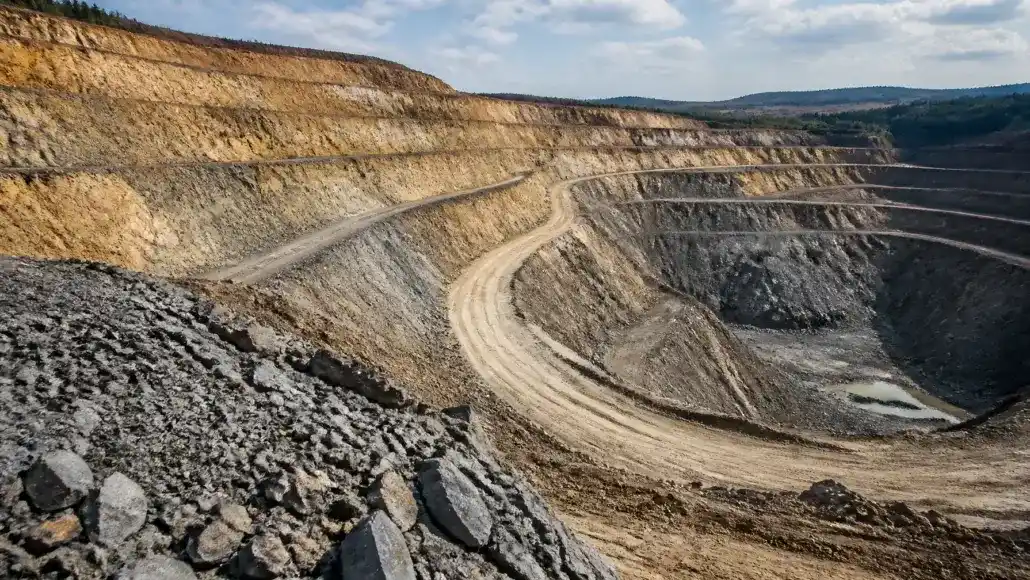

Every mining project is built upon a series of economic decisions that determine whether a mineral deposit can be developed profitably. While commodity prices, ore grades, and operating costs often receive significant attention, another equally important factor lies at the heart of surface mining economics: Strip Ratio. By measuring the volume of waste material that must be removed to access a given quantity of ore, strip ratio directly influences mining costs, project feasibility, and long-term operational performance.
In surface mining, extracting valuable minerals rarely involves accessing ore bodies that are immediately exposed at the surface. Instead, large volumes of overburden and waste rock must first be removed before economically recoverable ore can be mined. The amount of waste removal required relative to the quantity of ore recovered determines the strip ratio, making it one of the most important indicators used during mine planning, feasibility assessments, and production scheduling.
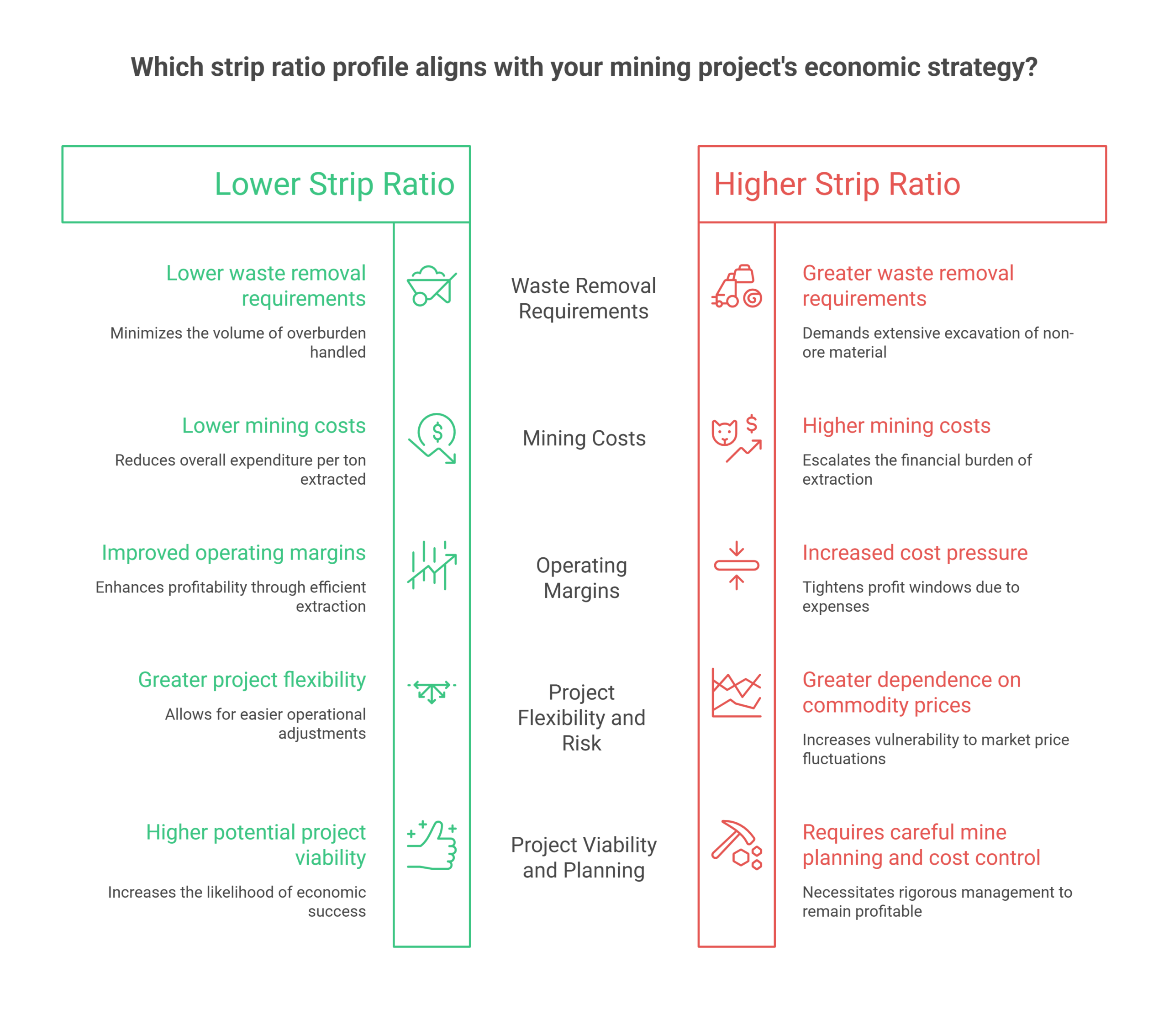
The economic significance of Strip Ratio extends throughout the entire life of a mining operation. A lower strip ratio generally reduces waste removal requirements and lowers mining costs, while a higher strip ratio increases equipment utilisation, fuel consumption, labour requirements, and overall operating expenses. As mining operations deepen over time, strip ratios often increase naturally, requiring companies to continuously balance production objectives with changing economic conditions.
Rather than serving as a fixed engineering measurement, Strip Ratio represents a dynamic economic parameter that influences investment decisions, reserve development, mine design, and long-term profitability. Understanding how strip ratio affects project economics allows mining companies to optimise resource extraction while maintaining sustainable and financially viable operations throughout the life of a mine.
Strip Ratio Forms the Foundation of Surface Mining Economics
Before a mining project advances from exploration to production, operators must evaluate how much waste material must be removed to access economically recoverable ore. This relationship forms the basis of Strip Ratio, which is commonly expressed as the quantity of waste rock removed for every unit of ore mined. Although the calculation itself is relatively straightforward, its influence on project economics is far-reaching.
Strip ratio provides an early indication of the mining effort required to recover a mineral resource. Projects with lower strip ratios generally require less overburden removal, resulting in lower mining costs and improved operating efficiency. Conversely, higher strip ratios increase the amount of non-revenue-generating material that must be excavated, transported, and managed before ore extraction can begin. As a result, strip ratio becomes a critical consideration when assessing the economic viability of a surface mining project.
Mining companies also use Strip Ratio to compare development alternatives during project planning. Different pit designs, production schedules, and mining sequences may produce varying strip ratios over the life of a mine. Evaluating these scenarios enables planners to identify approaches that maximise ore recovery while maintaining acceptable operating costs and supporting long-term project profitability.
Mining Costs Rise as Strip Ratio Increases
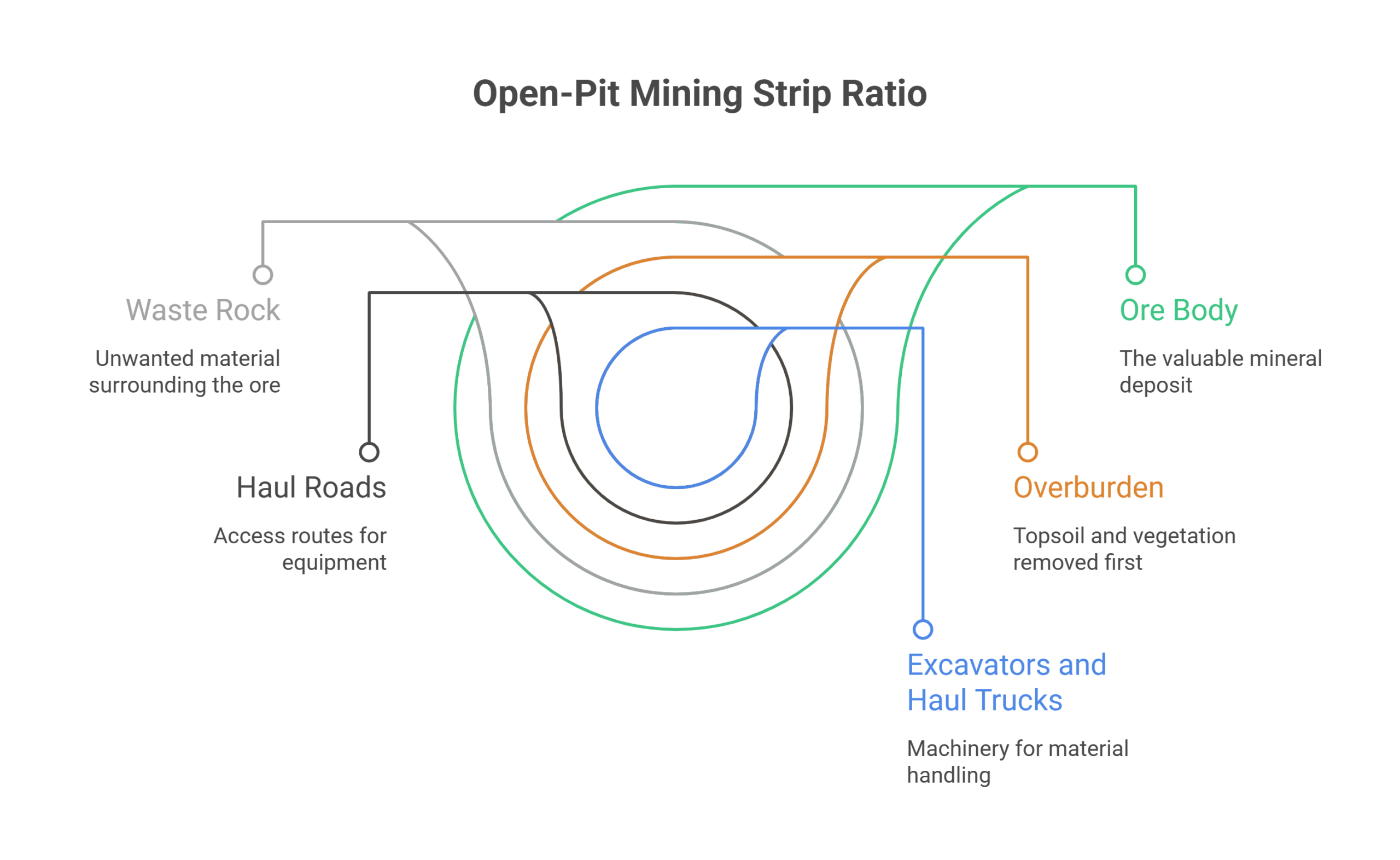
The relationship between Strip Ratio and mining costs is direct and significant. Every additional tonne of waste material removed requires drilling, blasting, loading, hauling, and disposal, all of which consume equipment capacity, fuel, labour, and maintenance resources without directly contributing to mineral production. As strip ratios increase, these activities account for a growing proportion of total operating costs.
Higher strip ratios also place greater demands on mine infrastructure and equipment fleets. Additional waste removal increases haul road usage, equipment operating hours, tyre wear, fuel consumption, and maintenance requirements. These cumulative effects can significantly influence unit mining costs, particularly in large open-pit operations where waste movement represents a substantial portion of total material handling.
Because strip ratios typically change throughout the life of a mine, mining companies continuously monitor their impact on production economics. During the early years of an operation, lower strip ratios often support stronger operating margins as ore is more easily accessible. As mining progresses to deeper sections of the deposit, increasing waste removal requirements may gradually raise operating costs, requiring careful production planning to maintain economic performance under changing mining conditions.
Strip Ratio Determines Long-Term Project Viability
Beyond influencing day-to-day operating costs, Strip Ratio plays a decisive role in determining whether a mining project remains economically viable throughout its lifecycle. During project evaluation, mining companies assess strip ratio alongside ore grades, recovery rates, commodity prices, and capital expenditure to estimate the long-term profitability of a mineral deposit. Even projects containing significant mineral resources may become commercially challenging if excessive waste removal substantially increases production costs.
Project viability also depends on how strip ratio changes over time. In many open-pit mines, the strip ratio increases as mining progresses deeper into the ore body, requiring greater volumes of waste rock to be removed before additional ore can be accessed. This gradual increase in mining effort can reduce operating margins unless supported by favourable commodity prices, efficient mine planning, or improvements in operational performance.
For this reason, strip ratio is not viewed as a fixed value but as a dynamic economic indicator that evolves throughout the life of a mine. Mining companies continuously reassess production strategies, mine designs, and extraction sequences to balance waste removal with profitable ore recovery. Maintaining an economically sustainable Strip Ratio is therefore essential for preserving project value while supporting long-term production objectives.
Ore Grades and Mine Planning Shape Strip Ratio Performance
Although Strip Ratio is a major driver of mining costs, it cannot be evaluated in isolation. Its economic significance is closely linked with ore grades, mine planning, and production scheduling, all of which influence how efficiently a mineral deposit can be developed. A higher strip ratio may remain economically acceptable if accompanied by high-grade ore capable of generating greater revenue per tonne, while lower-grade deposits often require more careful management of waste removal costs to remain commercially viable.
Mine planning plays a critical role in balancing these factors. Engineers design pit layouts, production sequences, and extraction schedules to optimise ore recovery while controlling waste movement throughout the mining lifecycle. Strategic planning allows operators to manage periods of increasing strip ratio by adjusting mining schedules, blending ore from different sections of the deposit, or sequencing extraction to maintain stable production and operating margins.
This integrated approach highlights the close relationship between Strip Ratio, ore grades, and long-term resource management. Rather than focusing on a single economic indicator, mining companies evaluate multiple operational variables together to support informed investment decisions and maximise the value of available mineral resources.
 Market Conditions Influence Strip Ratio Economics
The economic impact of Strip Ratio is also influenced by external market conditions. Commodity prices, fuel costs, labour expenses, and input costs all affect the amount of waste removal a mining project can economically support. During periods of strong commodity prices, mining companies may continue developing areas with relatively higher strip ratios because increased revenues help offset higher operating costs. Conversely, weaker market conditions often encourage operators to prioritise lower-strip-ratio areas where production can be maintained more efficiently.
Changes in operating costs have a similar effect. Rising fuel prices, equipment maintenance expenses, or labour costs increase the overall cost of moving waste material, making strip ratio an even more important factor in production planning. As economic conditions evolve, mining companies regularly update life-of-mine plans and financial models to ensure production strategies remain commercially sustainable.
This continuous evaluation demonstrates why Strip Ratio remains a dynamic measure of mining performance rather than a static engineering calculation. Its economic significance changes alongside market conditions, reinforcing its role as a key consideration in long-term project management and investment planning.
Conclusion
Strip Ratio remains one of the most influential economic indicators in surface mining, shaping decisions that affect project feasibility, operating costs, mine planning, and long-term profitability. By measuring the relationship between waste removal and ore extraction, it provides mining companies with a practical framework for evaluating the economic performance of a mining operation throughout its lifecycle.
While strip ratio naturally evolves as mining progresses, its impact can be effectively managed through disciplined mine planning, efficient production scheduling, and careful evaluation of market conditions. Understanding the interaction between Strip Ratio, ore grades, operating costs, and project economics enables mining companies to make informed decisions that maximise resource value while maintaining commercially sustainable operations. As surface mining projects continue becoming more complex, strip ratio will remain a fundamental measure guiding both operational strategy and long-term project viability.