








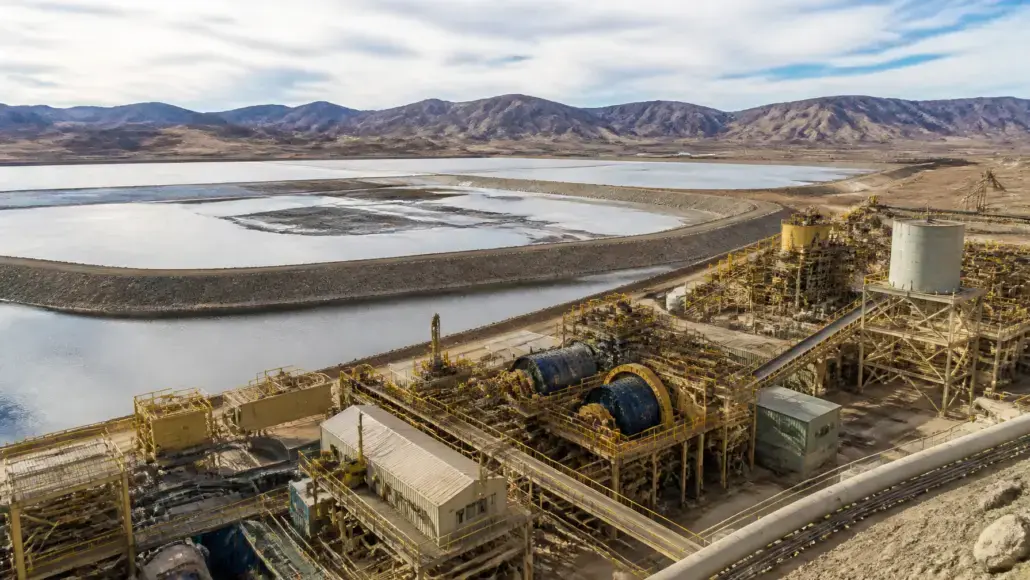

For decades, tailings reprocessing was largely viewed as a waste-management challenge. Material left behind after mineral processing had to be stored, monitored and eventually rehabilitated. But that view is changing as miners, governments and technology developers look again at what those deposits may contain.
Tailings can still hold quantities of valuable minerals that were not recovered during the original processing operation. In some cases, improvements in separation and extraction technologies, combined with stronger demand for critical minerals, can make previously uneconomic material worth reassessing. This is particularly relevant for minerals such as copper, cobalt, nickel and rare earth elements.
The policy environment is also moving in the same direction. The European Union’s Critical Raw Materials Act requires operators of relevant extractive-waste facilities to assess the quantities and concentrations of critical raw materials present and their technical and economic recoverability. Those assessments are intended to identify whether stored extractive waste could become another source of critical minerals.
India has taken a similar approach through its 2025 policy on recovering critical minerals from overburden, dumps and tailings. The policy calls for the location and quantity of minerals in tailings to be identified and their recoverability and economic viability to be evaluated.
Australia is also putting financial support behind critical-mineral processing. Its Critical Minerals Production Tax Incentive will provide a 10% refundable tax offset on eligible Australian processing expenditure from July 2027, and eligible feedstocks can include tailings containing critical minerals.
These developments point to a wider change in how mining waste is being viewed. tailings reprocessing is increasingly being considered as part of the mineral supply chain rather than only as a post-production responsibility.
Tailings are Moving from Liability to Mineral Feedstock
The opportunity starts with a simple question: what remains in the tailings after the original operation has recovered its main target minerals?
A deposit that was once processed primarily for copper or gold, for example, may contain smaller quantities of other minerals that were not worth recovering at the time. The economics can change when the value of those minerals increases, recovery technology improves or new processing methods become available.
But the presence of a mineral does not automatically make a tailings facility an economic resource. The operator still needs to know the grade, how much of the mineral can actually be recovered, what the process will cost and what will happen to the material left after reprocessing.
That is why the economic assessment is becoming as important as the geological assessment. The European framework, for example, specifically requires consideration of both the technical and economic recoverability of critical raw materials in extractive waste.
For mining companies, this creates a new way of looking at an existing asset. A tailings facility can potentially offer another source of mineral feedstock without the exploration and development cycle associated with finding an entirely new deposit. At the same time, reprocessing can potentially reduce the volume of material that remains to be managed.
The result is a change from asking only “How do we manage this waste?” to also asking “Can this material create value?”
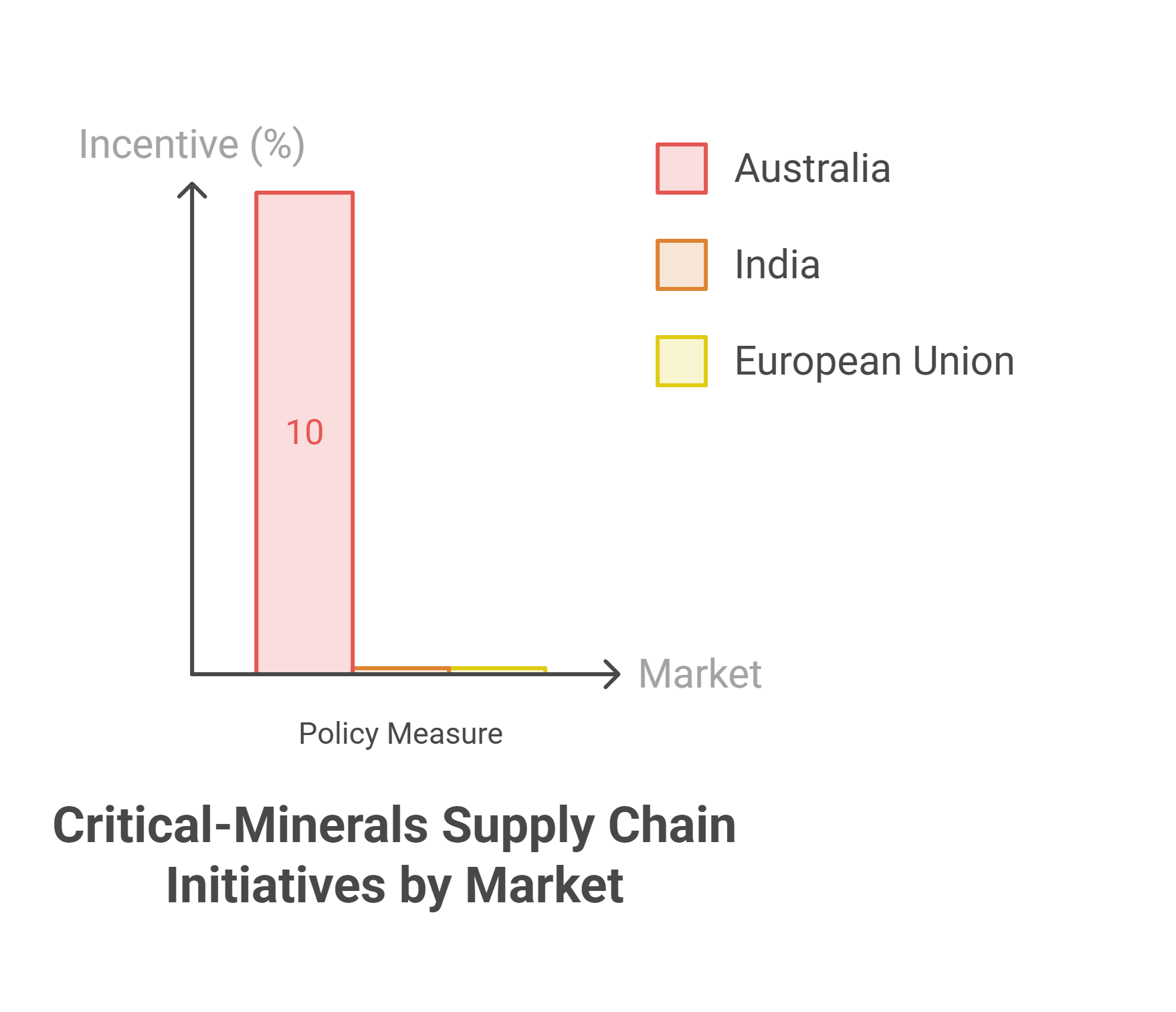
Key takeaway: Governments are increasingly treating mineral recovery from tailings as part of the wider critical-minerals supply chain, while still requiring economic and technical viability to be demonstrated.
The Economics of Reprocessing are Becoming More Important
The value of tailings reprocessing depends on more than the amount of metal left in a storage facility. Operators have to determine whether that material can be recovered at a cost that makes commercial sense. Recent research highlights the need to assess grade, recovery rates, processing technology, capital requirements, operating costs and the value of the resulting products before a reprocessing project can move forward.
That economic test is becoming more important as the mineral market changes. A tailings stream produced years ago may contain minerals that were not valuable enough to recover at the time. Today, stronger demand for critical minerals and improved processing technologies can change the calculation. A 2026 review of Canadian mine tailings, for example, identifies potential resources of lithium, nickel, cobalt, copper, rare earth elements, titanium, zirconium and niobium, while also emphasising that tailored processing flowsheets are needed to improve project economics.
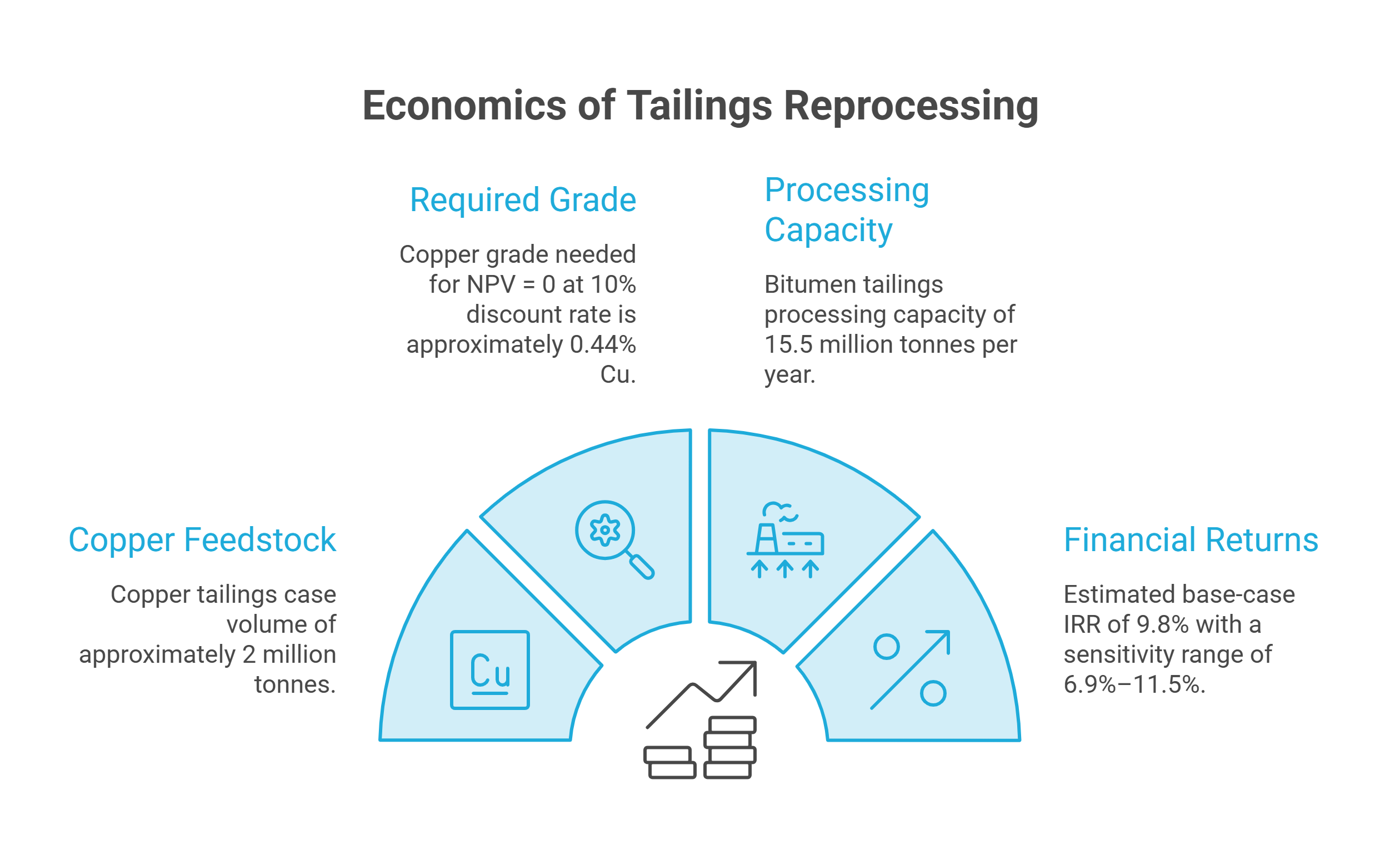
There is already evidence that the economics can work in specific circumstances. A study of copper tailings in Chile developed cost models for flotation, leaching and magnetic separation and found positive early-stage results for a case involving about 2 million tonnes of tailings. The modelling found that, for one leaching scenario, an extracted copper grade of around 0.44% was required to reach a net present value of zero at a 10% discount rate.
A separate 2025 techno-economic study of bitumen-extraction tailings modelled recovery of zircon and titanium from 15.5 million tonnes of tailings per year. Its base case produced an estimated 9.8% internal rate of return, with the result sensitive to plant capacity and zircon prices. The study also found that the estimated IRR could range from 6.9% to 11.5% under different input assumptions.
These examples show why tailings reprocessing cannot be judged simply by asking how much metal is present. The more important question is whether enough of that metal can be recovered, at the right cost and scale, to generate an acceptable return.
Technology is Expanding What Can be Recovered
Processing technology is becoming another part of the economic equation. Improvements in beneficiation, leaching, flotation and hydrometallurgy can make it possible to target minerals that were previously difficult or too expensive to separate.
Research is also beginning to demonstrate recovery at pilot scale. The EU-funded RAWMINA project, for example, has reported process results including 95% cobalt recovery, 60% antimony recovery, 92% iron extraction and 90% pyrite conversion in its tested processing routes. These are project-specific results rather than industry averages, but they demonstrate the potential of newer recovery approaches.
However, technical recovery does not automatically translate into a commercial project. A 2025 study of US mining practices found that large-scale tailings reprocessing remains limited, with industry professionals identifying practical and economic challenges as major barriers.
That gap between technical possibility and commercial viability is important. A project still needs adequate scale, predictable feed quality, suitable infrastructure, competitive energy and water costs, regulatory approvals and a market for the recovered minerals.
Conclusion
Tailings reprocessing is moving from being viewed mainly as a waste-management activity toward being assessed as a potential source of additional mineral supply. Higher demand for critical minerals, better recovery technologies and new policy support are making previously overlooked material more interesting to mining companies.
But the opportunity is not automatic. The value of a tailings facility depends on the concentration and recoverability of the minerals it contains, alongside processing costs, energy, water, infrastructure, permitting and the value of the recovered product.
For miners, the strategic opportunity is to evaluate tailings reprocessing as another potential mineral asset. The strongest projects will be those that can turn residual material into saleable minerals while also improving the long-term economics and management of existing waste.