







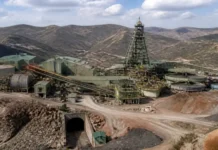
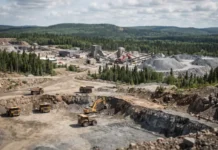
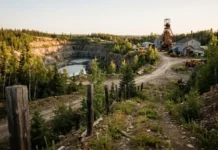
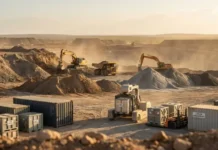


The US Department of Energy (DOE) has announced US$73 million in mining technology funding to support four projects designed to advance domestic mining capabilities and strengthen critical mineral supply chains across the country.
The funding is being delivered through the Office of Critical Minerals and Energy Innovation (CMEI) as part of the DOE’s Mine of the Future initiative. The program seeks to create domestic testing environments where new mining technology can be demonstrated and validated under real-world conditions before moving toward broader commercial use.
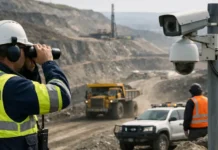
The four selected projects span a range of focus areas, including mine automation, connectivity, electrification, drilling, sensing, comminution, and energy management. Each project is intended to provide physical testing infrastructure where emerging solutions can be trialed in realistic mining settings.
Four Projects Selected Under the Initiative
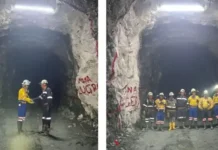
Innovative Wireless Technologies will build a national testbed spanning sites in Colorado, West Virginia, and Virginia. The testbed will combine underground and surface mining environments to evaluate next-generation digital, connectivity, and mine automation technologies.
The University of Arizona will develop an underground testbed in Sahuarita, Arizona, with a focus on electrification and energy-management technologies. The facility aims to support the transition of mining technology from development stages toward commercial deployment, while also targeting improvements in productivity and energy efficiency.
The Curators of the University of Missouri will create a multifunctional proving ground in Rolla, Missouri, integrating underground technology testing with advanced comminution research. This facility will also serve as a platform for workforce development related to next-generation mining innovation.
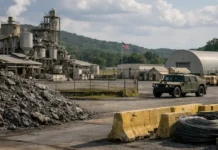
Southern Methodist University will establish what the DOE describes as the world’s first synthetic mine, located at an existing drilling and sensing test facility in Navasota, Texas. The project will offer a controlled environment for testing mining equipment, automation systems, and operational workflows before they are deployed in the field.
Broader Context for Critical Minerals Investment
The DOE says these projects are designed to accelerate the commercialization of mining technology while reducing US reliance on foreign sources of critical minerals.
“Investing in moving cutting-edge mining technologies out of the lab and into the field will help unleash America’s vast mineral resources,” US Secretary of Energy Chris Wright says. “President Trump is committed to rebuilding America’s mining industry, reducing our dependence on foreign adversaries, and securing the critical minerals that are foundational to our energy, manufacturing, and national security.”
Assistant Secretary of Energy Audrey Robertson says establishing real-world testing grounds will help accelerate technological breakthroughs across the domestic mining industry. “These investments will prove that American innovation can redefine what’s possible in modern mining,” Robertson says.
This mining technology funding follows a series of recent DOE investments in US critical mineral supply chains. Last month, the department selected seven projects for US$500 million in DOE funding to expand critical mineral processing, battery manufacturing, and recycling capacity. It also announced US$162 million for nine projects targeting the recovery of materials including scandium, copper, antimony, and rare earth elements from industrial feedstocks. Separately, DOE’s Critical Materials Innovation Hub awarded US$10 million to seven early-stage research projects focused on technologies for rare earths, gallium, copper, and other critical minerals.