









Africa’s drive to shift from being a supplier of raw minerals to a center of value-added processing will ultimately rely not on the accessibility of resources, but rather on if the continent is capable of overcoming infrastructure issues.
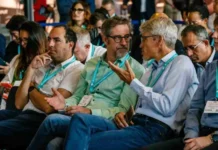
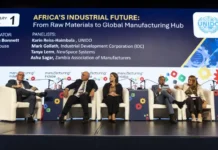
That was the primary point of view from a panel discussion at Investing in African Mining Indaba 2026, where policymakers and industry leaders as well as investors concurred that although Africa has approximately 30% of worldwide mineral reserves, roughly 10% of its current output is processed locally mainly due to the continued lack of energy, transport and logistics infrastructure.
The real question, the panellists stressed, was not whether Africa could build the infrastructure needed to raise that figure significantly but how it would do so and at what speed.
South Africa’s Department of Mineral Resources and Petroleum director-general Jacob Mbele said the continent’s goals are attainable, citing current infrastructure platforms including regional power pools and transport networks that can be broadened and coordinated more effectively.
“It’s an ambition that is realistic,” he said, noting that achievement will hinge on coordinating regulatory frameworks, planning for infrastructure, and regional cooperation. He also highlighted the need to rethink positions in the value chain, adding that extraction of minerals should not be seen as the sole obligation of mining companies.
One needs to free the industrialists to get that space, while mining houses do what they do most effectively, said Mbele.
A key theme to emerge from the discussion was the significance of developing regional hubs rather than trying to industrialise the whole of the continent. Some areas are better suited to concentrate on particular elements of the value chain, depending on their current strengths, Mbele said.
Elise Bungo, the BHP Vice President of Strategy and Market Intelligence, echoed this view, saying the debate was about execution, not feasibility.
The real question is not if Africa is going to do this, but how, she said. It is more about building layer by layer linking transportation and energy as well as partners in a cohesive way.
There is a need for early-stage collaboration between governments, industry and communities so as to reduce risk and hence make sure of long-term project viability, Bungo said. She pointed out that the world over, effective infrastructure development has been founded on bringing together various stakeholders and coordinating their interests from the very beginning.
For downstream industries, though, the infrastructure is not a secondary consideration, it is a deciding factor. For carmakers seeking to secure critical minerals when it comes to electric vehicles, infrastructure is a binary investment criterion, said VP M&A sustainable raw materials, Stellantis, Giuseppe Foglia. Even world-class assets without ports or roads as well as energy cannot be profitable, he said, adding that companies need long-term reliability across every aspect of the supply chain. He added that they don’t need raw materials, but they need processed materials.
Foglia said there was a demand for coordinated partnerships between upstream and downstream players, such as shared funding for industrial parks and processing capacity close to mining operations. Projects could be financially unsustainable without such integration.
Senior Adviser with the Organisation for Economic Co-operation and Development, Louis Maréchal, pointed out structural obstacles that still limit infrastructure development throughout the continent from a financing point of view. Africa was receiving some $80 billion a year in investment in infrastructure, but this was way behind the projected $150 billion needed each year so as to meet development needs, he said. Critically, only about 11% of present-day infrastructure funding is generated from the private sector, far less than in other regions.
According to Maréchal, this raises the question of why private capital is not flowing at the expected scale.
Key barriers were weak coordination among nations and within governments, inadequate project planning capacity and broader issues regarding investment attractiveness, like regulatory uncertainty as well as fiscal instability. Ivanhoe Atlantic chairman Peter Pham also addressed the question of risk and how it is viewed stating that while there is a real risk premium for Africa, it is often exaggerated. This is an excellent chance for investors that are prepared to engage in suitable de-risking strategies, he said.
Investors want predictable operating environments, said Pham, such as strong regulations of law and open regulatory frameworks as well as a social licence to operate. He also stressed the significance of multi-user infrastructure models that can enhance economic benefits and improve the viability of the project.
He drew on Ivanhoe Atlantic’s experience in West Africa, where there were existing but underutilised infrastructure assets including railways and energy networks that could be more fully integrated in order to underpin broader economic development.
One tends to look at what Africa doesn’t have, but not what it has and can better use,” he remarked.
This sentiment was backed up in the mention of the idea of corridor development, where infrastructure investments are intended to benefit multiple sectors beyond mining, such as agriculture and telecommunications as well as energy. Such integrated approaches can transform mining projects from solitary enclave operations into engines for broader economic growth.
A social licence to operate was also cited as a critical enabler for overcoming infrastructure issues. Mbele said this was stated in South Africa in mining licences through social and labour plans that mandate companies to make investments in community development initiatives such as schools, clinics and roads.
He said recent cooperation between government and industry, especially with regard to energy and rail constraints, has shown the ability of public-private partnerships to deal with infrastructure roadblocks.
However, panellists warned that the need for better enabling standards, including clearer regulations, improved coordination and more robust governance, will boost the participation of the private sector.
Maréchal underlined the significance of international standards along with policy frameworks to improve investment quality as well as environmental performance, adding that openness and predictability are essential to unlocking capital flows.
In the final analysis, the discussion emphasised that the infrastructure deficit in Africa is not just a financing problem but a more complex problem of coordination and governance as well as implementation.
As Bungo said, meeting these difficulties will need ongoing cooperation by multiple stakeholders with a focus on long-term instead of short-term outcomes.
The strategy happens to be partnership, Foglia said, stressing the importance of structured partnership with established responsibilities, roles, and implementation plans.
The global demand for critical minerals is growing, and the onus is on Africa to transform its resource wealth into industrialisation. If the continent is to do so, it will depend on its capacity to construct the infrastructure backbone that is needed to facilitate value addition and to do so in an equitable and coordinated as well as environmentally friendly manner.
As the discussion revealed, the building blocks are already present. Now the key is to connect them.