






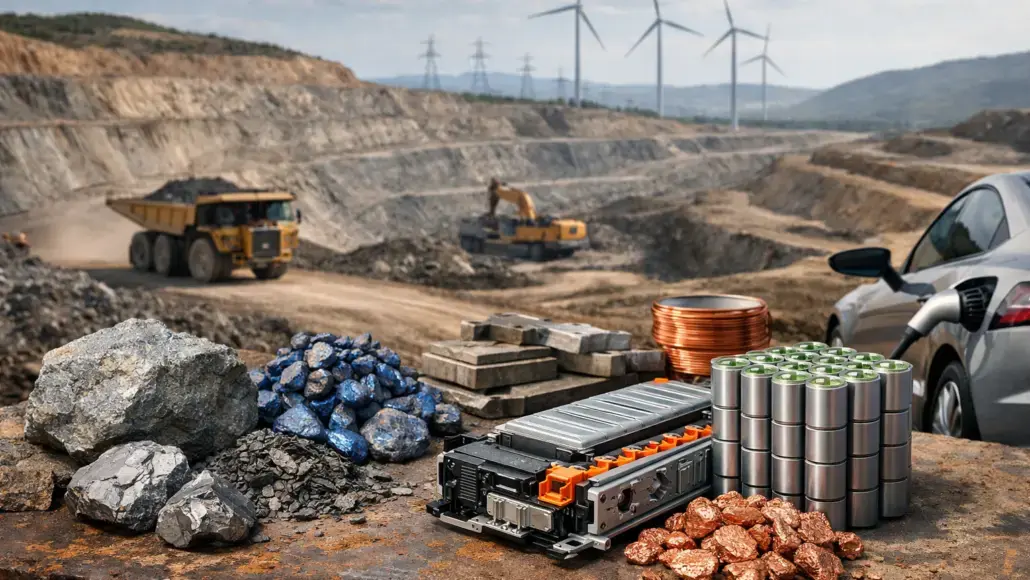

The global transition toward clean energy, advanced manufacturing, digital technologies, and electrified transportation has significantly increased demand for critical minerals. Materials such as lithium, nickel, cobalt, graphite, rare earth elements, and copper have become essential to modern industries, placing the mining sector at the centre of global economic and industrial development. While expanding mineral production remains important, the conversation surrounding critical minerals is increasingly shifting beyond extraction alone. Today, Value Addition in Critical Minerals is emerging as a key driver of long-term competitiveness, economic growth, and supply chain resilience.
For decades, many mineral-producing regions have relied primarily on exporting raw or minimally processed ores for further refining and manufacturing elsewhere. Although this model has supported mineral supply, it has often limited the broader economic benefits associated with downstream industrial activities. Processing, refining, and manufacturing typically generate greater economic value, create higher-skilled employment opportunities, and strengthen domestic industrial capabilities compared with the export of raw mineral resources alone.
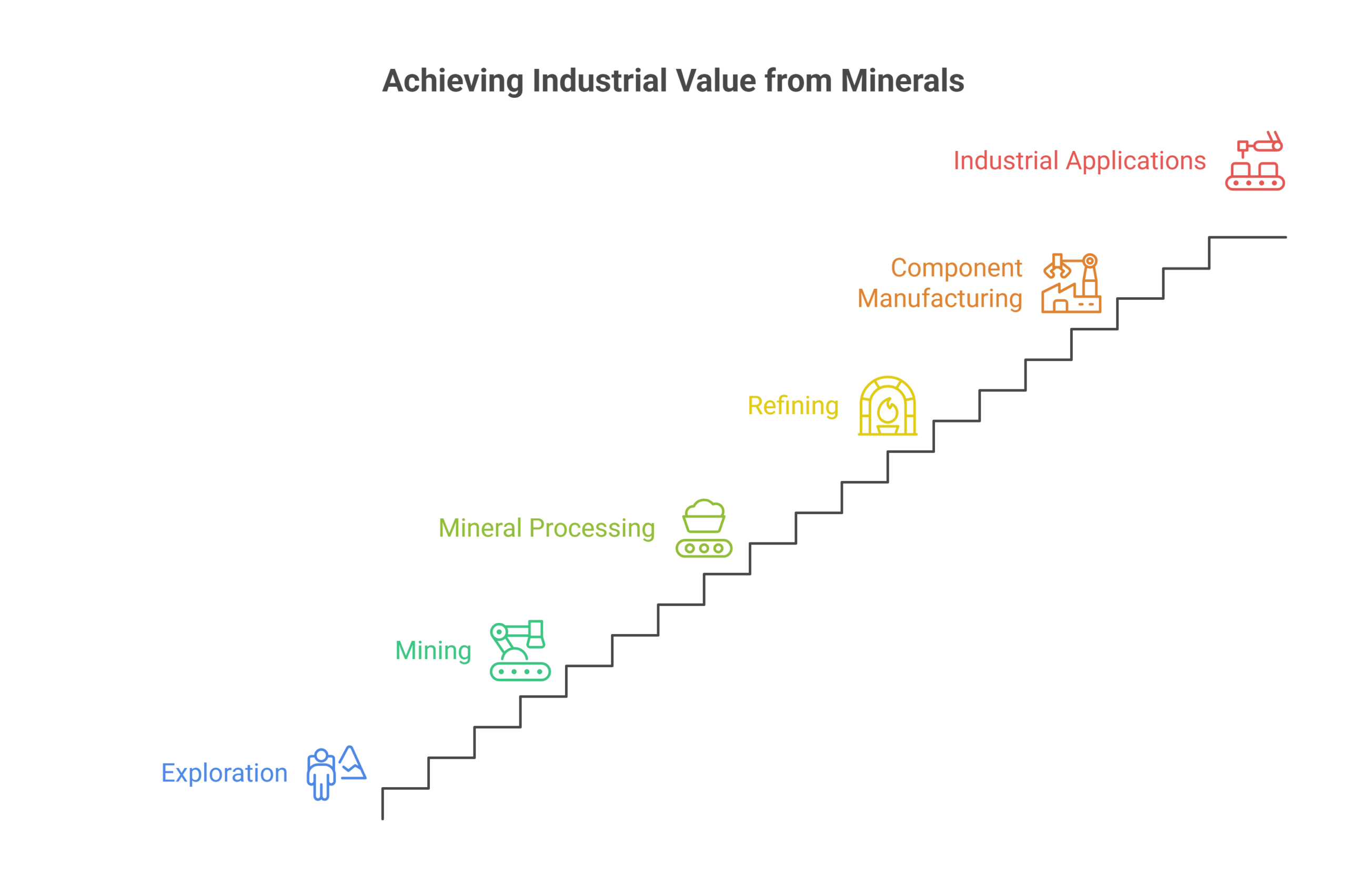
This changing landscape is encouraging governments, mining companies, and investors to reconsider how critical mineral resources are developed. Rather than focusing solely on increasing production volumes, greater attention is being given to building integrated value chains that extend beyond mining. By expanding mineral processing, refining capacity, and downstream industries, Value Addition in Critical Minerals enables resource-rich regions to capture a larger share of the economic value generated throughout the supply chain while supporting more resilient industrial development.
As global demand for critical minerals continues to grow, the ability to convert mineral resources into higher-value products is becoming an increasingly important measure of competitiveness. Value Addition in Critical Minerals is therefore evolving from an industrial objective into a long-term strategic priority that influences investment decisions, supply chain development, and the future direction of the global mining industry.
The Industry Is Moving Beyond Mineral Extraction
Mining has traditionally focused on discovering, extracting, and supplying mineral resources to global markets. While this remains the foundation of the industry, growing demand for critical minerals has highlighted the limitations of relying primarily on raw material exports. Increasingly, mining stakeholders are recognising that long-term economic value depends not only on the availability of mineral resources but also on the ability to process and refine them before they enter manufacturing supply chains. This shift is placing Value Addition in Critical Minerals at the centre of industry strategy.
The transition reflects broader changes across global supply chains. Manufacturers are seeking greater supply security, shorter processing networks, and more reliable access to refined mineral products that meet increasingly complex industrial requirements. As a result, investments are expanding beyond mine development to include processing facilities, refining operations, and supporting industrial infrastructure that create additional economic value closer to the source of extraction.
For mining companies, this evolution presents opportunities to participate in larger segments of the value chain while improving the long-term resilience of mineral supply. Rather than measuring success solely through production volumes, Value Addition in Critical Minerals encourages a more integrated approach that connects mining operations with downstream processing and industrial development, supporting broader economic growth alongside resource extraction.
Processing and Beneficiation Create Greater Economic Value
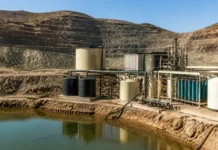
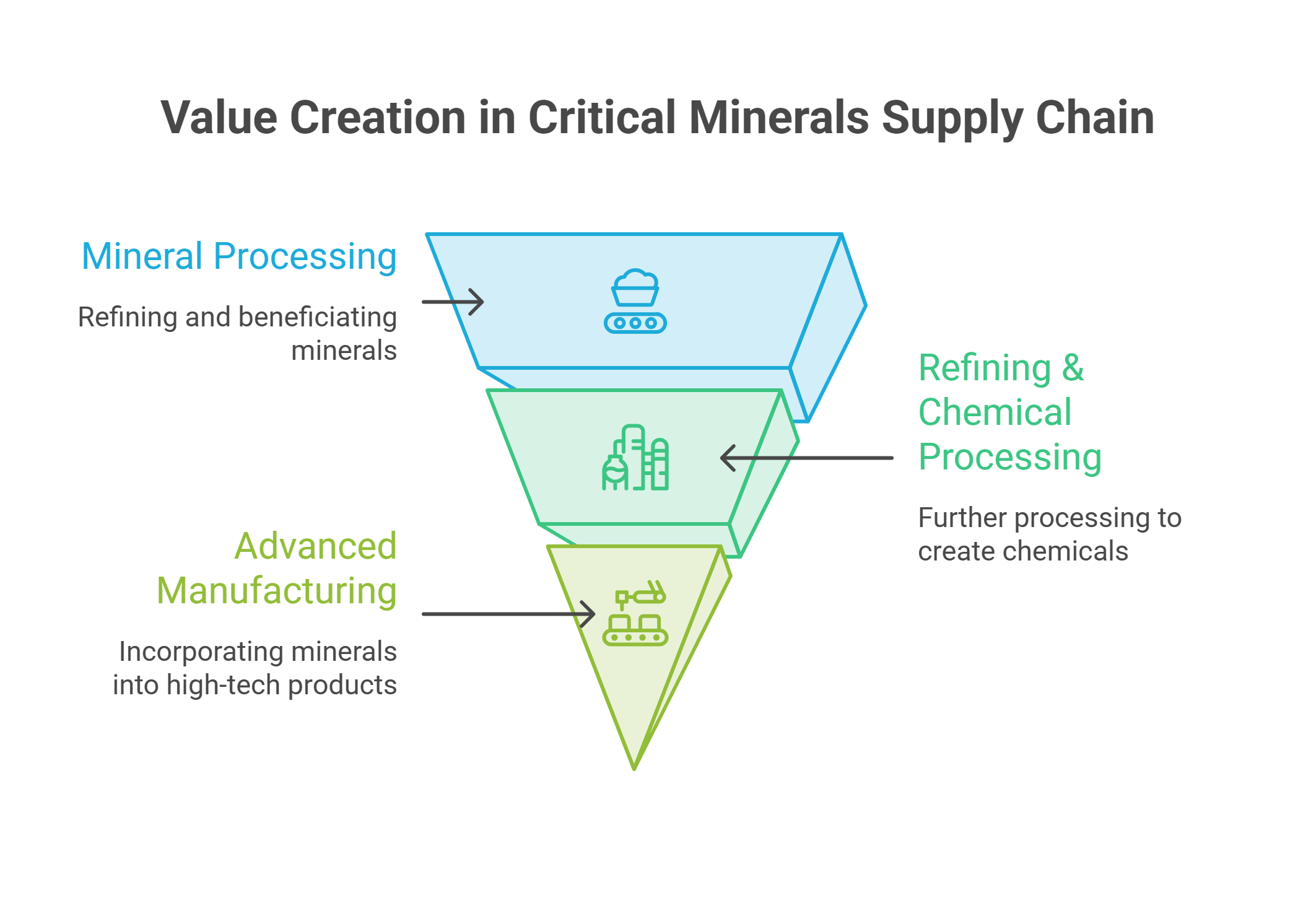
Processing and beneficiation represent some of the most important stages in creating additional value from critical mineral resources. After extraction, minerals often require crushing, concentration, separation, purification, or refining before they are suitable for industrial applications. Each of these stages increases the commercial value of the material while preparing it for use in manufacturing sectors that produce batteries, renewable energy technologies, electronics, and advanced industrial products.
Expanding these downstream activities enables mining regions to retain a greater proportion of the economic value generated from their natural resources. Instead of exporting raw ore with relatively limited processing, companies and governments are increasingly investing in facilities capable of producing higher-value intermediate or refined mineral products. This approach strengthens industrial capabilities while supporting broader economic diversification beyond primary resource extraction.
The growing emphasis on Value Addition in Critical Minerals also encourages closer collaboration across the mining value chain. Efficient coordination between extraction, mineral processing, refining, logistics, and manufacturing improves supply chain resilience while creating opportunities for long-term industrial growth. As demand for critical minerals continues to increase, processing and beneficiation are becoming essential components of competitive mining economies rather than optional downstream activities.
Infrastructure and Supply Chains Strengthen Value Addition
Building successful Value Addition in Critical Minerals extends well beyond mining and mineral processing. Efficient transportation networks, reliable energy supply, water availability, logistics infrastructure, and industrial facilities all play an essential role in supporting downstream activities. Without these foundational elements, moving minerals from extraction to processing and manufacturing becomes more costly and less competitive, limiting the overall economic value that can be generated from mineral resources.
Integrated supply chains have therefore become increasingly important within the critical minerals sector. Processing facilities located closer to mining operations can reduce transportation requirements, improve production efficiency, and create stronger connections between resource extraction and downstream industries. Well-developed logistics systems also support the consistent movement of raw materials, intermediate products, and refined minerals across domestic and international markets, strengthening supply chain resilience in an increasingly competitive global environment.
The development of supporting infrastructure also encourages broader industrial growth. As Value Addition in Critical Minerals expands, industries involved in engineering, equipment manufacturing, logistics, maintenance, and specialised services benefit from increased economic activity. This broader industrial ecosystem creates opportunities that extend beyond mining itself, contributing to long-term economic diversification while strengthening the competitiveness of critical mineral supply chains.
Investment and Policy Support Long-Term Competitiveness
Expanding Value Addition in Critical Minerals requires substantial long-term investment across multiple stages of the mining value chain. Processing plants, refining facilities, transport infrastructure, utilities, and industrial manufacturing operations involve significant capital expenditure and extended development timelines. As a result, investment decisions are closely influenced by regulatory stability, infrastructure readiness, market demand, and long-term industrial planning.
Stable policy environments provide greater confidence for investors seeking to develop downstream industries. Clear regulatory frameworks, transparent permitting processes, and consistent industrial policies help reduce investment uncertainty while supporting the development of integrated mineral value chains. Rather than focusing solely on increasing extraction volumes, many jurisdictions are placing greater emphasis on encouraging domestic processing, refining, and industrial development that generate additional economic value from existing mineral resources.
Collaboration between governments, mining companies, financial institutions, and industrial partners is also becoming increasingly important. Developing competitive Value Addition in Critical Minerals often requires coordinated investment across mining, infrastructure, energy, logistics, education, and manufacturing sectors. Strengthening these connections enables the mining industry to support wider industrial development while improving long-term competitiveness within global critical mineral markets.
Challenges Continue to Influence Value Addition
Despite the opportunities presented by Value Addition in Critical Minerals, several challenges continue to influence the pace of downstream development. Processing and refining facilities require significant capital investment, advanced technical expertise, reliable infrastructure, and access to skilled workforces. These requirements often extend beyond the capabilities of mining operations alone, making collaboration across industries and institutions essential for long-term success.
Global competition also shapes investment decisions. Established processing hubs benefit from mature industrial ecosystems, experienced workforces, and integrated supply chains that have developed over many years. New processing regions must therefore balance infrastructure investment, operating costs, regulatory certainty, and market access to remain competitive within international critical mineral markets.
The transition toward greater value addition is therefore not solely an industrial objective but a long-term development process. Successfully expanding downstream capabilities requires coordinated planning across mining, energy, transportation, education, and manufacturing sectors. As demand for critical minerals continues to increase, overcoming these challenges will become increasingly important for strengthening resilient and competitive supply chains.
Conclusion
The future of the critical minerals industry is increasingly being shaped by the ability to create value beyond extraction. While mining remains the foundation of global mineral supply, Value Addition in Critical Minerals is becoming a defining factor in long-term competitiveness, industrial growth, and supply chain resilience. Expanding processing, beneficiation, refining, and downstream manufacturing enables greater economic value to be captured throughout the mineral lifecycle while supporting broader industrial development.
Achieving meaningful Value Addition in Critical Minerals requires more than abundant mineral resources. It depends on strong infrastructure, efficient supply chains, supportive investment environments, and coordinated industrial planning that connects mining with downstream industries. As global demand for critical minerals continues to accelerate, the ability to transform raw resources into higher-value products will remain central to building sustainable, competitive, and resilient mining economies.