








A cut off grade may look like a simple technical boundary in mine planning, but it can influence much more than whether material is classified as ore or waste. It can determine how much material reaches the processing plant, how much is sent to stockpiles, how quickly a deposit is depleted and how much value a mine can generate over its life.
Traditionally, material above the cut-off grade is treated as ore, while material below it is treated as waste. But that threshold does not always need to remain fixed. Research into cut-off-grade optimisation shows that the most economic level can change as mining, processing and economic conditions change. A recent study also notes that cut-off-grade policies can be optimised alongside stockpiling, waste management, processing routes and geological variability rather than being treated as an isolated decision.
This makes cut off grades increasingly relevant to mine economics. Metal prices can change, operating costs can move higher, processing capacity can become constrained and recovery rates can improve. Each of these factors can alter the value of material that once sat below the economic threshold.
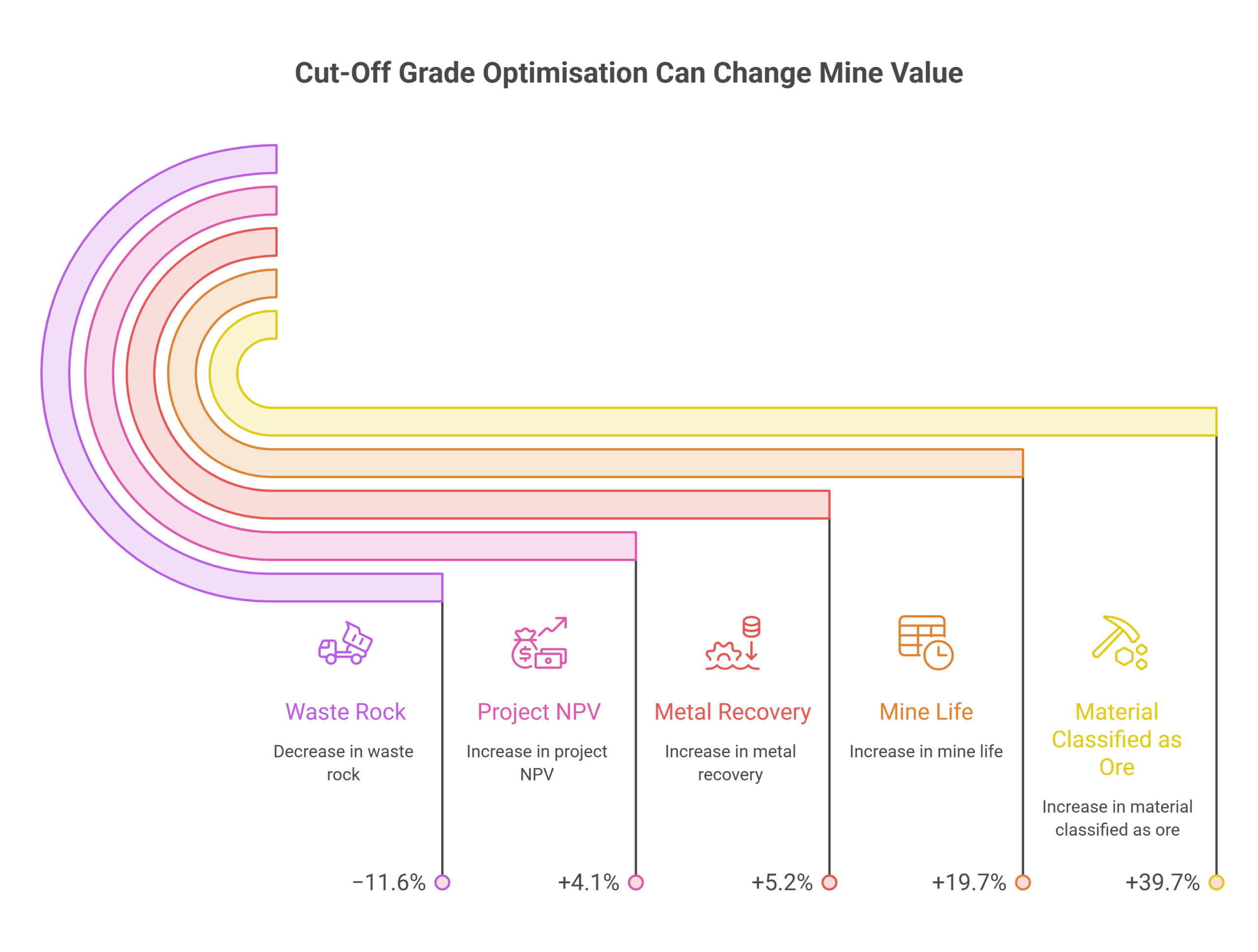
The effect can be significant. A 2025 copper-deposit study that combined cut-off-grade optimisation with stockpiling and pre-concentration reported a 4.1% increase in project net present value, alongside a 19.7% extension in mine life, 5.2% higher metal recovery and an 11.6% reduction in waste rock. The study also found that the amount of material classified as ore increased by 39.7%. These are results from a specific modelled case, not a guaranteed outcome for every mine, but they show how changes to the cut-off policy can affect several parts of asset performance at once.
Cut Off Grades are Becoming More Dynamic
The economics behind cut off grades are increasingly tied to the wider production system. A cut-off grade is not simply a question of how much metal exists in the rock. It depends on whether that metal can be mined, processed and sold at a sufficient margin.
Mining costs determine how expensive it is to extract the material. Processing costs determine whether lower-grade material can be treated profitably. Recovery determines how much of the contained metal can actually become saleable product. Metal prices determine the potential revenue. Together, these factors influence whether material is worth sending through the production system.
That is why researchers have increasingly moved away from treating cut-off grades as a single fixed number. Models now examine changing economic conditions, stockpiling and multiple processing destinations to identify policies that can maximise value over the life of an operation.
For miners, the practical implication is important. A deposit does not necessarily have one permanent economic boundary between ore and waste. The most valuable approach can change as the mine moves through different stages of its life.
Key takeaway: Optimising the cut off grade can influence not just ore classification, but recovery, waste, mine life and the overall value of a mining project.
Lower Grade Material is Becoming a Strategic Resource
The economics of cut off grades become even more interesting when material that falls below the current threshold is not treated as permanent waste. In many operations, lower-grade material can be stockpiled and processed later when commodity prices, operating costs or available processing capacity make it more attractive.
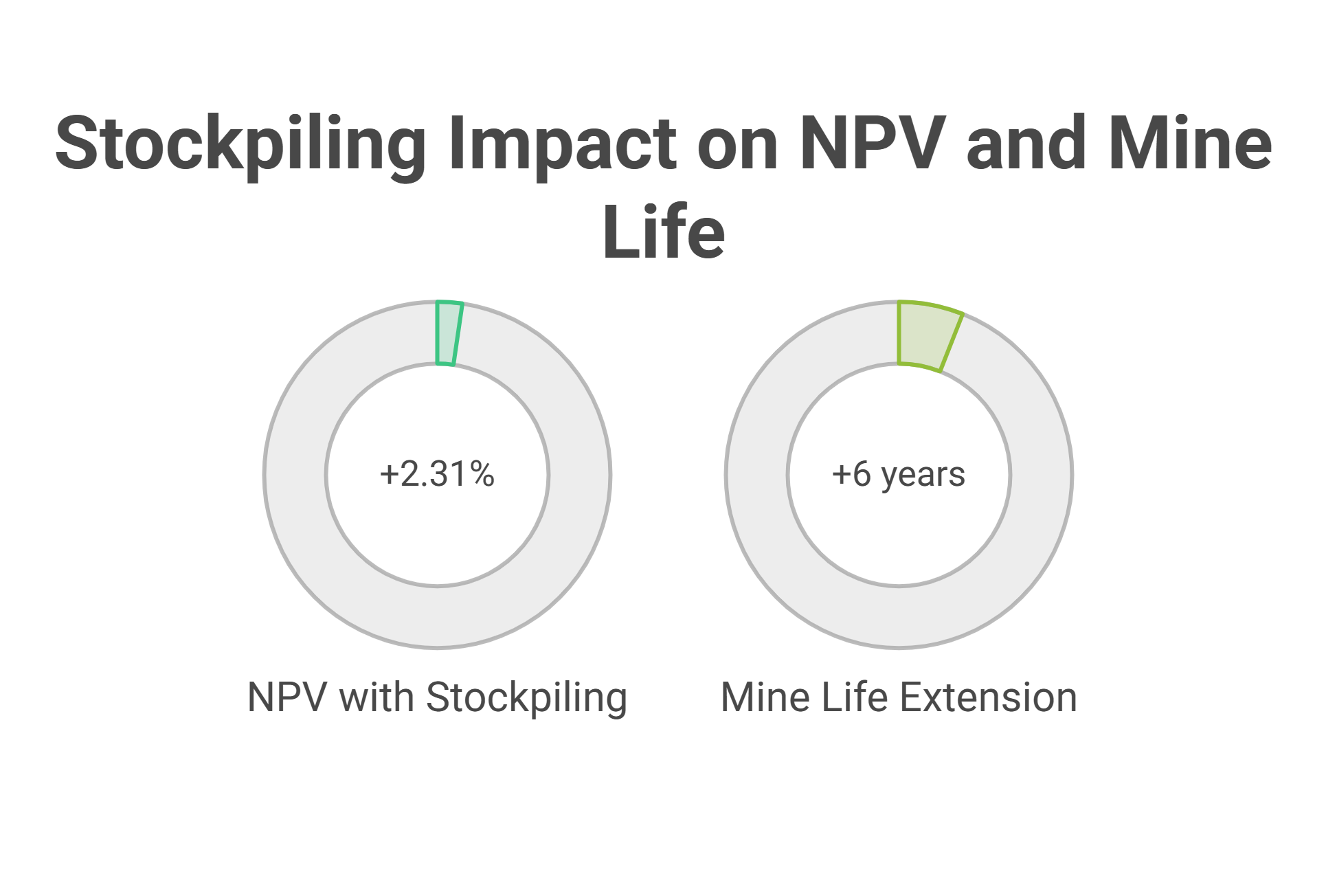
Stockpiling gives mine operators another option. Instead of forcing all available material through the plant immediately, the operation can separate material by grade and decide when each part creates the most value. This becomes particularly useful when processing capacity is limited or when the economic value of the ore changes over the life of the mine. Recent research on open-pit mine scheduling found that including stockpiling in cut-off-grade optimisation increased NPV by 2.31% and extended mine life by six years compared with a scenario without stockpiling.
The underlying idea is simple. A material that is uneconomic to process today may not remain uneconomic throughout the life of a mine. Holding it separately gives the operator the option to revisit that decision later rather than removing the material from the resource base entirely.
This makes cut off grades closely connected to production scheduling. The decision is no longer only about how much metal is contained in a tonne of rock. It is also about when that tonne should be mined, where it should go and when it should enter the processing stream.
The Cut Off Decision is Becoming an Asset Value Decision
The broader value of the approach becomes clear when cut-off grades are considered together with mining, processing and stockpiling decisions. Research on cut-off-grade optimisation shows that these factors can be linked to project value rather than treated as separate technical decisions. In a 2025 copper case study, an integrated optimisation approach increased metal recovery by 5.2%, reduced waste rock by 11.6%, extended mine life by 19.7% and increased the amount of material classified as ore by 39.7%. The combined effect produced a 4.1% increase in project NPV.
These figures come from a specific modelled deposit, so they should not be treated as a standard return that every mine can achieve. What they demonstrate is the broader economic potential of changing how material is classified and scheduled.
The logic also appears in real project planning. A 2025 technical study for a copper project described a variable cut-off grade strategy designed to optimise recovery during the early years of production and maximise mine life later in the plan.
That is the strategic shift taking place. The operator is not necessarily looking for one cut-off grade that remains unchanged for the entire mine life. It can assess the threshold against the stage of the mine, available processing capacity, expected prices, recovery rates and the value of preserving material for later.