













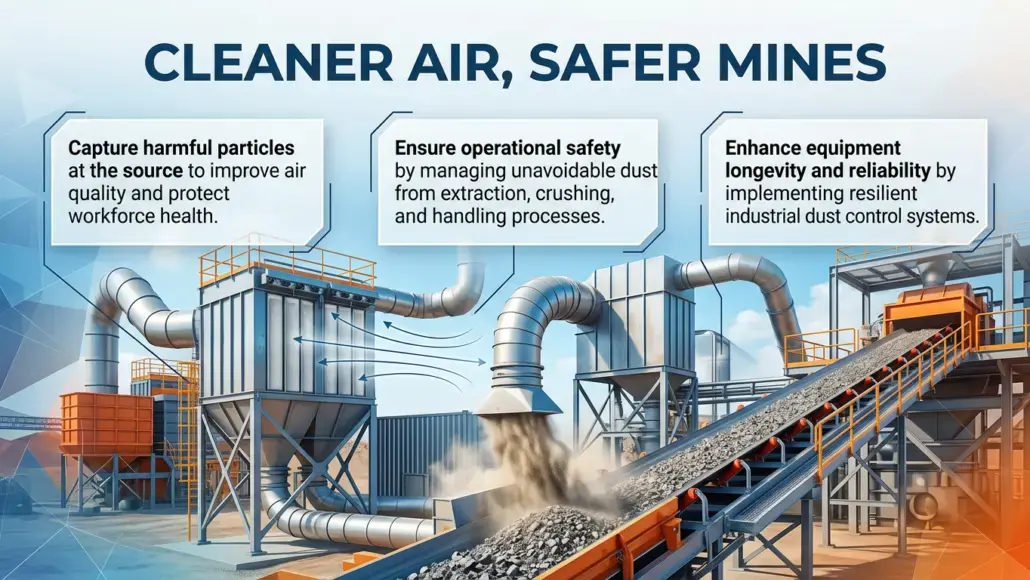

In the mining industry, the generation of airborne particulate matter is an unavoidable consequence of extraction, crushing, and material handling processes. Without effective management, this dust poses a severe threat to human health, operational safety, and equipment longevity. The implementation of resilient industrial dust extraction systems is therefore a critical priority for mine operators worldwide. These systems are designed to capture and remove harmful particles at the source, preventing them from dispersing into the atmosphere of processing plants, workshops, and underground bays. By maintaining high air quality standards, mining companies not only protect their most valuable asset, their workforce, but also ensure the reliable performance of the complex machinery that drives their production.
The challenges of dust management in a mining environment are uniquely demanding due to the high volumes of material processed and the extreme abrasiveness of the mineral dust. Traditional ventilation methods often prove insufficient for handling the concentrated dust loads found at conveyor transfer points or within primary crushers. Consequently, specialized industrial dust extraction systems that utilize high-capacity centrifugal fans, cyclonic separators, and advanced baghouse filters have become the industry standard. These systems are engineered to operate continuously in harsh conditions, providing the high-velocity suction required to entrain even the finest and most hazardous particles before they can be inhaled by personnel or infiltrate sensitive mechanical components.
Mitigation of Respiratory Risks Through Advanced Air Filtration
The primary motivation for investing in superior dust management is the protection of worker health. Prolonged exposure to respirable crystalline silica and other mineral dusts can lead to debilitating and irreversible respiratory diseases such as silicosis and coal workers’ pneumoconiosis. Industrial dust extraction systems play a vital role in mitigating these risks by significantly reducing the concentration of these harmful particles in the breathing zone of employees. By utilizing high-efficiency particulate air (HEPA) filters and membrane-coated filter media, modern extraction units can achieve capture rates exceeding 99.9%, ensuring that the air returned to the facility or discharged to the environment is remarkably clean.
Filter selection is a critical component of system design, as the physical properties of the dust can vary widely between different mine sites. Some dusts are highly abrasive, requiring heavy-duty filter bags with reinforced seams, while others may be moisture-sensitive or prone to static accumulation. Advanced industrial dust extraction systems offer a range of specialized filter media that can be tailored to the specific mineralogy of the site. This customization ensures that the system maintains optimal airflow and filtration efficiency over a long service life, reducing the need for frequent filter replacements and the associated maintenance costs.
In addition, the design of the capture hoods and ducting is essential for maximizing the effectiveness of the system. Engineers must carefully calculate the required capture velocity at each source point to ensure that the dust is successfully entrained without being hindered by cross-drafts or turbulent airflow. The use of computational fluid dynamics (CFD) modeling has revolutionized this process, allowing for the precise optimization of hood geometries and duct layouts before any physical installation occurs. This scientific approach to air management ensures that industrial dust extraction systems deliver the highest possible level of protection for the workforce, creating a safer and more productive working environment.
Operational Benefits of Reducing Dust Accumulation on Machinery
Beyond the obvious health benefits, the control of airborne dust offers significant operational advantages. Dust accumulation on mechanical components acts as a powerful abrasive, accelerating the wear of bearings, seals, and gear teeth. By removing these particles from the environment, industrial dust extraction systems directly contribute to the extension of equipment service life. This is particularly important for high-precision machinery and electronic control systems, which are highly sensitive to contamination.
- Reduced wear on moving parts by preventing abrasive dust from entering lubricant reservoirs and bearing housings.
- Improved visibility in processing facilities, which enhances safety and allows for easier visual inspection of equipment.
- Lower risk of dust-related fires and explosions, especially in facilities handling combustible materials such as coal or certain sulfides.
- Decreased housekeeping costs as the volume of dust settling on floors, walkways, and structural members is minimized.
The economic impact of dust-induced wear can be substantial. For example, the presence of fine mineral dust in a haul truck’s engine intake can lead to rapid piston ring wear and increased oil consumption, necessitating a premature engine overhaul. Similarly, dust accumulation in electrical cabinets can lead to overheating and short circuits, resulting in costly unplanned downtime. By integrating industrial dust extraction systems into the facility design, mining companies can protect their capital investments and ensure that their equipment operates at peak performance throughout its intended lifecycle.
Engineering Considerations for High-Volume Extraction Networks
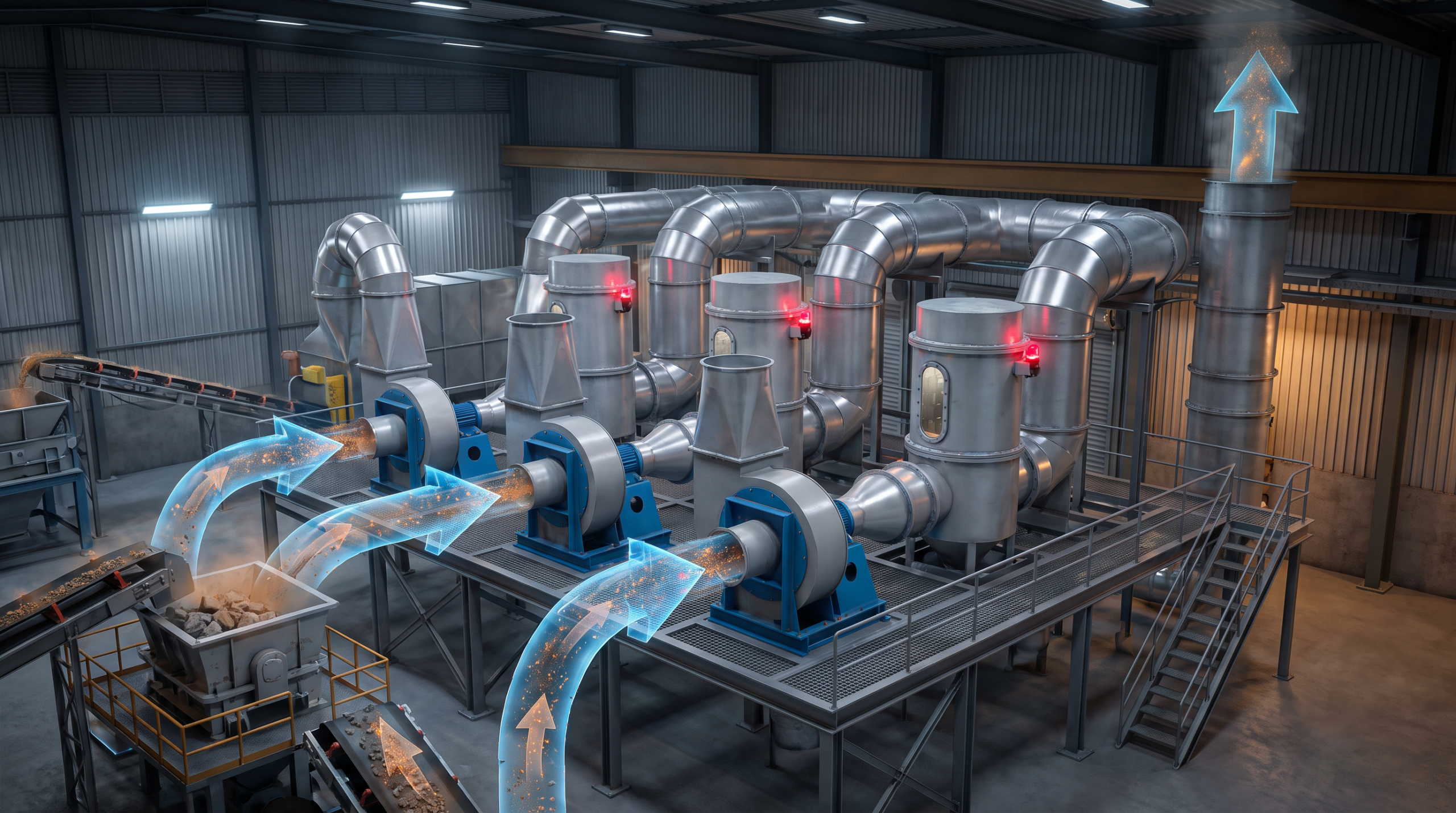
Designing an extraction system for a large-scale mining facility requires a deep understanding of aerodynamics and material handling. The system must be capable of moving immense volumes of air while maintaining sufficient velocity within the ducting to prevent dust from settling and creating blockages. This is a complex engineering challenge, as the system must often service multiple source points across a large physical area. High-performance industrial dust extraction systems utilize variable frequency drives (VFDs) on their fan motors, allowing the system to adjust its performance based on the actual demand at any given time.
The material of construction for the ductwork and filter housings is another critical consideration. In many mining applications, the dust is not only abrasive but also potentially corrosive. The use of wear-resistant alloys or specialized ceramic liners in high-velocity sections of the ducting can significantly extend the life of the system. Additionally, the system must be designed for ease of maintenance, with accessible inspection hatches and automated filter cleaning mechanisms. These features ensure that the system remains operational with minimal intervention, providing the continuous protection required in a 24-hour mining operation.
Integrating automated sensors within these networks allows for real-time monitoring of airflow, a process that can be further optimized by ai-based quality inspection of filter membranes to ensure maximum filtration efficiency. These sensors can detect changes in pressure drop across the filter media, providing an early warning of potential blockages or filter failures. By linking this data to a central control system, operators can proactively manage the performance of their industrial dust extraction systems, ensuring that they always operate within their designed parameters. This level of technical sophistication is essential for maintaining the high air quality standards required by modern mining regulations.
Integration of Smart Sensors for Real-Time Air Quality Monitoring
The move toward “Smart Mines” has seen the integration of sophisticated sensing technologies within air management systems. Real-time air quality monitors can now detect a wide range of pollutants, from fine particulate matter (PM2.5 and PM10) to hazardous gases like nitrogen oxides and carbon monoxide. By connecting these monitors to the control system of the industrial dust extraction systems, the extraction rate can be automatically adjusted in response to changing air quality levels. This ensuring that the system provides maximum protection when it is most needed while saving energy during periods of lower activity.
Data logging and analytics also play a vital role in modern dust management. By analyzing long-term air quality data, mine managers can identify patterns and trends that may indicate underlying issues with production processes or maintenance procedures. For example, a sudden spike in dust levels at a specific conveyor transfer point could signal a failing seal or a misaligned chute. This allows for targeted maintenance interventions that address the root cause of the problem, rather than just treating the symptom. The use of digital dashboards and mobile alerts ensures that this information is always available to the people who need it, enabling a proactive and data-driven approach to safety and environmental management.
The transparency provided by real-time monitoring is also valuable for building trust with local communities and regulatory bodies. By demonstrating a consistent commitment to high air quality standards, mining companies can protect their reputation and ensure their long-term viability. The ability to provide verified data on air quality performance is a powerful tool for managing the complex social and environmental context of modern mining. As technology continues to evolve, the integration of smart sensors into industrial dust extraction systems will become an increasingly important feature of sustainable and responsible mining operations.
Compliance with Environmental Regulations and Safety Standards
Global mining operations are subject to increasingly stringent environmental and safety regulations regarding air quality and dust emissions. These regulations set strict limits on the concentration of respirable dust in the workplace and the volume of particulate matter that can be discharged into the atmosphere. Failure to comply with these standards can result in significant fines, legal liabilities, and the potential suspension of operations. Industrial dust extraction systems are the primary tool for achieving and maintaining compliance with these critical requirements.
Achieving compliance requires a comprehensive approach that includes system design, regular performance testing, and meticulous record-keeping. Many jurisdictions require third-party audits of dust management systems to ensure that they are operating effectively and according to the manufacturer’s specifications. High-quality industrial dust extraction systems are designed with these requirements in mind, featuring built-in monitoring and diagnostic tools that simplify the compliance process. By investing in proven and reliable technology, mine operators can avoid the risks associated with non-compliance and focus on their core production objectives.
Finally, the role of leadership and culture in dust management cannot be overlooked. While advanced technology is essential, it must be supported by a strong organizational commitment to health and safety. This involves regular training for personnel on the importance of air quality and the correct operation of extraction systems. A culture that prioritizes cleanliness and safety will ensure that industrial dust extraction systems are utilized to their full potential, providing the highest possible level of protection for the workforce and the environment. As the mining industry continues to evolve, the integration of advanced air management technologies into the daily workflows of the mine site will remain a cornerstone of operational excellence and corporate responsibility.