










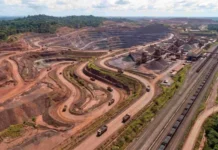
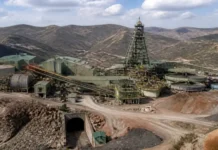
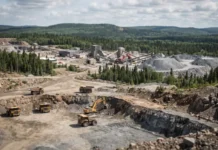


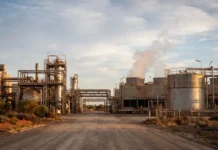

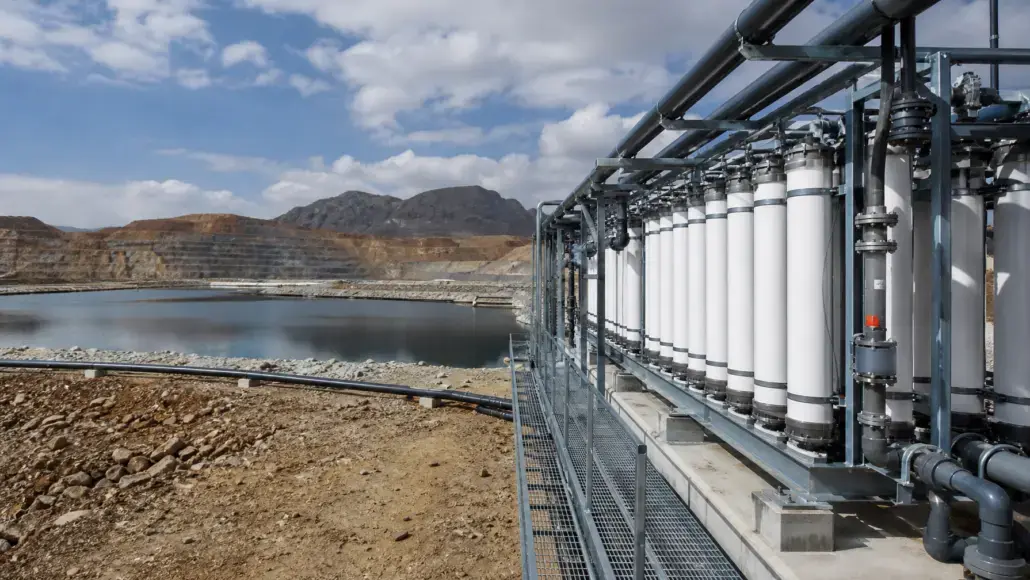

Stricter environmental discharge standards enacted across major mining jurisdictions in 2025 have fundamentally altered how mineral operations manage process effluent and acid rock drainage. Operators across the copper belts of South America and the gold fields of North America face rigorous limits on sulfate concentrations, heavy metal loads, and total dissolved solids. In response to these regulatory and hydrological pressures, industrial membrane filtration for mining wastewater has shifted from an occasional secondary polishing method to a central component of closed loop water management strategies.
Traditional chemical precipitation methods, long anchored by lime neutralization, struggle to meet modern discharge permits. While lime successfully elevates pH and precipitates heavy metals as basic hydroxides, it leaves water saturated with calcium and sulfate ions. The resulting effluent routinely carries dissolved sulfate levels between 1,500 and 2,200 milligrams per liter, far exceeding contemporary discharge thresholds that often demand concentrations below 500 milligrams per liter. Furthermore, lime precipitation generates immense volumes of low density gypsum sludge that requires costly long term containment.
Advanced membrane systems overcome these operational limits by physically isolating dissolved ions and particulate contaminants without creating secondary sludge volumes. Modern installations combine microfiltration, ultrafiltration, nanofiltration, and high pressure reverse osmosis into multi-stage treatment trains capable of recovering more than 85 percent of process water for direct plant reuse.
Structural Evolution of Industrial Membrane Materials
Polymeric membranes composed of polyamide, polysulfone, and polyvinylidene fluoride dominate conventional desalination, but harsh mining environments present severe degradation mechanisms. Acid mine drainage with pH values below 2.5, elevated ferric iron concentrations, and abrasive silicate particles rapidly degrade thin film composite membranes through chemical oxidation and mechanical abrasion.
To address these harsh feed conditions, equipment manufacturers have advanced tubular ceramic membranes manufactured from silicon carbide and alpha-alumina. Silicon carbide membranes exhibit chemical inertness across the full pH spectrum from 0 to 14, tolerate operating temperatures up to 80 degrees Celsius, and withstand feed streams with high oil and suspended solids content.
Operational data from industrial trials in 2025 demonstrated that silicon carbide ultrafiltration units sustained continuous flux rates exceeding 450 liters per square meter per hour on unclarified tailings decant water. In comparison, polymeric hollow fiber modules suffered irreversible fouling and flux decline within 400 operating hours under identical solids loadings. The robust mechanical integrity of ceramic membranes enables aggressive backpulsing and high pressure hydraulic cleaning, which dramatically lowers chemical consumption over extended operating cycles.
Key operational characteristics distinguishing ceramic and advanced polymeric modules include:
- Thermal resilience allowing direct processing of hot autoclave and electrowinning rinse waters without prior cooling steps
- Complete chemical stability in concentrated acid streams, enabling direct copper and nickel recovery from acidic bleed solutions
- High tolerance to hydrocarbons, hydraulic oils, and residual flotation frothers that irreversibly foul standard reverse osmosis spiral wound elements
- Extended operational lifespan often exceeding eight to ten years compared to two to three years for standard polymeric elements
Nanofiltration and Reverse Osmosis Configurations
Downstream of particulate clarification, the separation of dissolved multivalent ions, monovalent salts, and transition metals relies on dense semi-permeable barriers. Nanofiltration membranes feature fixed negative surface charges and pore dimensions ranging from 1 to 2 nanometers, providing high rejection rates for divalent anions like sulfate while allowing monovalent chlorides to pass.
In copper and nickel processing circuits, nanofiltration permits the selective concentration of dissolved base metals in the retentate while generating a permeate stream suitable for recycling back to grinding and flotation mills. Nanofiltration membranes routinely achieve sulfate rejection rates above 98 percent while operating at significantly lower net driving pressures than reverse osmosis modules, reducing electrical power requirements by 25 to 35 percent across the filtration plant.
When water reuse mandates require complete demineralization or zero liquid discharge compliance, reverse osmosis systems serve as the definitive concentration barrier. Standard seawater reverse osmosis elements operate at hydraulic pressures between 60 and 80 bar. Recent installations in arid mining regions, including the Atacama Basin, have commissioned ultra-high pressure reverse osmosis systems operating at pressures up to 120 bar.
These elevated pressures enable operations to concentrate mine wastewater brine up to 130,000 milligrams per liter of total dissolved solids. By pushing the concentration boundary past conventional limits, high pressure configurations reduce the volumetric load directed to expensive thermal crystallizers and evaporation ponds by as much as 60 percent.
Mitigation Strategies for Membrane Scaling and Fouling
The operational viability of membrane filtration for mining wastewater depends directly on scale control. Mining waters carry near-saturation levels of sparingly soluble inorganic salts, notably gypsum, silica, barium sulfate, and calcium carbonate. As pure water permeates through the membrane barrier, ion concentrations in the boundary layer exceed thermodynamic solubility limits, triggering rapid surface crystallization.
Industrial facilities employ a combination of hydrodynamic management and specialized chemical conditioning to suppress mineral precipitation:
- Continuous antiscalant dosing utilizing phosphonate and polycarboxylic acid formulations designed to disrupt crystal lattice formation of calcium sulfate
- Vibrating shear-enhanced processing systems that introduce high frequency torsional oscillation at the membrane surface, generating high shear rates that sweep foulants away from the boundary layer
- Automated flow reversal protocols that periodically invert the feed and concentrate stream directions, dissolving embryonic crystal nuclei before scale layers consolidate
- Intermediate chemical de-supersaturation loops incorporating seeded slurry reactors to precipitate gypsum between successive membrane stages
Feed water acidification also plays a vital role in preventing carbonate scaling, though operators must balance acid addition against the rejection performance of the membrane elements and subsequent downstream neutralization requirements.
Integration with Upstream and Downstream Mine Circuits
Membrane systems do not function as isolated treatment units. Their long term performance relies entirely on coherent integration with upstream processing steps and downstream mineral recovery operations. When treating complex drainage containing diverse metallic species and elevated sulfates, conventional single-step reverse osmosis faces severe operational bottlenecks caused by rapid membrane saturation.
To prevent premature scaling and enhance resource recovery, forward-thinking operations integrate Selective Ion Removal Technologies for Mine Water Reuse directly ahead of their high pressure membrane stages. This upstream separation selectively removes target scaling ions, enabling the reverse osmosis system to achieve higher volumetric recovery rates without exceeding gypsum or silica precipitation thresholds.
The recovered permeate water provides substantial operational benefits when recycled to mineral processing circuits. Unlike raw surface water or untreated groundwater, high purity permeate exhibits stable ionic conductivity and neutral pH. Recirculating consistent, demineralized water into froth flotation circuits eliminates unpredictable reagent consumption caused by hard water cations like calcium and magnesium, which frequently depress valuable mineral recoveries.
Operational Economics and Long-Term Feasibility
Capital expenditure for industrial membrane plants remains substantial, typically ranging from 1.50 to 3.80 dollars per cubic meter of installed daily treatment capacity, depending on the metallurgy and pretreatment requirements. Operating expenditures, primarily driven by electrical power consumption and periodic element replacement, average between 0.45 and 1.10 dollars per cubic meter of treated water.
These costs are increasingly offset by rising water procurement expenses in hyper-arid jurisdictions and stringent non-compliance penalties imposed by environmental regulators. Furthermore, recovering sulfuric acid and valuable metal units from membrane concentrate streams creates supplementary revenue streams that shorten payback periods.
Industrial membrane filtration for mining wastewater has established itself as an indispensable technological framework for sustainable mining. By combining chemically resilient ceramic modules, specialized high pressure reverse osmosis configurations, and intelligent scale control strategies, mining operations can secure reliable water supplies while satisfying the most stringent environmental regulations.