








Mining operations seeking to close their water loops encounter a persistent chemical hurdle: the steady accumulation of dissolved ionic species in recycled process streams. Continuous recirculating circuits concentrate sulfate, calcium, magnesium, sodium, chloride, and toxic trace metalloids such as arsenic and selenium. Rather than deploying non-selective desalination systems that strip every dissolved salt and produce unmanageable brine volumes, leading processing facilities are implementing selective ion removal technologies to extract specific disruptive ions while preserving benign background chemistry.
Non-selective treatment processes, including standard reverse osmosis and thermal evaporation, treat mine wastewater as a uniform waste product. This brute force approach requires massive capital investments and consumes substantial electrical energy. More critically, indiscriminate salt removal overlooks the chemical realities of mineral processing. Flotation circuits, for instance, operate effectively under moderate salinity provided that specific multivalent depressants and scaling precursors are controlled.
By deploying selective ion removal technologies, metallurgists target only the ionic species that impair process recoveries, compromise equipment integrity, or violate environmental discharge regulations. This selective strategy minimizes reagent consumption, dramatically cuts hazardous brine production, and unlocks lucrative mineral recovery opportunities from legacy drainage streams.
The Chemistry of Closed-Loop Process Contamination
In closed-loop mineral processing circuits, water recycling causes dissolved ion concentrations to climb rapidly over successive operational cycles. The chemical consequences across milling, flotation, and leaching operations are both severe and multifaceted.
Elevated sulfate ions, frequently exceeding 3,000 milligrams per liter in untreated process water, react with residual calcium to precipitate gypsum scale throughout transfer piping, grinding mills, and pump impellers. In sulfide flotation circuits, high concentrations of calcium and thiosulfate species alter bubble-particle attachment kinetics, inadvertently depressing the recovery of chalcopyrite, pentlandite, and sphalerite.
Similarly, heavy metal cations and oxyanions present acute environmental and processing risks:
- Dissolved copper and zinc ions inadvertently activate unwanted gangue minerals like pyrite, diluting final concentrate grades
- Magnesium ions form gelatinous hydroxide precipitates under alkaline flotation conditions, increasing slurry viscosity and hindering solid-liquid separation
- Oxyanions including arsenate, selenite, and antimonate pose severe toxicological risks, triggering severe regulatory penalties if permitted to escape containment
- Chloride accumulation accelerates pitting corrosion across stainless steel leach tanks, electrowinning cathodes, and slurry pipelines
Targeted extraction of these problematic elements allows mining facilities to preserve overall water balance without incurring the exorbitant operating costs of total demineralization.
Advanced Chelating and Ion-Specific Resins
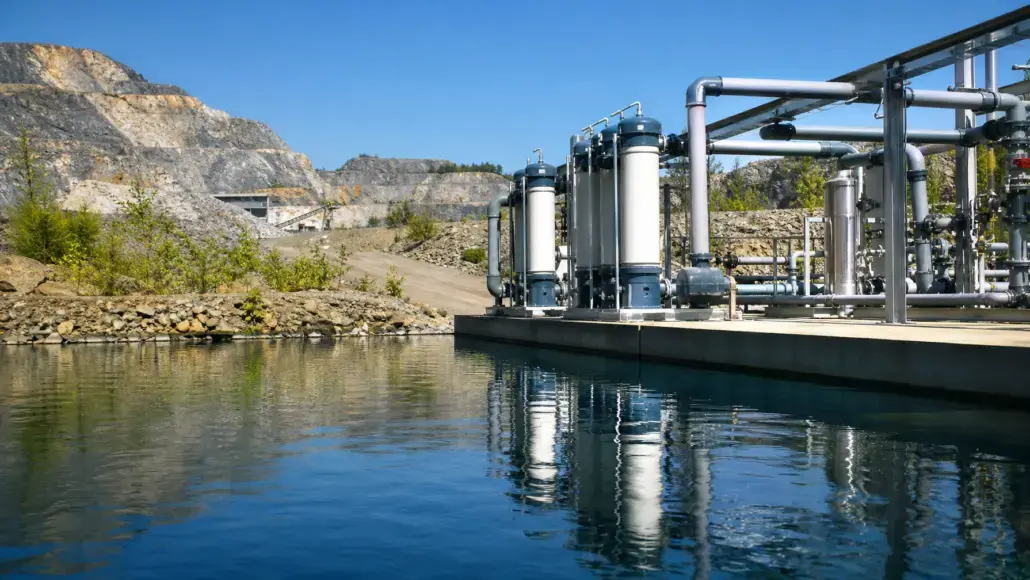
Modern ion exchange represents the front line of selective ion separation in mining hydrometallurgy. Advances in functional polymer chemistry have yielded macroporous resin beads grafted with chelating ligands that exhibit extraordinary affinity for specific polyvalent metal cations, even in the presence of overwhelming concentrations of sodium, potassium, and calcium.
Resins functionalized with iminodiacetic acid or bis-picolylamine groups selectively sequester nickel, cobalt, and copper from acidic process streams at pH levels where conventional hydroxide precipitation fails. In gold and copper circuits, specialty resins equipped with quaternary amine or thiourea functional groups isolate trace metal-cyanide complexes, preventing their accumulation in leaching circuits and eliminating cyanide destruction bottlenecks.
For sulfate removal, operators utilize specialized weak base anion exchange resins in fluidised bed or counter-current packed column configurations. Unlike strong base resins that become exhausted by ubiquitous bicarbonate and chloride ions, weak base resins can be tailored to target divalent sulfate with high selectivity. Regeneration protocols utilizing dilute ammonium hydroxide or sodium hydroxide yield concentrated ammonium sulfate or gypsum byproducts that can be repurposed in industrial fertilizer markets or integrated into cemented backfill paste.
Electrodialysis Reversal and Electrochemical Ion Separation
Electrochemical separation platforms offer a versatile alternative to resin columns, especially for high salinity, high suspended solids mine waters that foul packed beds. Electrodialysis reversal uses alternating cation- and anion-exchange membranes placed between electrified anodes and cathodes. By reversing electrical polarity at programmed intervals, electrodialysis reversal systems self-clean their membrane surfaces, preventing scale consolidation from calcium sulfate and barium compounds.
Recent industrial deployments have advanced beyond basic electrodialysis to incorporate bipolar membranes. Bipolar electrodialysis splits water molecules into hydrogen and hydroxyl ions at the junction layer under an applied electrical potential. When applied to sodium sulfate-rich mine drainage, this system converts low value dissolved salt into commercial grade sulfuric acid and sodium hydroxide.
Key operational benefits realized through electrochemical ion separation include:
- Direct on-site generation of industrial acids and bases, reducing the logistical costs and transport risks of bringing bulk chemicals to remote mine sites
- High electrical energy efficiency compared to thermal evaporation, operating at power consumptions between 7 and 12 kilowatt-hours per cubic meter of treated water
- Superior volumetric water recovery, with electrodialysis reversal systems consistently achieving water recoveries exceeding 90 to 95 percent
- Robust tolerance to dissolved silica, which severely restricts recovery limits in conventional pressure-driven membrane systems
Industrial pilot projects conducted in 2025 across Western Australia demonstrated that combining selective weak-acid cation exchange with electrodialysis reversal reduced total mine water sulfate levels from 4,200 milligrams per liter to below 250 milligrams per liter while generating clean sodium sulfate crystals suitable for glass manufacturing.
Metal Recovery as an Operational Revenue Driver
Selective ion removal technologies transform water treatment plants from cost liabilities into secondary production assets. Legacy acid rock drainage, tailings seepage, and heap leach bleed solutions frequently contain economic quantities of critical minerals and precious metals that historical processing overlooked.
By deploying tailored selective extraction circuits, mining operators can extract battery metals, including nickel, cobalt, and lithium, alongside rare earth elements directly from wastewater streams. In North American copper operations, solvent extraction and selective ion exchange circuits recovering copper from waste dump run-off routinely generate millions of dollars in annual cathode revenue, fully subsidizing the operational costs of site water treatment.
The integration of selective ion removal technologies enables mine operators to achieve stringent environmental compliance while generating tangible economic returns. However, wet water treatment, regardless of how targeted and chemically efficient it becomes, still requires substantial surface infrastructure, pumping power, and reagent supply logistics.
To circumvent wet processing complexities altogether in hyper-arid environments, forward-looking mining operations are evaluating alternatives to water-based beneficiation. Many operations are pairing closed-loop water treatment with dry mineral processing methods, increasingly turning to Pneumatic Separation Systems for Waterless Ore Beneficiation to reject barren gangue before wet grinding and flotation stages ever occur.
Strategic Implementation and Lifecycle Performance
Implementing a selective ion removal flowsheet requires comprehensive geochemical characterization of the mine site water balance. Feed water chemistry fluctuates across seasonal precipitation cycles, seasonal thaw events, and ore body transitions. System design must incorporate robust pre-filtration to manage suspended solids and organic flotation collectors that could poison selective exchange ligands.
Operating expenditures for selective ion separation systems are dominated by regenerant chemical usage and resin replacement rates. Utilizing intelligent process control algorithms to dynamically adjust regeneration frequencies based on real-time ionic breakthrough curves significantly extends resin operating life, frequently past five years of continuous duty.
Selective ion removal technologies provide the precise chemical surgical tools required to manage modern closed-loop mining water circuits. By eliminating problematic scaling species, protecting flotation recovery rates, and unlocking valuable mineral byproducts, these technologies enable mining enterprises to achieve true operational resilience in an era of escalating water scarcity and environmental oversight.