









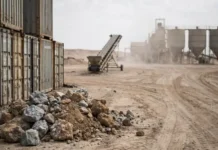

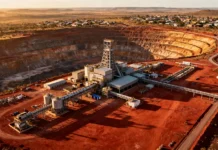
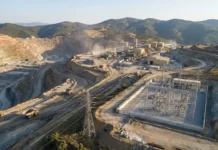
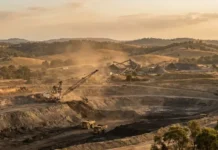
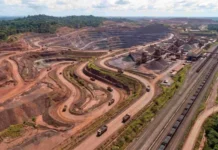
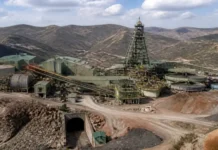
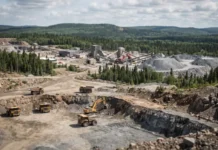


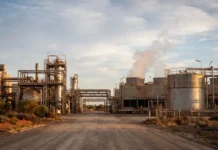
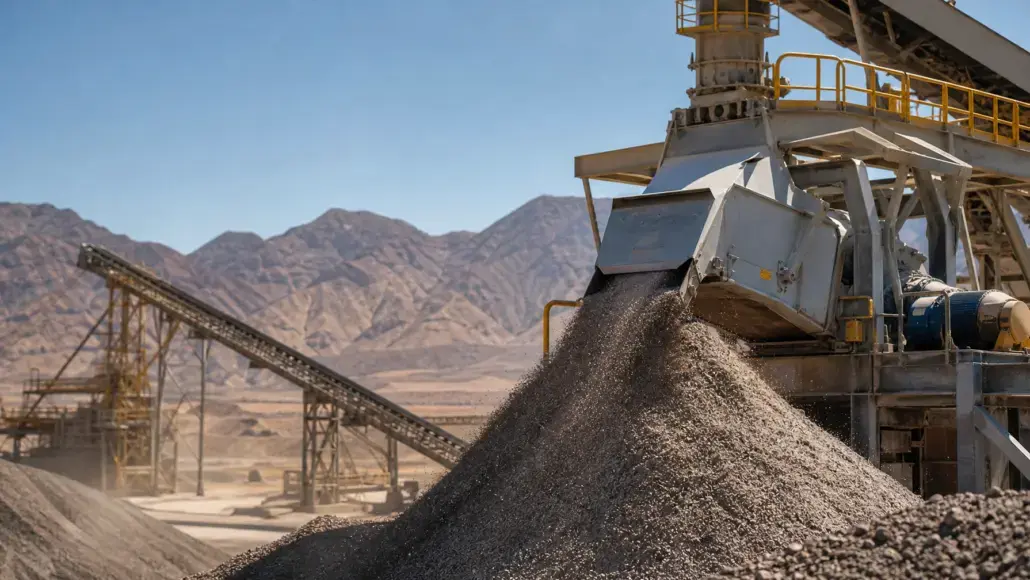

Severe water scarcity across premier mining jurisdictions has elevated dry processing from a niche operational option to a primary strategic priority. Mining operations in the Atacama Desert of Chile, the Pilbara region of Western Australia, and the arid high plateaus of southern Africa operate under stringent water withdrawal quotas and escalating community opposition to industrial water extraction. In these moisture-depleted environments, deploying pneumatic separation systems enables producers to reject barren waste rock and upgrade run-of-mine feed without consuming process water.
Wet mineral processing techniques, particularly wet gravity separation, dense media separation, and froth flotation, require immense freshwater inputs. Conventional wet beneficiation circuits consume between 0.4 and 1.2 cubic meters of water per metric ton of processed ore. Transporting seawater to high-altitude mine sites through reverse osmosis pipelines incurs staggering capital costs, frequently exceeding 1.5 billion dollars for long-distance uphill pumping networks, alongside persistent carbon emissions from energy-intensive pump stations.
Pneumatic separation platforms dismantle this water dependency by utilizing differential aerodynamic drag, density differentials, and pressurized air ejection to segregate valuable minerals from host gangue. By introducing pneumatic separation systems early in the comminution circuit, mining companies achieve substantial mineral upgrades while leaving their regional hydrological balance intact.
Fundamental Mechanics of Aerodynamic and Air Gravity Sorting
Pneumatic beneficiation exploits the differing physical and aerodynamic behaviors of mineral particles immersed in an upward or cross-current air stream. Unlike wet processing, where water serves as the viscous separating medium, dry systems rely on the precise interplay between particle mass, specific gravity, shape factor, and fluidization velocity.
Air tabling and air jigging represent two workhorse configurations for dry gravity separation. An air table employs a porous, inclined deck oscillating in an eccentric lateral motion while low-pressure air continuously permeates through the deck surface. As crushed ore feeds across the vibrating surface, the upward air currents fluidize the lighter gangue particles, allowing them to ride over deck riffles toward the lower discharge lip. Denser, mineralized particles remain trapped in the riffle channels and travel laterally toward the concentrate discharge chute.
Pneumatic air jigs operate through cyclic air pulsations that expand and contract an ore bed resting on a screen plate. The pulsating air velocity creates an artificial density stratification comparable to liquid-based jigs:
- Heavy mineral grains rapidly settle through the bed during the relaxation phase, accumulating in the lower concentrate layer
- Lighter gangue minerals remain suspended in the upper fluidized zone and discharge over an adjustable weir gate
- Operating air pressures typically range from 2 to 6 kilopascals, delivering high stratification rates with minimal electrical consumption
- Feed size distributions can be tuned between 1 and 25 millimeters, providing effective dry concentration across intermediate particle sizes
For fine minerals, gas-solid fluidized bed separators utilize fine, dry dense media powders, such as magnetite or ferrosilicon, suspended in an upward airflow. This creates a pseudo-heavy liquid bed with an adjustable apparent density, allowing precise sink-float separation of ores without a drop of liquid moisture.
Sensor-Based Pneumatic Sorter Integration
The most substantial technological evolution in dry mineral processing involves coupling high-speed sensor detection with targeted pneumatic air-jet ejection. Sensor-based ore sorting systems inspect individual rocks traveling along high-speed conveyor belts at velocities between 3 and 5 meters per second.
Advanced sensors, including dual-energy X-ray transmission, near-infrared spectrometry, and electromagnetic induction, analyze the interior atomic density and mineralogical signature of each rock within milliseconds. Once a valuable particle or barren gangue boulder is classified, an array of high-speed pneumatic solenoid valves fires micro-blasts of compressed air, precisely deflecting the target rock into a dedicated collection bin.
Key operational metrics achieved by modern sensor-based pneumatic sorting installations include:
- Sorting throughputs reaching up to 400 metric tons per hour on individual wide-belt machines processing 20 to 100 millimeter rock fractions
- Rejection of 30 to 50 percent of barren run-of-mine rock directly ahead of the primary grinding circuit
- Solenoid valve actuation speeds below 2 milliseconds, delivering exceptional spatial accuracy and minimizing air consumption
- Direct enrichment of run-of-mine grade by 20 to 45 percent, significantly increasing the metal output of existing downstream mills
In lithium pegmatite operations, dual-energy X-ray transmission sorters distinguish dense spodumene crystals from lighter quartz and feldspar gangue. Industrial installations in 2025 demonstrated that pneumatic sorting rejected 38 percent of mass as barren waste while recovering over 92 percent of the contained lithium oxide, avoiding the energy and water costs of wet milling sub-economic rock.
Process Economics and Energy Decarbonization
The financial case for dry pneumatic beneficiation extends far beyond water conservation. Comminution, encompassing crushing and grinding, accounts for more than 50 percent of total electrical power consumed at a typical hard rock mine. Grinding barren rock to fine flotation sizes represents an immense waste of electrical power and grinding media.
Rejecting coarse waste rock pneumatically directly after primary or secondary crushing drastically reduces the mass of ore directed to semi-autogenous and ball mills. Processing plants achieve a 15 to 30 percent reduction in milling power consumption per unit of recovered metal. Grinding mill liners and steel grinding balls experience proportional reductions in wear and tear, yielding substantial operating cost savings.
Furthermore, the coarse reject produced by pneumatic separation systems is completely dry, chemically inert, and physically stable. Operators can immediately transport this barren rock via standard conveyor belts for use as structural mine backfill, road construction ballast, or co-disposed dry rock dumps, completely eliminating the geotechnical risks and impoundment costs associated with wet tailings dams.
Managing Moisture and Fine Particle Constraints
Pneumatic separation systems require careful operational management to preserve separation efficiency. Surface moisture represents the primary technical challenge for dry processing. When ore moisture exceeds 3 to 5 percent, capillary water forces cause fine particles to agglomerate into cohesive crusts, blinding screening decks and distorting aerodynamic drag coefficients.
To maintain optimal feed conditions, mining operations utilize waste heat captured from diesel generators, smelting furnaces, or roasting kilns to dry damp ore in compact rotary or fluid bed dryers before sorting. Enclosed material transfer chutes and negative-pressure dust extraction hoods equipped with pulse-jet fabric baghouses are mandatory to capture fugitive particulate emissions, protecting worker safety and recovering fine mineral dust.
While dry pneumatic sorting dramatically decreases the volume of material requiring intensive wet processing, most base metal and precious metal deposits ultimately require fine grinding and chemical separation to liberate microscopic mineral grains. Even after pneumatic systems reject coarse waste, the concentrated mineral fractions must still enter wet hydrometallurgical or flotation circuits.
To handle the fine wet slurry generated during subsequent processing while upholding strict environmental stewardship, operations implement Paste Thickening Technologies for Improved Tailings Management to recover the maximum possible water volume and eliminate conventional liquid slurry storage.
The Expanding Role of Dry Processing
Technological advancements in computational vision, valve durability, and fluid dynamics continue to broaden the application window for pneumatic separation systems. As water access permits become increasingly contested in global mining districts, the ability to upgrade ore deposits without freshwater inputs provides mining operators with an essential operational advantage.
Deploying pneumatic separation systems transforms low-grade, remote deposits in hyper-arid regions into economically viable, environmentally responsible assets. By intercepting waste rock ahead of wet processing circuits, pneumatic platforms preserve precious regional water reserves and set a higher standard for resource efficiency.