







The metallurgical industry is undergoing a paradigm shift as the global community intensifies its efforts to combat climate change. Smelting, historically one of the most carbon-intensive industrial processes, is being reimagined through the lens of sustainability. The development and deployment of low-carbon smelting technologies are now central to the future of metal production. These innovations are not merely incremental improvements they represent a fundamental restructuring of how we transform ores into the base metals that underpin modern civilization. From steel and aluminum to copper and nickel, the entire spectrum of metal manufacturing is being touched by the urgent need for industrial decarbonisation. This transition is driven by a combination of regulatory pressure, shifting consumer preferences for “green” products, and the inherent economic advantages of more efficient, low-emission metal manufacturing.
The Technological Frontier of Low-Carbon Smelting
At the heart of the transition to sustainable metal production is a suite of breakthrough technologies designed to eliminate the reliance on carbon-based reductants. Traditionally, smelting has relied on coal or coke to extract metals from their oxides, a process that inherently releases massive quantities of carbon dioxide. Low-carbon smelting technologies seek to break this cycle by utilizing alternative energy sources and chemical pathways. Hydrogen-based reduction is perhaps the most prominent of these developments, particularly in the steel industry. By using green hydrogen produced via electrolysis as the reducing agent, the only byproduct of the smelting process is water vapor rather than CO2. This technology, often referred to as Hydrogen Direct Reduced Iron (H-DRI), is already moving from pilot plants to commercial-scale operations, signaling a new era for sustainable metallurgy.
Beyond hydrogen, molten oxide electrolysis (MOE) represents another revolutionary path. MOE uses electricity to directly decompose metal oxides into liquid metal and oxygen gas. This process eliminates the need for any chemical reductant, offering a path to truly zero-emission smelting if the electricity is sourced from renewables. While MOE is still in the early stages of commercialization for some metals, its potential to simplify the smelting process and eliminate carbon inputs makes it a cornerstone of future low-carbon smelting strategies. These green smelting technologies are not just theoretical concepts they are the result of decades of research and are now receiving billions of dollars in investment from the world’s largest mining and metallurgical companies.
Electrification and Heat Recovery in Smelting Operations
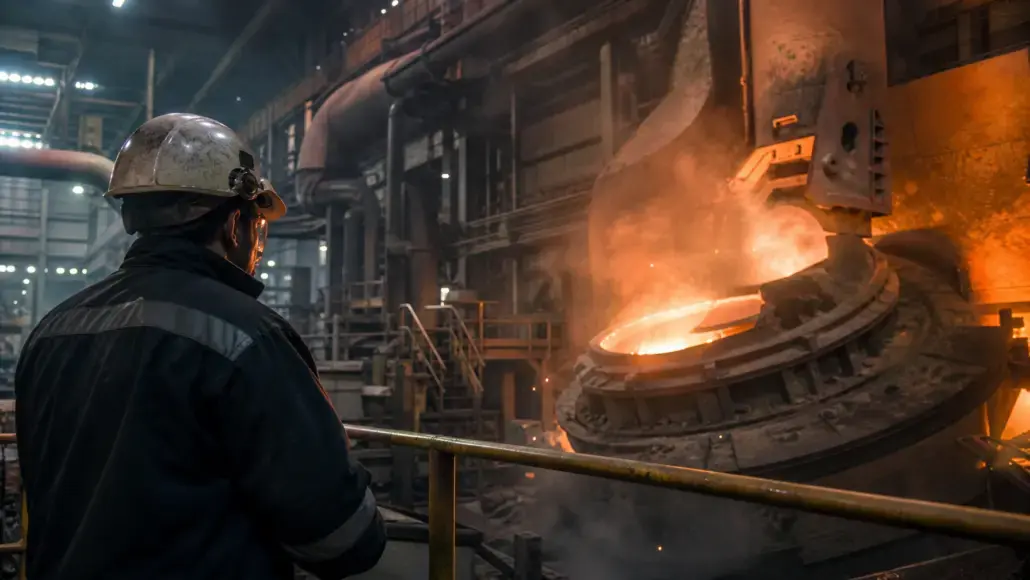
A critical component of industrial decarbonisation within the metals sector is the total electrification of smelting furnaces. The shift from gas-fired or coal-fired furnaces to electric arc furnaces (EAF) and submerged arc furnaces (SAF) is a vital step in reducing the direct carbon footprint of production. Electrification allows for much more precise temperature control and higher energy efficiency, as electric furnaces can reach the necessary temperatures for smelting without the heat loss associated with combustion. When these electric units are powered by a renewable energy mix, the carbon intensity of the resulting metal drops precipitously. This move toward low-emission metal manufacturing is essential for the industry to align with the Paris Agreement targets and internal corporate net-zero commitments.
Furthermore, the integration of advanced heat recovery systems is transforming the efficiency of smelting plants. Smelting is an inherently high-temperature process, and in traditional setups, a significant portion of that energy is lost as waste heat. Modern low-carbon smelting technologies incorporate sophisticated heat exchangers and thermal storage systems to capture this energy and repurpose it within the plant. This waste heat can be used to pre-heat incoming ores, generate additional electricity through steam turbines, or even provide district heating for nearby communities. By creating a more circular energy loop, metallurgical operations can further reduce their total energy demand and operational costs, reinforcing the economic case for sustainable metal production.
The Role of Green Hydrogen in Sustainable Metallurgy
Green hydrogen is widely considered the “silver bullet” for decarbonizing hard-to-abate sectors like metallurgy. The transition to hydrogen-based smelting requires not only new furnace designs but also a massive scale-up of hydrogen production and storage infrastructure. In the context of metal production technologies, the ability to integrate hydrogen at scale is a defining characteristic of a modern, future-proof facility. Beyond its role as a reductant, hydrogen can also be used as a clean fuel for high-temperature burners throughout the refining process, replacing natural gas and further lowering the plant’s overall carbon footprint.
The development of “hydrogen hubs” near major industrial clusters is facilitating this transition. By locating smelting operations in areas with abundant renewable energy and hydrogen infrastructure, companies can minimize the costs and complexities of transporting this volatile gas. This regional approach to industrial decarbonisation is essential for making low-carbon smelting technologies economically competitive with traditional methods. As the cost of electrolyzers continues to fall and renewable energy capacity grows, the price of green hydrogen will reach parity with fossil fuels, accelerating the adoption of sustainable metallurgy across the globe.
Economic and Strategic Drivers for Sustainable Metal Production
The move toward low-carbon smelting is not purely an environmental endeavor it is a strategic business decision. As carbon taxes and border adjustment mechanisms, such as the EU’s Carbon Border Adjustment Mechanism (CBAM), come into effect, the financial penalty for high-emission production will become a significant burden. Companies that invest in low-carbon smelting technologies today will avoid these costs and gain a significant advantage in international markets. Furthermore, the growing demand for “green steel” and “green aluminum” from the automotive and construction sectors is creating a premium market for low-carbon metals. Manufacturers are increasingly willing to pay a higher price for raw materials that help them meet their own sustainability goals and appeal to eco-conscious consumers.
Moreover, sustainable metal production technologies often lead to higher quality outputs and more resilient supply chains. Advanced electric and hydrogen-based processes offer greater control over the chemical composition of the metal, leading to fewer impurities and better performance in downstream manufacturing. By reducing their dependence on volatile fossil fuel markets and coal imports, metallurgical companies can also enhance their operational resilience and insulate themselves from geopolitical shocks. In this light, industrial decarbonisation is as much about risk management as it is about environmental protection.
Scaling Low-Emission Metal Manufacturing
Moving from pilot projects to industry-wide adoption of low-carbon smelting requires overcoming significant technical and financial hurdles. The capital expenditure (CAPEX) for building new hydrogen-ready furnaces or MOE plants is substantial, and the long lifespan of existing metallurgical assets can slow the pace of replacement. However, “retrofitting” technologies are emerging that allow for the gradual blending of hydrogen into traditional blast furnaces, providing a bridge to full decarbonization. This phased approach allows companies to begin reducing their emissions immediately while managing the financial transition.
Collaboration across the value chain is also vital. Mining companies, technology providers, and end-users must work together to create the necessary infrastructure and market conditions for green metals to thrive. Public-private partnerships and government subsidies are playing a crucial role in de-risking the first-of-a-kind commercial plants, paving the way for wider industry adoption. As these technologies scale, economies of scale and “learning by doing” will further drive down costs, making low-emission metal manufacturing the global standard.
Digital Transformation and Process Optimization
The full potential of low-carbon smelting technologies is unlocked when they are integrated with digital twins and AI-driven process optimization. These tools allow operators to simulate the complex thermodynamics and chemical reactions within a hydrogen-based or electric furnace in real-time. By constantly adjusting parameters to account for variations in ore quality or energy supply, these digital systems ensure that the plant always operates at its peak efficiency. In the context of sustainable metal production, the ability to minimize waste and maximize recovery is a key factor in the overall economic viability of the operation.
AI can also help manage the intermittent nature of renewable energy supplies. By predicting periods of high renewable generation, smelting plants can schedule their most energy-intensive tasks to coincide with low-cost, low-carbon power. This “demand-side management” is a critical feature of modern industrial decarbonisation strategies, turning large industrial users into stabilizers for the broader electrical grid. The synergy between digital technology and green metallurgy is a powerful engine for innovation in the metals industry.
The Future Landscape of Global Metallurgy
As we look toward 2050, the metallurgical landscape will be unrecognizable from the coal-dependent industry of the 20th century. Low-carbon smelting technologies will be the norm, and the concept of “waste” will be replaced by circularity. Recycled metals will play an even larger role, processed in high-efficiency electric furnaces that are indistinguishable from those used for primary production. The shift to sustainable metallurgy is a global movement, with significant developments occurring not only in traditional industrial hubs but also in emerging economies that are leveraging their abundant renewable resources to become the green metal producers of the future.
The transition is also creating new opportunities for workers in the metals industry. The operation and maintenance of advanced electrolyzers, hydrogen furnaces, and digital control systems require a highly skilled workforce. By investing in the training and development of their employees, metallurgical companies can ensure they have the human capital necessary to lead the green industrial revolution. This social dimension of the transition is essential for building a just and sustainable future for the entire metal production value chain.
In conclusion, low-carbon smelting technologies are the foundation of a new era of sustainable metal production. By embracing green smelting technologies and focusing on industrial decarbonisation, the metals industry can significantly reduce its environmental impact while enhancing its economic competitiveness and operational resilience. The journey toward low-emission metal manufacturing is a complex and capital-intensive endeavor, but the path is clear. Through innovation, collaboration, and a commitment to sustainability, the metallurgical sector will continue to provide the essential building blocks for a low-carbon world. The transformation of metal production technologies is not just an industrial necessity it is a vital contribution to the global effort to ensure a habitable planet for generations to come.