





The mineral processing industry is facing an unprecedented challenge: how to extract more value from increasingly complex and lower-grade ores while simultaneously reducing its massive energy footprint. At the center of this challenge is comminution, the process of crushing and grinding ore to liberate valuable minerals. Comminution is notoriously the single most energy-intensive stage of mining, often accounting for more than 50% of a mine site’s total electricity consumption and approximately 3% of global electricity use. Consequently, the adoption of energy-efficient grinding is no longer just a technical preference it is a critical necessity for the survival and growth of the industry. The transition toward sustainable mineral processing depends heavily on our ability to rethink and modernize grinding circuits, moving away from legacy tumbling mills toward advanced grinding technologies that offer superior performance and lower environmental impact.
The Energy Crisis in Mineral Comminution
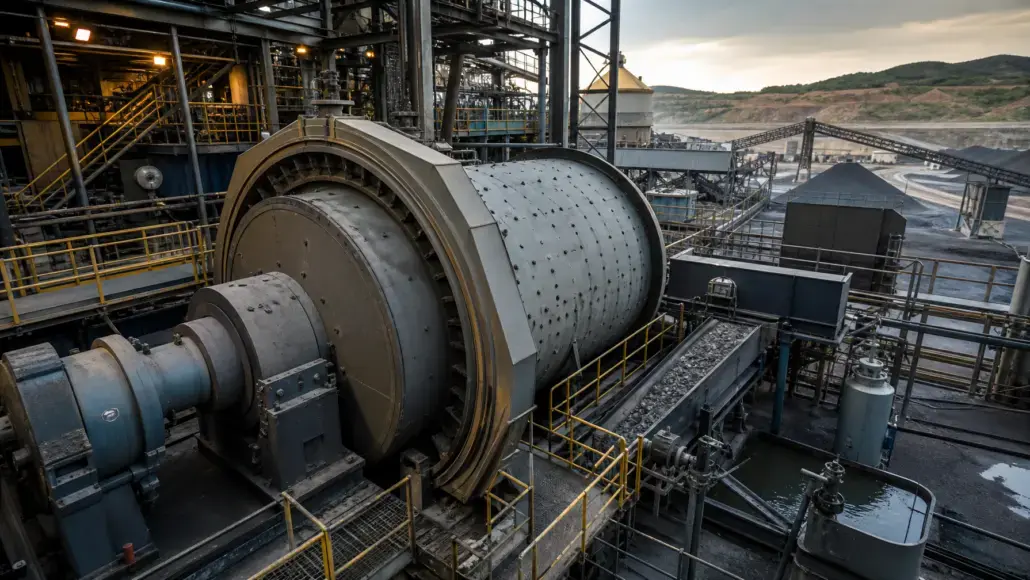
The fundamental problem with traditional grinding methods, such as ball and SAG (Semi-Autogenous Grinding) mills, is their inherent inefficiency. These massive machines rely on tumbling ore and steel media in a large cylinder, a process that wastes a significant portion of the applied energy as heat, noise, and mechanical vibration. Only a tiny fraction of the total energy input often estimated at less than 5% is actually used for particle breakage. As ore grades decline, the amount of grinding required to achieve liberation increases, leading to a direct and unsustainable rise in grinding energy consumption. This trend is putting immense pressure on mining companies’ bottom lines and their ability to meet carbon reduction targets.
Addressing this inefficiency requires a multi-faceted approach that combines the deployment of new mineral grinding technologies with a rigorous focus on mining process optimisation. By analyzing the entire comminution circuit as a holistic system rather than a series of isolated steps, operators can identify and eliminate energy leaks, optimize particle size distribution, and ensure that every kilowatt-hour of electricity is used as effectively as possible. This systemic shift is the foundation of modern, energy-efficient grinding strategies and is essential for maintaining the competitiveness of mining operations in a resource-constrained world.
High-Pressure Grinding Rolls: A Leap in Efficiency
One of the most significant breakthroughs in advanced grinding technologies is the development and widespread adoption of High-Pressure Grinding Rolls (HPGR). Unlike traditional mills that use impact and attrition, HPGR units use inter-particle compression to break the ore. As the ore passes between two counter-rotating rolls, it is subjected to immense pressure, causing fractures at the grain boundaries. This method is inherently more efficient than tumbling, often reducing energy consumption by 20% to 50% depending on the ore type. Furthermore, HPGR-treated ore often contains micro-cracks that make it easier to grind in subsequent stages, creating a cumulative energy saving across the entire circuit.
HPGR technology also offers significant operational advantages for sustainable mineral processing. These units have a smaller footprint than equivalent tumbling mills, require less maintenance, and do not use expensive grinding media like steel balls. By eliminating the need for media, HPGR reduces the carbon footprint associated with the manufacturing and transport of steel, further enhancing its sustainability credentials. As the technology has matured, HPGR units have become capable of handling increasingly hard and abrasive ores, making them a versatile tool for a wide range of mineral processing applications, from iron ore and copper to gold and diamonds.
The Rise of Stirred Milling and Vertical Mills
Another critical component of the move toward energy-efficient grinding is the shift from tumbling mills to stirred mills and vertical mills for fine and ultra-fine grinding. In a stirred mill, the grinding media is agitated by an internal rotor or screw, rather than by the rotation of the mill shell itself. This design allows for a much higher energy density and more precise control over the grinding environment. Stirred mills are significantly more efficient than ball mills when grinding to very fine particle sizes often required for complex ores where minerals are tightly bound. By integrating these mineral grinding technologies, plants can achieve the necessary liberation while consuming a fraction of the power required by traditional methods.
Vertical mills, which use a similar principle of internal agitation, are also gaining traction in the industry. These mills are particularly effective for secondary and tertiary grinding stages, where they can replace traditional ball mills to provide a more uniform product with lower energy inputs. The vertical configuration also saves space and simplifies the plant layout. The adoption of stirred and vertical milling technology is a clear example of how the industry is moving toward more specialized and targeted comminution solutions, replacing the “one size fits all” approach of the past with a more nuanced and energy-efficient model.
Mining Process Optimisation and Digital Transformation
While new hardware is essential, the full potential of energy-efficient grinding is only realized through continuous mining process optimisation. This involves using advanced sensors and data analytics to monitor the performance of the grinding circuit in real-time. By tracking variables such as ore hardness, feed rate, power draw, and particle size distribution, operators can use AI-driven control systems to make minute-by-minute adjustments to the circuit. This ensures that the mills always operate at their “sweet spot,” maximizing throughput while minimizing energy consumption. This digital layer is a fundamental part of advanced grinding technologies, turning raw data into actionable insights that drive sustainable performance.
Optimisation also extends to the design of the circuit itself. Modern engineers are increasingly using sophisticated modeling tools, such as Discrete Element Method (DEM) and Computational Fluid Dynamics (CFD), to simulate the movement of ore and media inside the mills. These simulations allow for the design of more efficient liners, lifters, and internal components, reducing energy loss and extending the life of the equipment. By combining these advanced design techniques with real-time operational data, mining companies can create a “closed-loop” optimisation system that continuously improves the efficiency and sustainability of the grinding process.
The Role of Classification in Reducing Grinding Energy Consumption
An often-overlooked aspect of efficient grinding is the role of classification the process of separating material that has reached the desired size from that which needs further grinding. If the classification system is inefficient, “finished” particles are returned to the mill, where they are over-ground, wasting energy and potentially interfering with downstream processes like flotation. Modern sustainable mineral processing plants are investing in high-efficiency cyclones and screens to ensure that once a particle is small enough, it leaves the grinding circuit immediately.
Advanced classification technologies, such as fine-screening and high-capacity hydrocyclones, are essential for minimizing the circulating load in a grinding circuit. By reducing the amount of material that is unnecessarily re-processed, these technologies directly lower the total grinding energy consumption. Furthermore, better classification leads to a narrower particle size distribution, which can significantly improve the recovery of valuable minerals in the concentration stage. This synergy between grinding and classification is a prime example of how holistic process optimization can deliver both economic and environmental benefits.
Pre-Concentration and Ore Sorting Strategies
Perhaps the most effective way to reduce grinding energy is to avoid grinding waste rock in the first place. Pre-concentration and sensor-based ore sorting technologies are becoming vital tools for sustainable mineral processing. These systems use X-ray, laser, or infrared sensors to identify and remove low-grade or barren rock before it enters the energy-intensive grinding circuit. By upgrading the feed quality, ore sorting can reduce the total volume of material that needs to be ground by 10% to 30%. This leads to a massive reduction in power consumption and allows the processing plant to focus its energy on the most valuable material.
The implementation of ore sorting is particularly beneficial for mines with highly variable ore bodies or those operating in regions with high energy costs. While the initial investment in sorting technology is significant, the payback period is often very short due to the immediate savings in grinding energy and reagent use. As sensor technology continues to improve, the ability to sort ore at higher speeds and with greater precision will further solidify pre-concentration as a cornerstone of energy-efficient grinding strategies worldwide.
Future Trends in Comminution Technologies
Looking forward, the industry is exploring even more radical approaches to comminution. Technologies such as microwave-assisted breakage and electro-pulse fragmentation are currently in the research and development phase. These methods use energy to create internal stresses and cracks in the ore before it reaches the mill, potentially making it much easier to grind. While these technologies are not yet ready for large-scale commercial use, they represent the next frontier of advanced grinding technologies and offer the promise of even deeper energy savings in the future.
The focus is also shifting toward the total electrification of the grinding circuit. As we move away from diesel-powered generators toward renewable-based microgrids, the ability of grinding circuits to participate in demand response programs will become increasingly important. A highly automated and flexible grinding circuit can adjust its power draw to match the availability of renewable energy, further reducing the carbon footprint and energy costs of the operation. This integration of energy management and process control is the ultimate goal of sustainable mineral processing.
In conclusion, energy-efficient grinding is the linchpin of a sustainable and profitable mining industry. By embracing advanced grinding technologies, from HPGR and stirred mills to high-efficiency classification and ore sorting, mining companies can significantly reduce their grinding energy consumption and operational costs. The journey toward sustainable mineral processing requires a commitment to innovation, a focus on holistic mining process optimisation, and a willingness to rethink traditional methods. Those companies that lead the way in adopting these energy-efficient solutions will not only improve their bottom line but also play a vital role in ensuring that the mining industry remains a responsible and resilient provider of the materials needed for a low-carbon future.