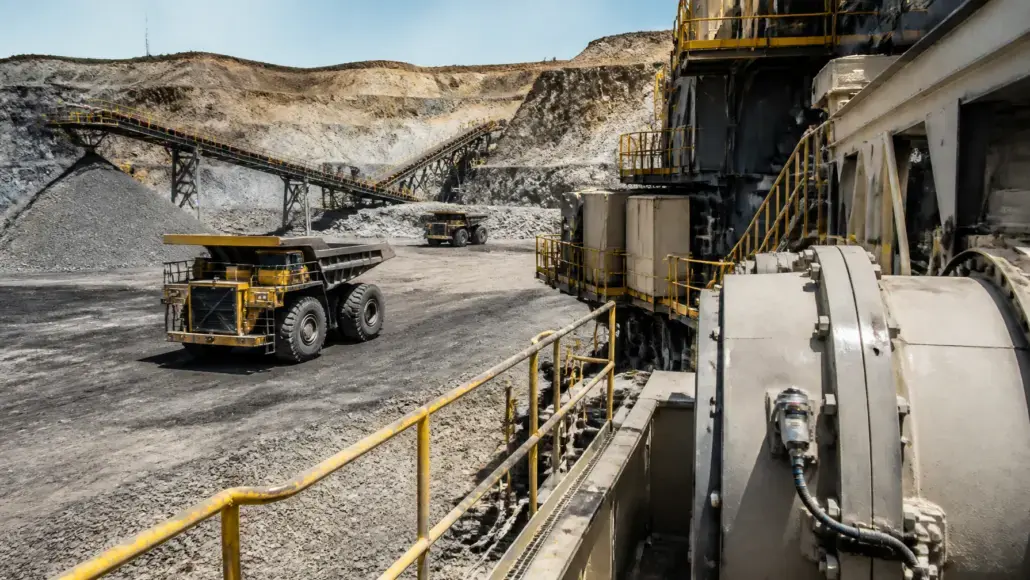
Mining equipment sits at the centre of production, and when a critical machine stops, the cost can extend far beyond the repair itself. A failed haul truck can reduce material movement, while a problem with a crusher, mill or other processing asset can interrupt the flow of an entire operation. That makes maintenance an important part of mine economics, particularly as operators look for ways to protect production while controlling costs.
Research on mining operations estimates that equipment maintenance can account for around 30% to 50% of an operation’s annual budget. The exact share varies by mine, equipment and accounting method, but the scale shows why maintenance decisions can have a meaningful effect on operating performance.
For mining companies, the challenge is not simply how much maintenance costs. It is also when that maintenance happens. Reactive maintenance waits for a failure, which can create an unexpected repair bill and an unplanned production interruption. Preventive maintenance follows a schedule, but equipment does not always deteriorate according to a calendar. Predictive maintenance takes a different approach by using equipment and operating data to identify signs of deterioration before a failure occurs.
That can give mine operators more control over the timing of an intervention. Instead of waiting for a component to fail or replacing it earlier than necessary, operators can use condition data to estimate when maintenance is likely to be needed and plan the work around production requirements.
Unplanned Downtime Is Becoming a Bigger Cost to Mining
The economic value of predictive maintenance becomes clearer when equipment failure is viewed as a production problem rather than a maintenance problem alone. A machine that is unavailable can affect tonnes moved, plant throughput, labour utilisation, spare-parts consumption and, in some cases, the performance of other equipment across the operation.
This is particularly important for assets that sit at a bottleneck. A failure in one part of the production chain can create a much larger effect than the repair cost suggests. Recent research on mining machinery highlights the direct connection between equipment condition, productivity, maintenance costs and operational reliability.
The difference can be substantial in real operations. In a 2025 mining case study in Alberta, predictive analytics identified early signs of injector wear before failure. The operation reported a 98% reduction in unplanned downtime and US$18 million in fleet-wide cost savings. The operator had previously faced multi-day downtime events costing up to US$150,000 per event. These figures are from a specific fleet case and should not be treated as an industry-wide benchmark, but they demonstrate the potential economic value of detecting failures earlier.
The economic goal is therefore not simply to predict when something will break. It is to identify the most valuable time to intervene, before a component failure becomes a production event.
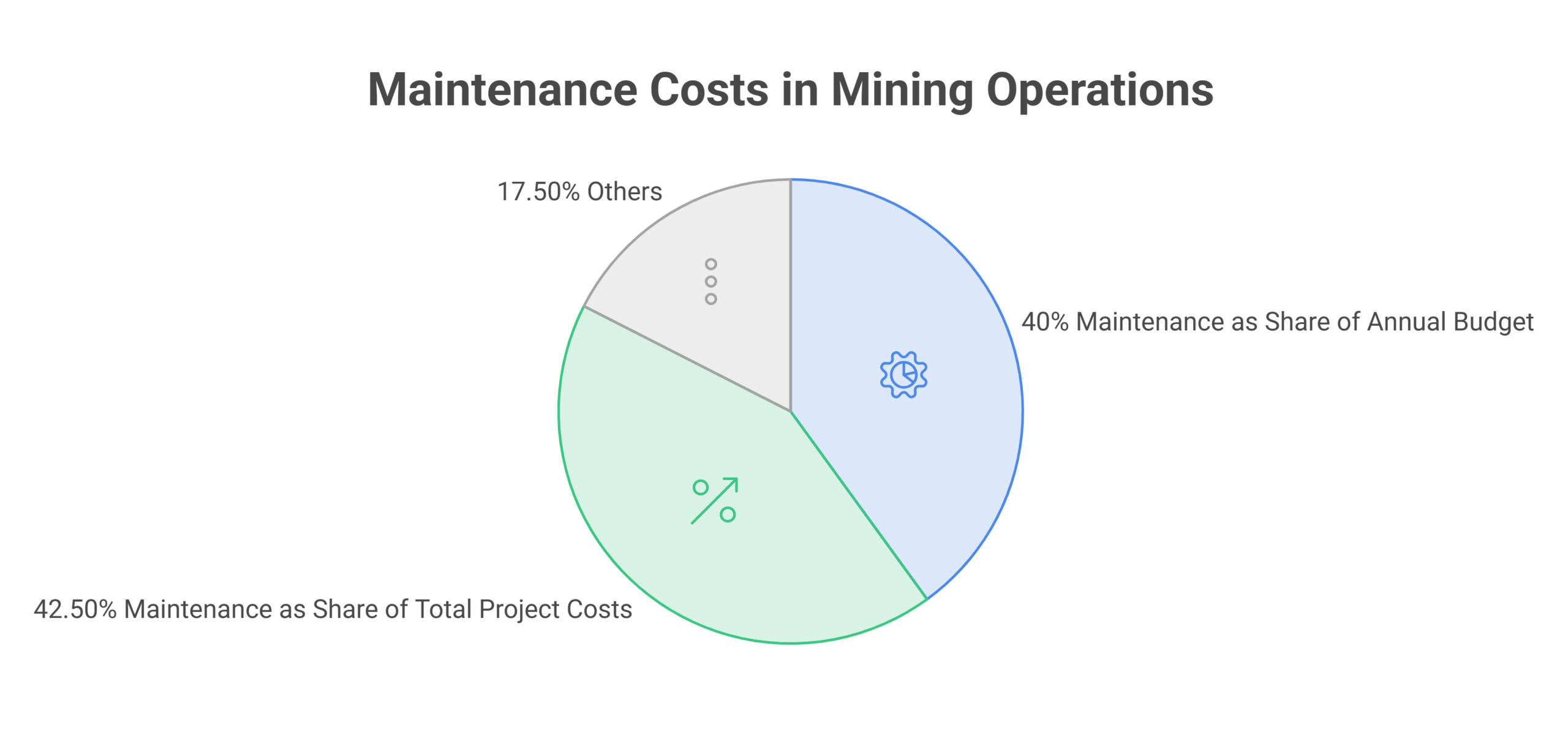
Key takeaway: Maintenance represents a significant share of mining costs, making equipment reliability and maintenance timing important economic decisions.
The shift toward predictive maintenance is therefore not simply about adding sensors or artificial intelligence to mining equipment. It is about reducing uncertainty around failure and giving operators more control over when maintenance happens, how much it costs and how much production can be protected.
Predictive Maintenance Is Turning Downtime Into a Planning Decision
The value of predictive maintenance becomes clearer when equipment failure is treated as a production problem rather than a maintenance problem alone. A failed truck, shovel, crusher or conveyor can affect tonnes moved, plant utilisation, labour, spare parts and production schedules at the same time. The cost of that failure can therefore be much larger than the repair invoice.
This is where condition monitoring and predictive analytics can change the maintenance model. Sensors can track factors such as vibration, temperature, pressure, oil condition and component wear, while analytical models can identify patterns that suggest equipment is moving toward failure. That information gives maintenance teams more time to decide whether an intervention should happen immediately, during a planned shutdown or after another production cycle. Recent research links these systems with improved equipment availability and lower maintenance costs in mining operations.
The financial decision is therefore not simply whether a component is close to failure. It is whether the cost of intervening now is lower than the expected cost of allowing the equipment to continue operating.
That can change maintenance from a fixed schedule into a more flexible economic decision.
The Return Comes From Protecting Production
For mining companies, the strongest case for predictive maintenance may not be the maintenance budget itself. It is the production value that can be protected when failures are identified before they become major interruptions.
A 2025 mining case study reported a 98% reduction in unplanned downtime after predictive analytics identified early signs of injector wear, alongside US$18 million in fleet-wide savings. The same operation had previously faced downtime events that could cost up to US$150,000 each. These figures come from a specific fleet and should not be treated as an industry benchmark, but they illustrate how quickly the economics can change when failure prediction protects equipment availability.
Another mining operation using machinery-health monitoring reported about US$5.8 million in annual savings linked to improved availability and avoided costs, including around US$1.3 million in cost avoidance from a single eight-hour downtime event. Again, this is a site-specific case rather than a universal industry result, but it shows how the financial value of maintenance can extend well beyond repair costs.
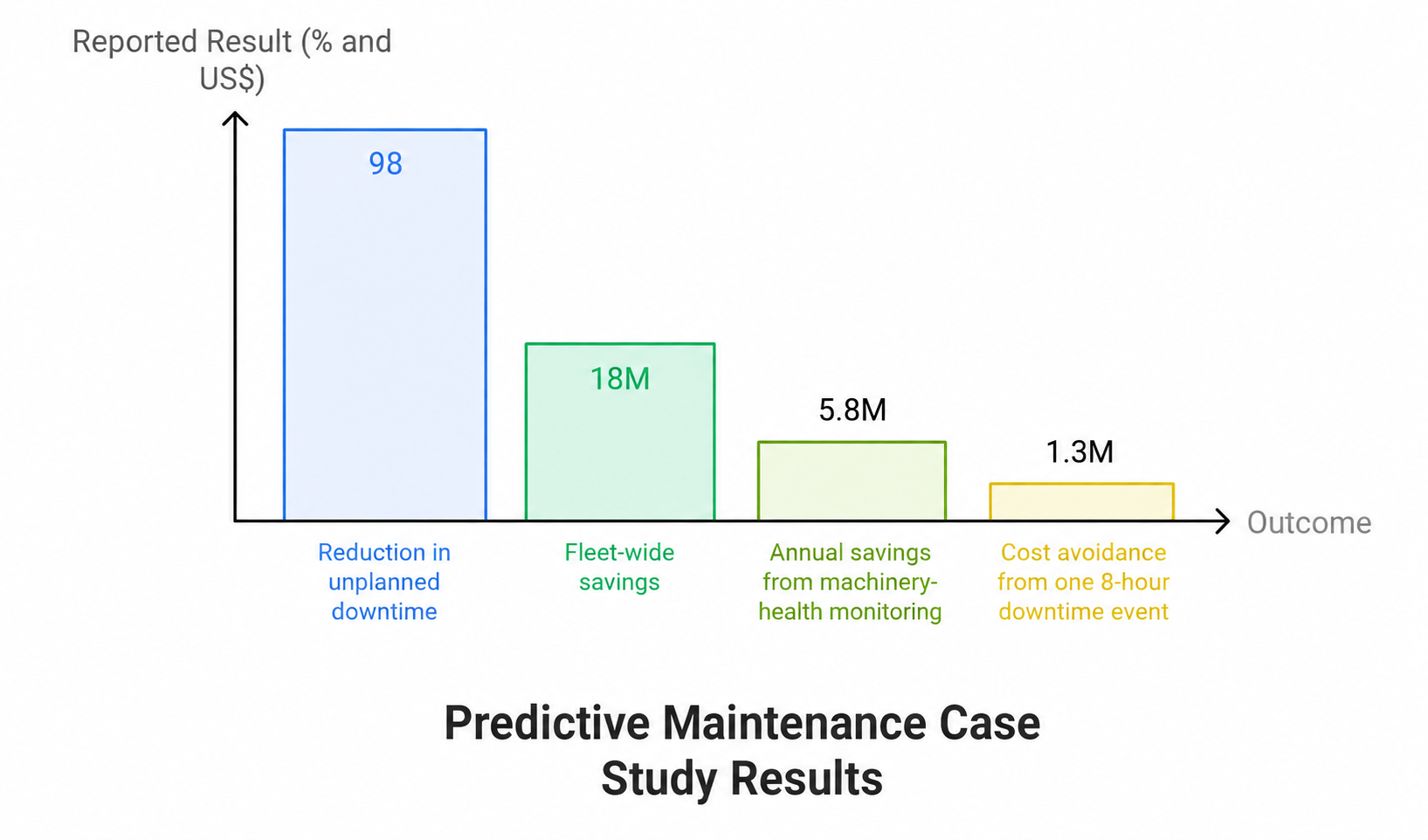
Key takeaway: The economic value of predictive maintenance can come from protecting production and avoiding downtime, not just reducing repair costs.
The next step is making this approach scalable across an entire operation. That means deciding which assets matter most, connecting equipment data with maintenance planning and making sure maintenance teams can act on the warnings they receive. The goal is not to predict every failure. It is to identify the failures where early action creates the greatest economic value.
Conclusion
Predictive maintenance is becoming a more important part of mine economics because equipment reliability directly affects production, operating costs and asset utilisation. The financial value does not come only from spending less on repairs. It also comes from avoiding unexpected failures that can interrupt production and create much larger downstream costs.
The strongest approach is therefore not to predict every possible failure, but to identify the failures where early intervention can protect the most production value. Reported mining case studies have shown significant reductions in unplanned downtime and measurable savings, although the results vary by operation and should not be treated as universal benchmarks.
As mines become more connected and equipment generates more condition data, predictive maintenance can help operators move from reacting to failures toward making maintenance decisions at the point where they create the greatest economic value.