








As global industrial demand intensifies, the scale of mineral extraction has reached a critical juncture. Industry experts and current market trends highlight a “trillion-tonne threat” stemming from global mining operations. The environmental math is stark: for every single tonne of copper extracted, nearly 100 tonnes of waste rock are generated. As India pursues the ambition of becoming a developed economy by 2047, securing critical minerals like lithium, cobalt, nickel, and rare earths is essential for electric mobility, renewable energy, electronics, and national defence. However, the energy transition cannot rely on the damaging historical practices of bulk open-pit extraction. Addressing this challenge requires a pragmatic middle path that integrates precision mining, systematic waste valorisation, and accelerated circular-economy deployment to succeed in Solving Mining’s Trillion-Tonne Environmental Reckoning.
Cutting Overburden at the Source through Precision Technology
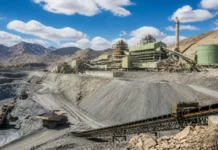
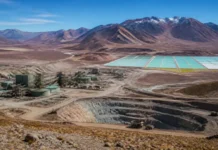
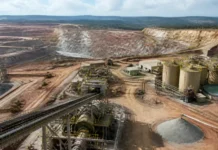
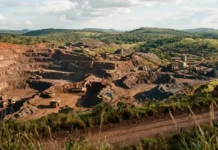
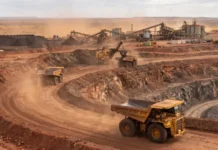
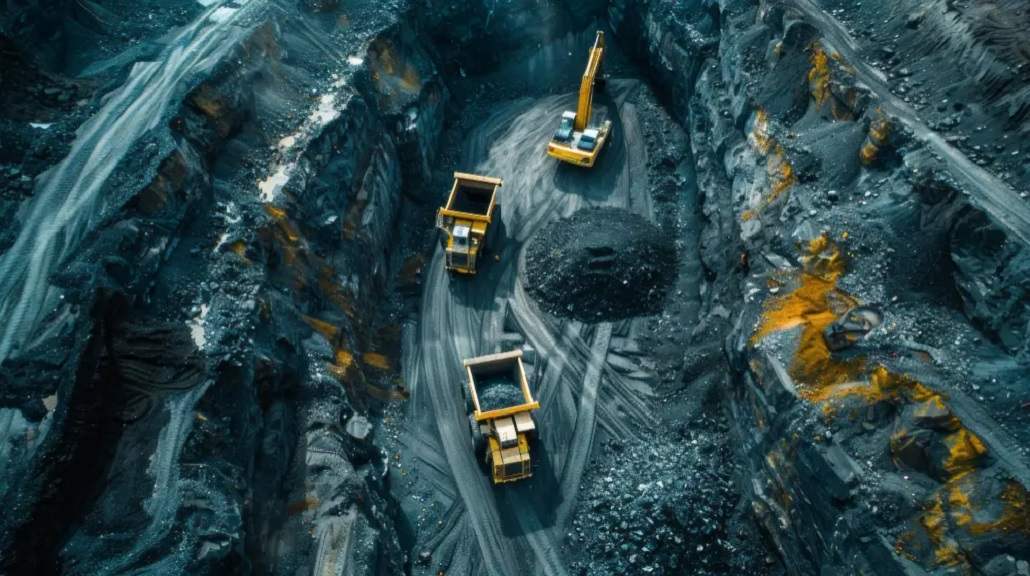
The largest component of the physical footprint in mining is overburden, the rock that must be removed to access an orebody. Conventional open-pit mining often operates with high strip ratios, frequently exceeding 4–6 tonnes of waste for every single tonne of ore. This inefficiency is driven by a reliance on coarse geological models, excessively wide safety buffers, and indiscriminate bulk blasting. To modernize this process, the industry must transition toward high-precision systems that minimise the initial environmental impact.
- High-Resolution Modelling: The adoption of advanced orebody modelling allows for a more granular understanding of mineral deposits, enabling companies to tighten pit boundaries.
- Selective Extraction and Pre-Concentration: By focusing on specific mineral zones and processing material closer to the source, operators have demonstrated the ability to reduce overburden movement by 30–60 percent in hard-rock operations.
- Sensor-Based Characterisation: Utilising real-time sensors to identify ore quality helps in reducing dilution and excluding marginal zones that would otherwise contribute to waste.
- Denser Drilling Grids: Implementing more frequent and precise drilling ensures that only the most viable material is excavated, adhering to the principle that the most effective waste reduction is not excavating waste in the first place.
Furthermore, establishing strict mine-closure discipline is a non-negotiable aspect of Solving Mining’s Trillion-Tonne Environmental Reckoning. Generated overburden should be progressively backfilled, followed by comprehensive rehabilitation involving topsoil restoration and reforestation. While these obligations often exist within legal frameworks, rigorous enforcement is necessary to eliminate abandoned mining scars within a single generation.
Transforming Tailings into Strategic Construction Resources
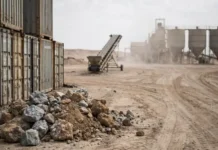
Tailings, the residual materials left after ore processing, are frequently misclassified as inert waste. In reality, these streams often contain high-purity silica, aluminosilicates, and residual unrecovered metals. At the same time, the construction industry faces sustainability challenges, such as the destructive mining of river sand, which damages riverbeds and groundwater systems. This contradiction presents an opportunity for industrial synergy.
- Manufactured Sand (M-Sand): When tailings meet specific standards for particle size, chemistry, and leachability, they can be processed into manufactured sand and aggregates, providing a direct substitute for river-mined sand.
- Low-Carbon Building Materials: Tailings can be blended with industrial by-products like fly ash or slag to create geopolymer bricks and other sustainable construction materials.
- Regulatory Integration: While technologies for crushing, grading, and stabilisation are proven, a formal regulatory linkage between mining waste and construction demand is required. Extending manufactured-sand frameworks to certified tailings-derived materials would simultaneously reduce river-sand extraction and legacy tailings liabilities.
Unlocking Secondary Value from Industrial Slag
Downstream mineral processing generates slags that remain remarkably rich in secondary metals. Copper smelting slag, for example, typically contains 30–45 percent iron trapped in complex mineral phases, alongside residual copper and other trace elements. Despite this richness, recovery efforts remain limited because prevailing economics often discourage investment in energy-intensive reprocessing while fresh iron ore remains available. This represents a market failure where environmental externalities are not appropriately priced.
To address this, policy tools modelled after existing Refuse-Derived Fuel mandates could be implemented. These might include:
- Financial Incentives: Providing price premiums for steel produced using iron recovered from slag.
- Recycled Content Mandates: Establishing phased requirements for minimum shares of slag-derived or recycled inputs in primary steelmaking.
- Partial Substitution Strategy: Even the partial replacement of primary ore with slag-derived materials creates viable demand for waste while reducing the pressure on primary extraction sites.
The Convergence of Urban Mining and Primary Extraction
A significant opportunity for Solving Mining’s Trillion-Tonne Environmental Reckoning lies at the intersection of “urban mining” and conventional extraction. India’s battery-recycling and critical-minerals-processing sectors have already developed advanced hydrometallurgical systems capable of recovering over 95 percent of lithium, cobalt, and nickel from end-of-life batteries and electronics.
Although mining tailings differ in scale and grade from electronic waste, the core processing principles, selective leaching, impurity control, and solvent extraction, are entirely transferable. Industrial symbiosis offers a mutual benefit: recycling operators gain access to large, long-duration feedstock streams, while mining companies can recover hidden value, stabilise tailings dams, and reduce long-term environmental liabilities. The existing Rs 1,500-crore incentive scheme under the Battery Waste Management Rules provides a strategic window to pilot these large-scale collaborations.
A Phased Roadmap for a Sustainable Mineral Future
The challenge of Solving Mining’s Trillion-Tonne Environmental Reckoning will not be resolved through a single intervention but requires mining, processing, and recycling to evolve in parallel over a realistic timeline.
- Immediate Horizon (0–3 Years): The focus must be on deploying precision-mining tools to cut overburden movement by 30–60 percent in new operations. Rigorous enforcement of mine-closure obligations and the introduction of targeted incentives for slag recovery are priority actions.
- Medium-Term Horizon (3–7 Years): The industry should scale the valorisation of certified tailings for construction materials to replace river-sand extraction. Simultaneously, recycling capacity must expand to include the pilot reprocessing of legacy tailings.
- Long-Term Horizon (7–15 Years): For highly recyclable minerals like lithium, cobalt, and nickel, circular systems should meet a major share of incremental demand. Bulk materials like copper and iron will see slag recovery and recycling structurally embedded into the economy, allowing primary extraction to concentrate solely on high-grade strategic deposits.
Conclusion
The pragmatic middle is neither an idealistic rejection of mining nor an acceptance of unchecked environmental damage. It is a pragmatic recognition that developmental imperatives and environmental responsibilities are equally binding. By systematically shrinking the environmental footprint through every battery recycled, every tonne of tailings valorised, and every unit of steel derived from slag, the industry can navigate toward a sustainable future. The tools to reconcile these forces exist; the requirement now is the collective will to deploy them at scale.