






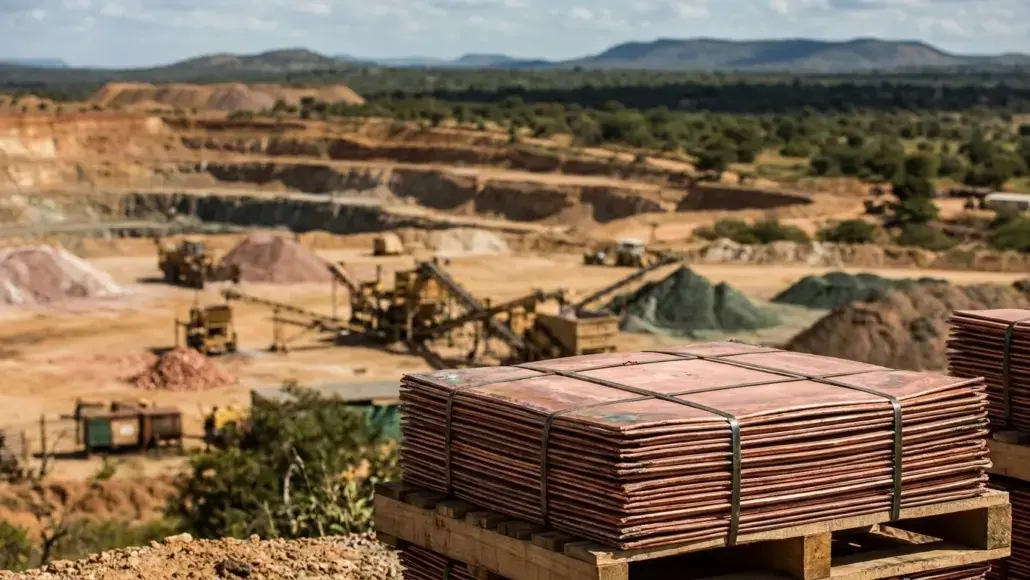

Zambian President Hakainde Hichilema is spearheading an initiative to establish a Pan African metals exchange, aimed at helping the continent retain and maximize the economic benefits of its natural resources. The objective is to assist nations, including Africa’s second-largest copper producer, in ensuring that extracted materials remain accessible for local value addition.
According to Jito Kayumba, the president’s adviser on finance and investment, there is a growing demand among citizens to benefit from Zambia mining wealth directly. He noted that young people across the continent are increasingly expressing a desire to participate more actively in the resource sector, stemming from mounting public discontent over traditional export models.
Strengthening Control Over Africa Critical Minerals
The proposal for a Pan African metals exchange aligns with a broader movement by African governments to exercise greater authority over their natural resources, including Africa critical minerals. Several nations, such as the Democratic Republic of Congo, Guinea, Ghana, and Zimbabwe, have recently introduced reforms designed to increase domestic refining capacities, enhance local ownership, and limit the export of specific unprocessed mineral products.
With President Hichilema seeking reelection next month, the plan for a Pan African metals exchange is highlighted in his party’s formal manifesto. Should his administration secure a second term, the new cabinet will prioritize this initiative. Kayumba confirmed that the formal process to implement the program would begin immediately under a renewed mandate.
Trading Ventures and Resource Access
The proposed exchange is expected to build upon a metals-trading joint venture established between Zambia and the trading firm Mercuria Energy Group. Previously, in 2022, Hichilema’s government signed an agreement with neighboring Congo to develop a shared electric-vehicle battery value chain utilizing raw materials such as copper and cobalt. However, progress on that front was hindered because neither country possessed direct access to the resources produced by private extraction companies.
To resolve this, the establishment of Zambia’s state-backed metals-trading framework is intended to secure the necessary supply of Africa critical minerals to be traded on the new Pan African metals exchange. Congo has taken similar steps by securing offtake agreements from major extraction sites where the state holds a minority stake, alongside setting up a comparable trading arrangement with Mercuria. Zambia has already initiated discussions regarding the exchange with Congo, as well as two other undisclosed countries.
Clean-Energy Technology and Regional Cooperation
Data from the International Energy Agency indicates that Africa currently captures less than 1% of the global value generated from clean-energy technology manufacturing. This remains the case despite the continent supplying a substantial portion of the unprocessed resources required for clean-energy technology. A recent report from the Natural Resource Governance Institute highlights that regional cooperation remains essential to improving the prospects for local value addition across the continent.
Kayumba emphasized that failing to secure Zambia mining wealth and broader continental resources to create jobs for a rapidly expanding youth demographic poses a direct threat to democratic stability. The continent holds the world’s fastest-growing youth population, which will constitute an increasing share of the global workforce in the coming decades.
Without a proportional economic expansion to meet the needs of young citizens, the risk of instability rises. Kayumba warned that if democracies fail to deliver tangible dividends, populations may begin to favor the political disruptions seen in the Sahel region, which has been characterized by military interventions, insurrections, and the state seizure of extraction assets. Maximizing local value addition and regional cooperation through a formal exchange is viewed as a necessary measure to secure Zambia mining wealth and promote sustainable continental employment.