









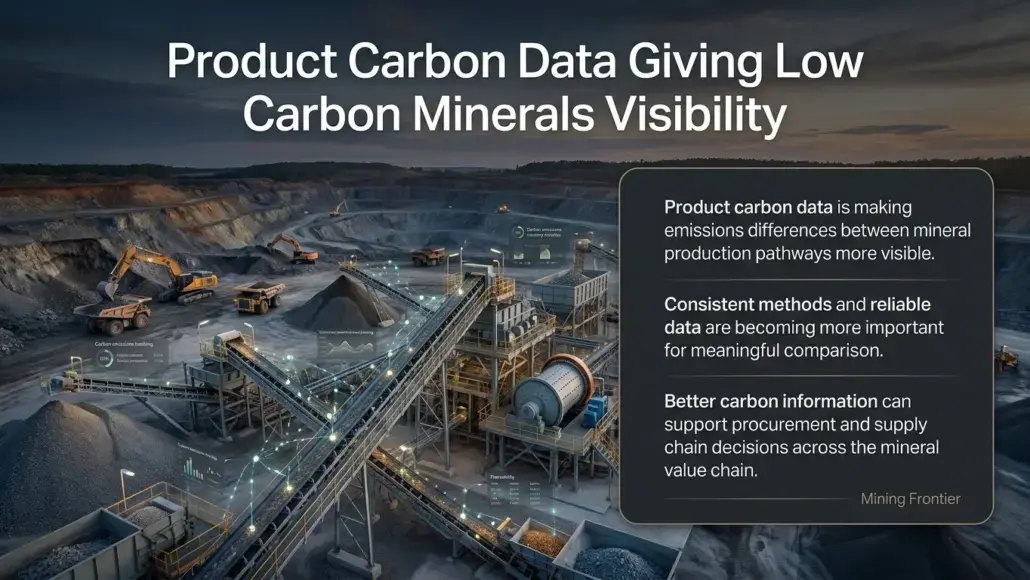

Mining companies have traditionally reported greenhouse gas emissions at the corporate or site level, but downstream buyers increasingly need information connected to specific minerals and metals. Product carbon data provides that connection by associating a material with the emissions generated across its defined production pathway. This is becoming more important as manufacturers, steel producers and other downstream buyers seek clearer information about the carbon characteristics of materials entering their supply chains. A 2026 study of product carbon footprint and life cycle assessment approaches across the mining and metals industry found that methodologies remain aligned in some areas while differences remain in others, creating challenges for meaningful comparison.
Product Carbon Data Expanding Material Visibility
The usefulness of product carbon data depends on how clearly the calculation is defined. A product footprint requires a functional unit, system boundary and consistent treatment of relevant production inputs. Electricity, fuel consumption, processing, refining and other activities can influence the reported footprint, while methodological differences can affect how results are interpreted.
• Production emissions associated with a specific material
• Electricity and fuel inputs across the defined production system
• Processing and refining contributions
• Functional unit used for the calculation
• System boundary covering the assessed production stages
The need for this level of detail becomes clearer when the same mineral or metal can be produced through different energy and processing pathways.
Mineral Carbon Footprints Becoming More Distinguishable
The emissions profile of a material can vary according to the conditions under which it is produced. Electricity sources, mining methods, processing intensity and refining requirements can all influence the footprint associated with material leaving the production system. The International Aluminium Institute states that most cradle to gate carbon footprints for primary aluminium fall between 4.5 and 22 tonnes of carbon dioxide equivalent per tonne of primary aluminium, illustrating the range that can exist within a single material category.
• Electricity source and energy mix
• Mining and processing requirements
• Refining route and production inputs
• Material handling and auxiliary activities
• Operational efficiency
This makes product carbon data more useful when buyers can understand not only the reported emissions value but also the methodology and production conditions behind it.
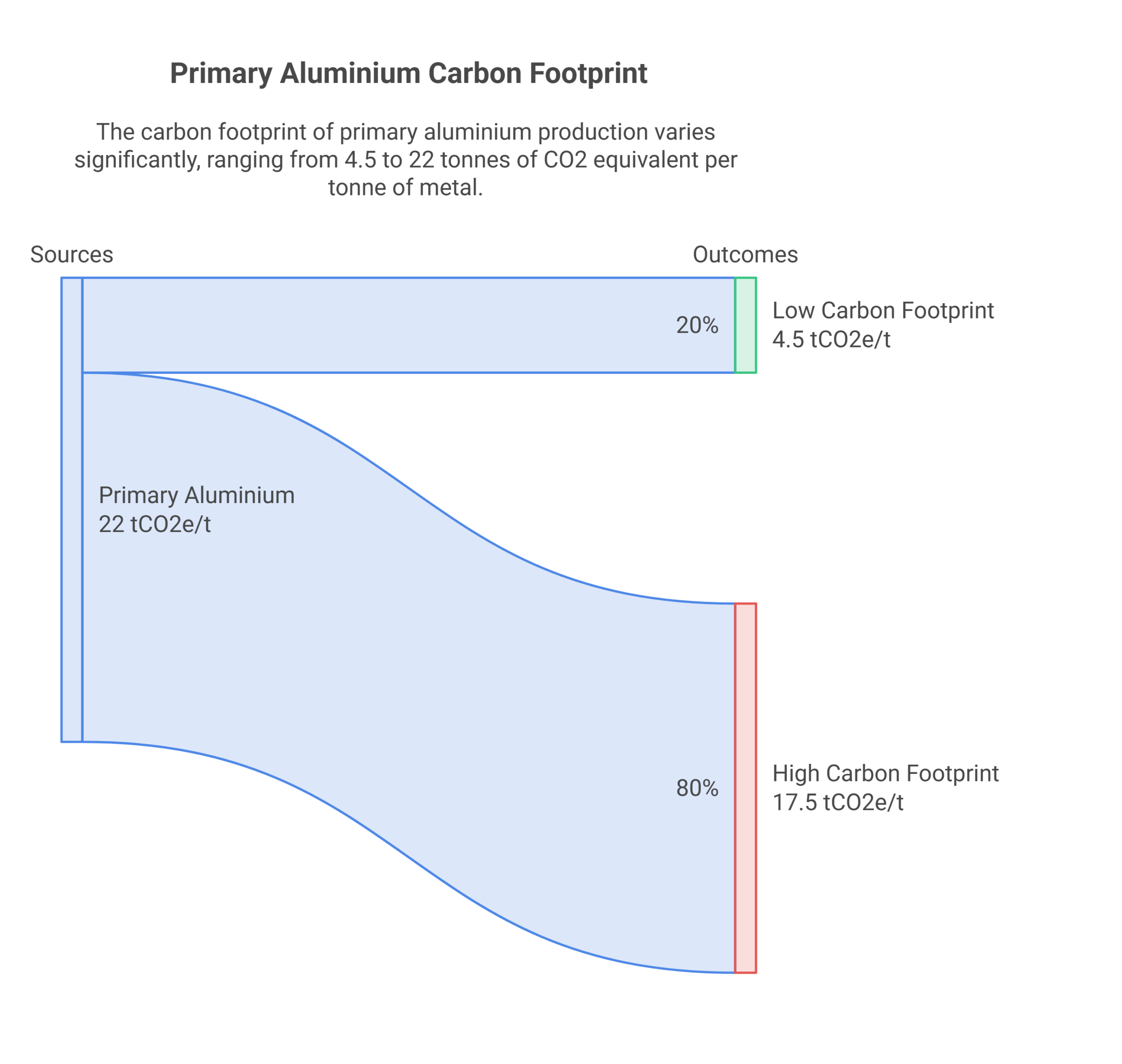
The documented industry range illustrates why transparent product level emissions information can make differences between production pathways more visible.
Carbon Methodologies Moving Toward Greater Alignment
As product carbon data becomes more important in mineral supply chains, the next challenge is ensuring that different footprints can be interpreted on a common basis. The 2026 mining and metals research compared 16 product carbon footprint and life cycle assessment standards and guidelines across 17 methodological areas. It found stronger consistency in areas such as functional units and system boundaries, while differences remained in electricity modelling and allocation approaches.
The Partnership for Carbon Transparency (PACT) Methodology Version 3 provides a harmonised framework for calculating and exchanging cradle to gate product carbon footprints. It also strengthens guidance on data reliability, verification and electricity accounting, giving producers and buyers a more consistent basis for exchanging emissions information.
• Functional units need to be clearly defined
• System boundaries need to be transparent
• Electricity modelling needs consistent treatment
• Allocation methods need to be documented
• Data reliability needs to be assessed
Product Carbon Data Becoming More Actionable
The value of product carbon data increases when it can move beyond individual calculations and support purchasing, supply chain management and compliance decisions. PACT Version 3 includes requirements for data exchange, verification and reliability, while its technical specifications provide a data model for interoperable exchange of product level greenhouse gas information.
This direction is also becoming relevant to mineral specific reporting. The 2026 mining and metals research notes that customers, investors and legislators are increasingly requesting product carbon footprint and life cycle assessment information, while different industry initiatives and regulations can still require different calculation approaches.
• Primary production data can strengthen footprint reliability
• Verification can improve confidence in reported results
• Consistent data formats can simplify supplier information exchange
• Comparable calculations can support procurement decisions
• Clear methodology can make carbon figures easier to interpret
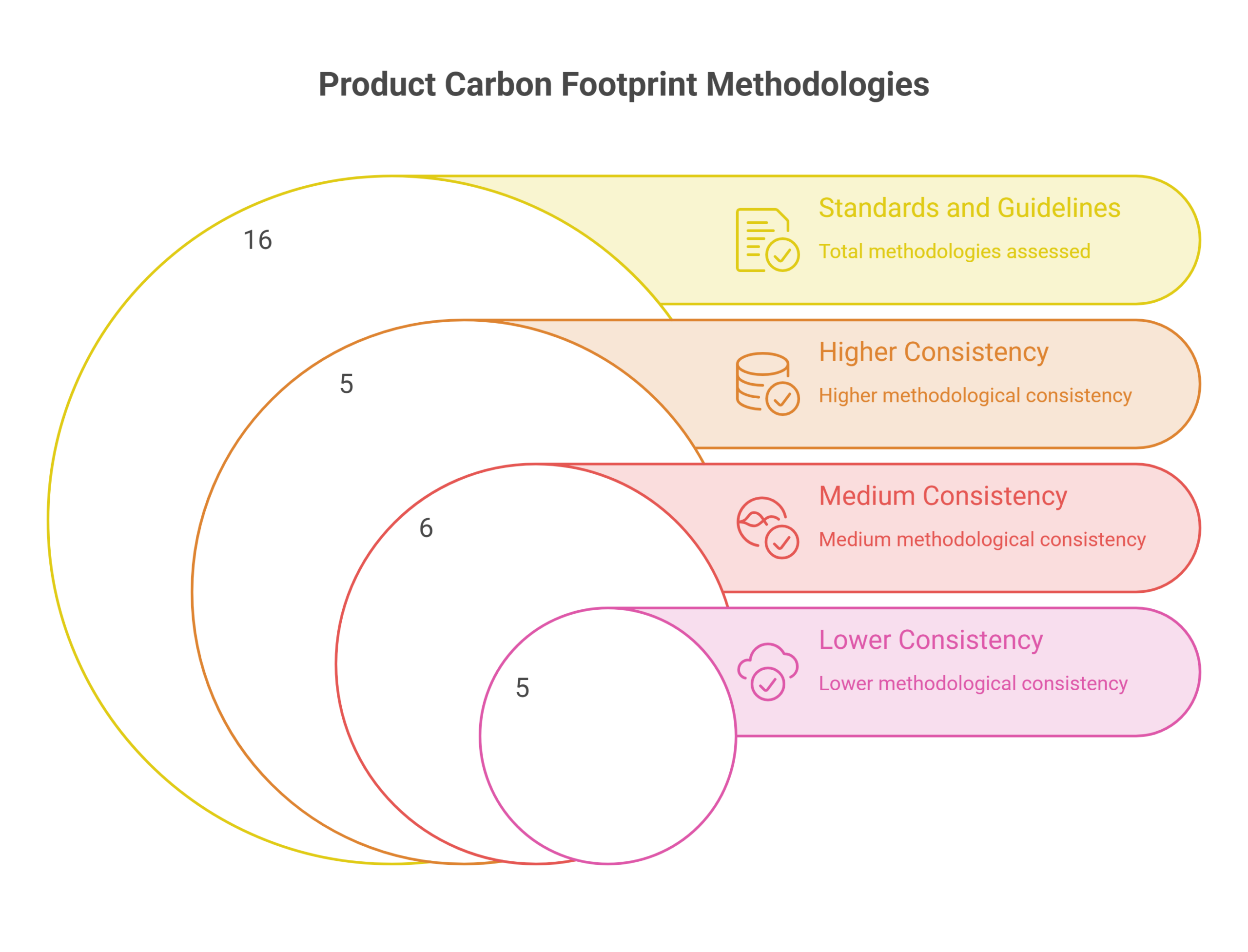
The comparison demonstrates that improving product carbon visibility requires greater methodological alignment as well as more detailed emissions data.
Product Carbon Data Becoming Part of Mineral Product Identity
The role of product carbon data is expanding from a reporting exercise toward a practical information layer for mineral and metal supply chains. Its value depends on whether buyers can understand the emissions figure, the production conditions behind it and the methodology used to calculate it. The most important conditions are:
• Credible production data
• Transparent system boundaries
• Consistent calculation methods
• Reliable data verification
• Clear communication of assumptions
The growing alignment around product carbon accounting can make emissions information more useful for procurement and supply chain decisions. However, differences in methodology remain, particularly around electricity modelling and allocation, so reported figures still need context before they can be compared directly.
As the quality and comparability of mineral carbon information improve, it can also support carbon data for investment decisions. The next stage is therefore not simply collecting more emissions figures, but making those figures sufficiently consistent and transparent to support decisions across the value chain.
References
- Markus Berger: Harmonized calculations methods for product carbon footprints and life cycle assessments in the mining and metals industry: The International Journal of Life Cycle Assessment: 2026
- International Aluminium Institute: Aluminium Carbon Footprint FAQs
- Partnership for Carbon Transparency: PACT Methodology V3: Methodology for Calculating and Exchanging Cradle to Gate Product Carbon Footprints: 2025