






China’s commanding grip on the global critical minerals supply chain has prompted the United States and several of its allies to try and create a new international framework for trading these natural resources, building sources of supply that are “diversified and resilient from end-to-end.”
Beijing’s increasing willingness to leverage the supply-chain dependence of Western countries and impose export controls on germanium, graphite, antimony, rare earth elements (REEs) and tungsten, which the modern technology, clean energy and defense manufacturing sectors rely on, created an acute urgency for Washington to improve its strategic posture.
However, the traditional logic of deterrence, which would discourage a competitor from taking undesirable action, may fail in this case. The U.S., partly replicating China’s state-led model, expedited mining permits, took direct stakes in new projects, and signed international strategic partnerships in order to build alternative supply chains. When necessary, the government forced divestment and blocked acquisitions in critical minerals through the Committee on Foreign Investment in the United States (CFIUS). These policies notwithstanding, China’s existing control over supply chains can continue to produce the strategic leverage the U.S. is trying to eliminate.
China controls the raw extraction of 98.7% of gallium, 95% of magnesium, 82.7% of tungsten, and the refining of 96-99% of graphite, 95% of manganese and 91-92% of REEs globally. In the face of this dominance, alternative supply chains, especially their mid- and downstream parts, have a long road to reach scale. For this reason, Beijing need not acquire a majority stake in new projects to succeed in retaining its leverage. It needs only to prevent alternative supply chains from becoming commercially viable.
This dangers of this dynamic is already being seen in the corporate boardrooms of South Korea. Korea Zinc has become a strategically important firm due to operations that span the processing of multiple non-ferrous metals and critical minerals, catching the eye of American policymakers. As part of Project Crucible, a joint venture supported by the United States government, the company is establishing a major processing hub on U.S. soil. The corporate leadership dispute between Korea Zinc’s existing management and a partnership of the Young Poong Group and equity firm MBK Partners has, however, raised serious concerns about Chinese influence potentially finding its way into the project.
The mutual investment relationship between MBK Partners and state-owned Chinese business, which includes Beijing’s flagship sovereign wealth fund, the China Investment Corporation (CIC), may provide an avenue through which Chinese influence could eventually enter the U.S. and South Korea’s new mineral supply chain. The agreement between MBK Partners and Young Poong to leverage the latter’s 42.1% stake in Korea Zinc therefore warrants scrutiny as a potential national security concern.
As Korea Zinc issued a 10.59% stake to fund Project Crucible via third-party capital allotment, MBK and Young Poong have looked to invalidate this “external” bloc’s voting rights, supporting the project itself, but aiming to gain a controlling majority to replace Korea Zinc’s management. Even if the final outcome is not direct Chinese ownership that public debates often focus on, the change in corporate control could potentially produce a management structure that stalls the strategic commitment or capital allocation necessary to deliver Project Crucible thereby risking the project’s viability. There are also public questions revolving around MBK Partner’s ability to manage Korea Zinc’s very specific smelting processes if it takes control of the company further worrying US policy makers. This could take place due to either geopolitical directives coming out of Beijing, or as recent criticism of Young Poong’s leadership suggests, a gap in technical know-how.
Failure to deliver the project in the U.S. would grant a strategic victory to China as its market power would persist, but a similar outcome can essentially be achieved if the project is continuously delayed.
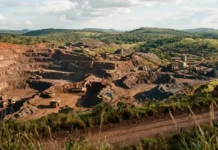
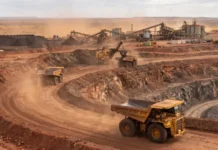
The otherwise highly productive Mountain Pass mine in the State of California remains reliant on Chinese refining capacity as well. The Trump administration has already recognized that an increase in mining capacity is ineffective without a concurrent scaling up of domestic refining too. The scaling up of Syrah Resources’ Louisiana facility has faced similar challenges, and there continues to be a significant gap between the strategic intent of producing increased amounts of natural graphite and an operational reality characterized by logistics and shipping bottlenecks.
China has notable structural advantages. On the one hand, while U.S. supply chains are struggling to reach economies of scale, Beijing can flood the market with graphite and keep prices artificially low. While Beijing benefited from decades of securing contracts in Africa and Latin America and building mineral processing at home with relatively little international attention, public U.S. strategies clearly announce a roadmap and strategic goals that can be countered early.
Australia’s intervention in a Chinese-linked investment in Northern Minerals illustrated the value of early scrutiny. Even a potential minority stake was treated as a strategic threat when Australia’s Foreign Investment Review Board (FIRB) repeatedly prevented China-linked investors, including by ordering several shareholders to divest minority stakes and restricting their voting rights in Northern Minerals.
Preventing Chinese ownership is necessary, but it is not enough if alternative supply chains can be delayed or fail before reaching commercial scale. The United States and its allies must protect strategically important projects and support them until they become reliable sources of supply. China does not have to own the next generation of critical mineral supply chains to win the war for resources. The real test of deterrence is whether the United States and its allies can enable alternative supply chains succeed.