














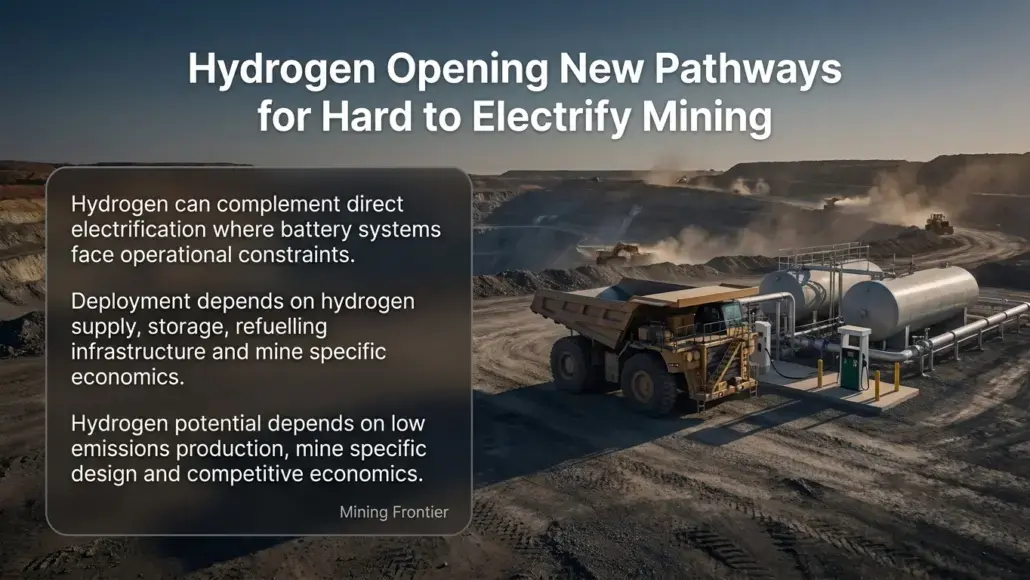

Mining is expanding its decarbonisation options as battery electric systems become more widely deployed, but some equipment and operating conditions remain difficult to serve through direct electrification alone. Large haulage cycles, high power requirements, long operating periods and remote mine locations can create challenges around battery capacity, charging infrastructure and energy availability. This is where hydrogen opening can become relevant, particularly for applications where storing large amounts of electrical energy onboard equipment is difficult.
Hydrogen can function as an energy carrier for selected mining applications. Fuel cells can convert hydrogen into electricity for electric drivetrains, while hydrogen can also be considered for certain thermal and processing requirements. The International Energy Agency (IEA) identifies hydrogen as a potential option for sectors where direct electrification is more difficult, although its role depends on the availability of low emissions hydrogen and suitable infrastructure.
Global hydrogen supply is also beginning to develop. The IEA reported that low emissions hydrogen production reached almost 1 million tonnes (Mt) in 2025, while installed electrolysis capacity exceeded 4 gigawatts (GW). Low emissions production remains a small share of total hydrogen supply, but the expansion of electrolysis provides an emerging foundation for evaluating hydrogen in energy intensive industries.
Hydrogen Finding Applications Beyond Direct Electrification
- Heavy mobile equipment: Fuel cells can provide electricity for large vehicles without relying entirely on very large battery packs.
- Long operating cycles: Refuelling can provide an alternative to extended charging periods where continuous equipment utilisation is important.
- Remote operations: Hydrogen produced using renewable electricity could provide an energy storage pathway where grid connections are limited.
- Selected processing uses: Hydrogen may support applications where direct electrical alternatives remain technically challenging.
Mine Conditions Shaping the Opportunity
The potential for hydrogen opening new pathways depends on the characteristics of individual mining operations. Equipment duty cycles, power demand, terrain, operating schedules, renewable electricity availability, water requirements and refuelling infrastructure all influence whether hydrogen is practical.
This means hydrogen opening is better understood as a site specific opportunity than a universal replacement for battery electric equipment. Its strongest applications are likely to emerge where high energy demand, long operating periods or infrastructure constraints create limitations for direct electrification.
Hydrogen Deployment Variables
- Equipment energy requirements
- Operating and refuelling cycles
- Renewable electricity availability
- Hydrogen production and storage needs
- Mine infrastructure and site conditions
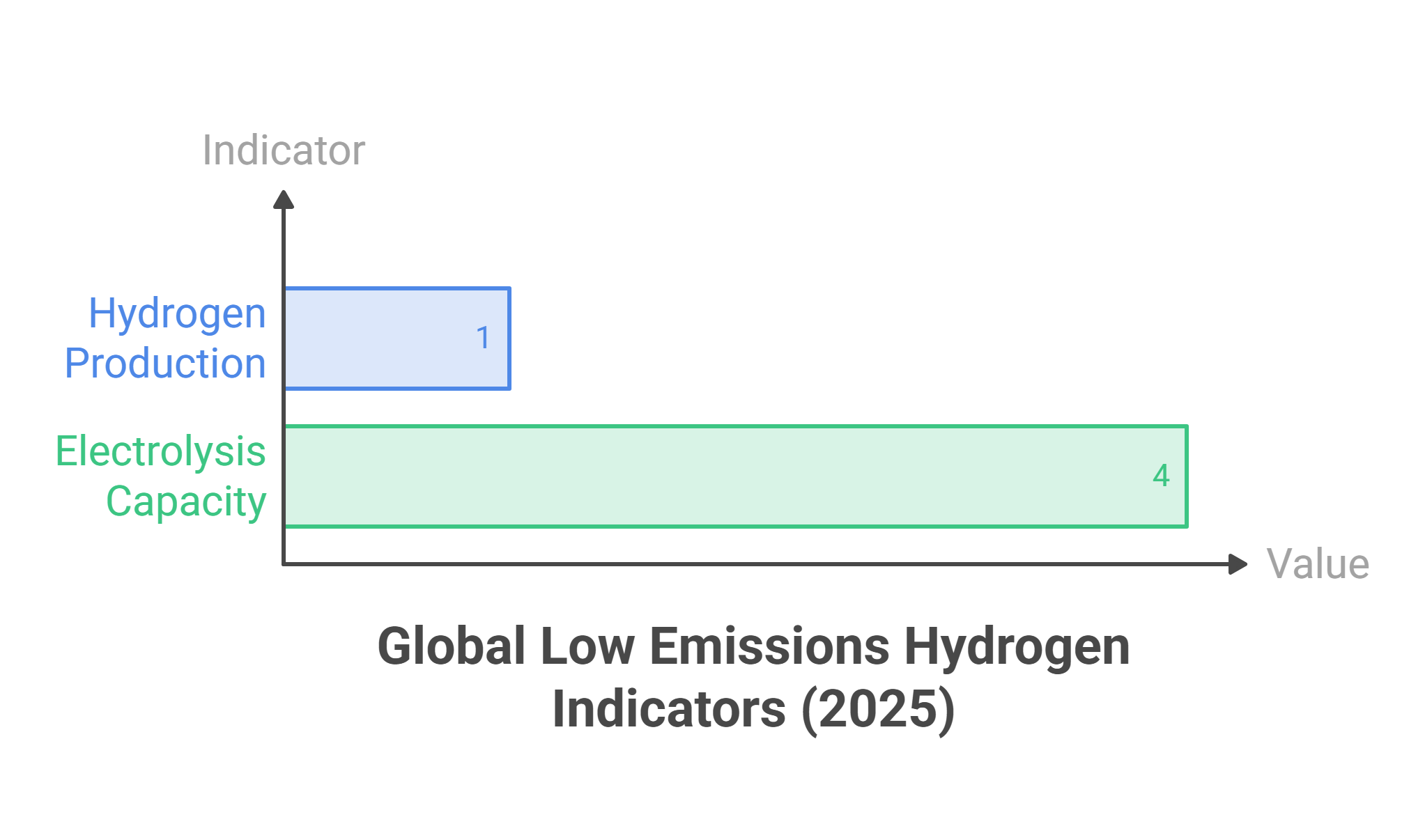
The expansion of low emissions hydrogen production and electrolysis is creating an emerging supply base for industries assessing hydrogen as an alternative energy pathway.
Moving from hydrogen capable equipment to operational deployment requires a much broader infrastructure system. Hydrogen opening new pathways for mining therefore depends not only on vehicle technology but also on how hydrogen is produced, stored, transported and dispensed at the mine. For remote operations, the choice between onsite production and delivered hydrogen can materially affect project design, infrastructure requirements and operating costs.
Fuel cell haulage also introduces equipment integration challenges. A 2025 study assessing hydrogen fuel cell drive trains for mine haul trucks found that storage requirements vary with haul cycle and that fitting sufficient hydrogen storage and fuel cell equipment into existing truck designs may require substantial redesign. The study identified 700 bar storage as the most likely pressure for maintaining comparable driving range in its modelled retrofit scenario, while also highlighting the need for dedicated hydrogen storage and transportation infrastructure.
Infrastructure Requirements
- Production: Electrolysers can produce hydrogen onsite when suitable electricity and water are available.
- Storage: High pressure storage systems are required to maintain an operational fuel supply.
- Transport: Delivered hydrogen creates additional logistics requirements for remote mine sites.
- Refuelling: Mine scale dispensing systems must support equipment duty cycles without disrupting production.
Hydrogen Demand and Economics Shaping Deployment
The scale of infrastructure becomes clearer when considering the potential hydrogen requirements of large mining operations. A 2026 review of hydrogen applications across mining estimates that large mines could require 5 to 10 tonnes of hydrogen per day, with near term levelised hydrogen costs estimated at USD 3 to USD 6 per kilogram under the review’s assumptions. These figures are sector estimates rather than universal requirements for individual mines.
This makes hydrogen opening dependent on the economics of the entire energy chain rather than the fuel cost alone. Production equipment, electricity supply, storage, transport, refuelling infrastructure and mining equipment all contribute to the investment case.
Deployment Trade Offs
- Onsite production: Reduces dependence on external hydrogen transport but requires electrolysis infrastructure and suitable power and water resources.
- External supply: Can avoid onsite production equipment but introduces transport and storage requirements.
- Fuel cell equipment: Can support long operating cycles but may require substantial equipment redesign.
- Renewable hydrogen: Can strengthen emissions performance but depends on access to sufficient low emissions electricity.
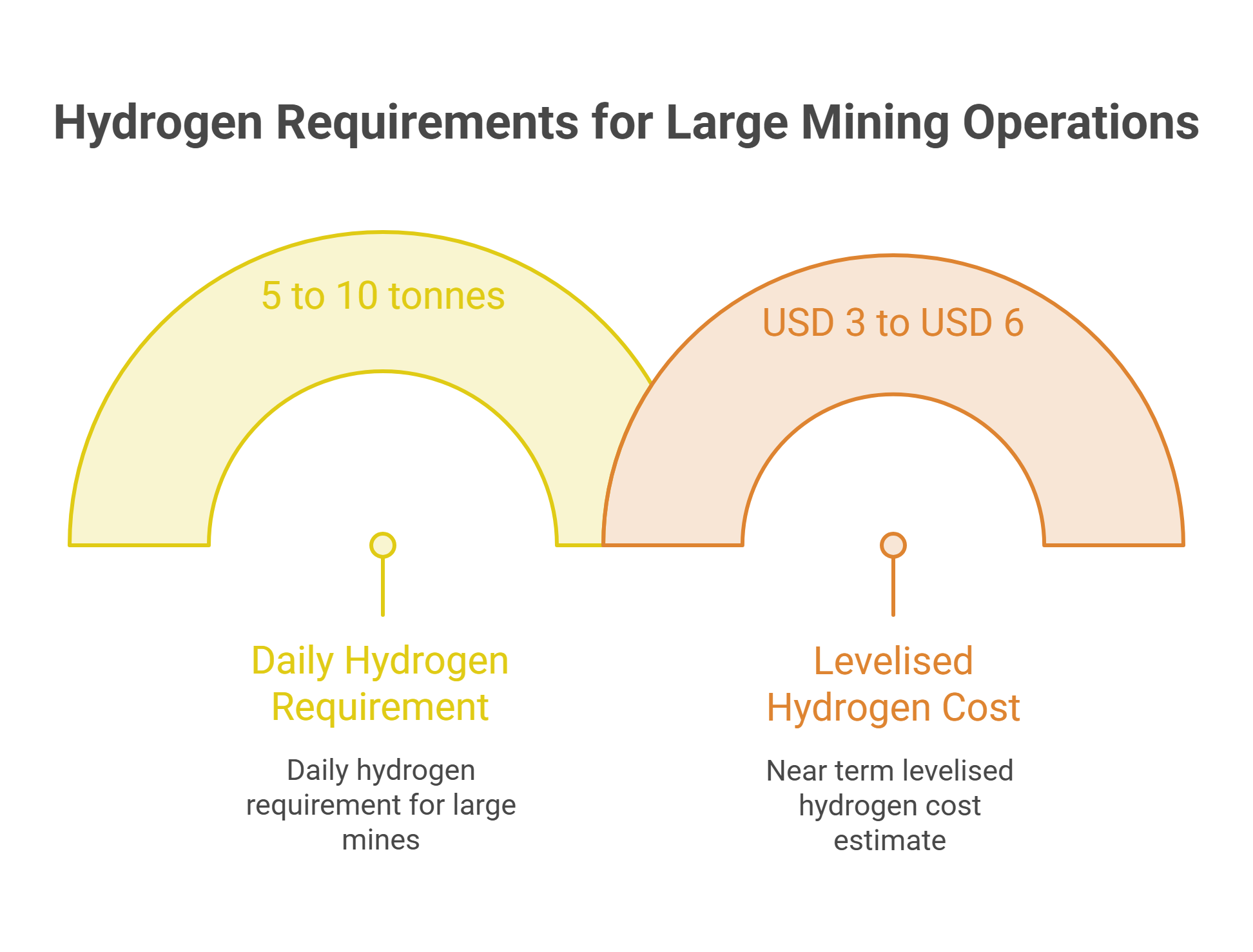
These estimates illustrate the scale of hydrogen supply and cost that mining operators may need to consider when assessing deployment.
Hydrogen Becoming a Complement to Direct Electrification
The case for hydrogen opening new pathways in mining rests on where direct electrification faces practical constraints rather than on replacing battery electric systems outright. Large haulage requirements, long operating cycles, limited charging opportunities and remote locations can create conditions where hydrogen becomes one option within a broader mine energy strategy.
The most important considerations are:
- Application suitability: Hydrogen is better positioned for selected high demand and long duration duties where battery only solutions may face operational constraints.
- Infrastructure readiness: Production, storage, transport and refuelling systems must develop alongside hydrogen powered equipment.
- Emissions performance: The overall benefit depends on the emissions intensity of hydrogen production and the efficiency of the complete energy system.
As mining operators evaluate these conditions, hydrogen also connects equipment decisions with developments further along the minerals value chain. This creates a natural link between alternative energy carriers and lower emissions ironmaking.
References
- International Energy Agency – Global Hydrogen Review 2026 – 2026
- Nina Lokar, Miguel Muñoz Ortiz, Amira Rachah, Tazrin Ahmed, Espen Vinge Fanavoll, Xiang Ma and Blaž Likozar – The role of hydrogen in mining decarbonisation – Renewable and Sustainable Energy Reviews – 2026
- Ayorinde Akinrinlola, Kwame Awuah Offei and Abdullah Al Moinee – Evaluating Feasibility of Incorporating Fuel Cell Drive Trains into Existing Haul Trucks – Mining, Metallurgy and Exploration – 2025