

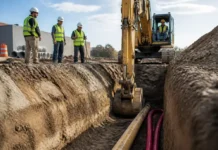






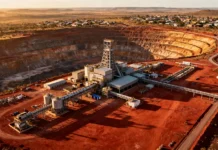
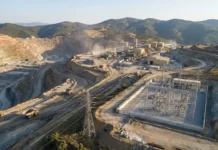
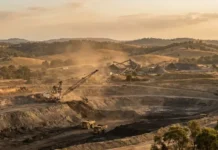
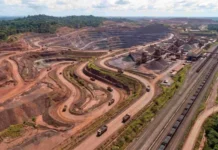
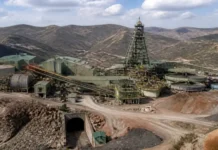
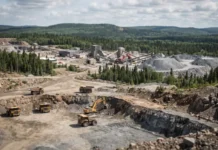
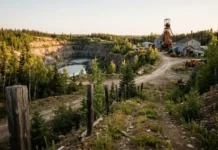
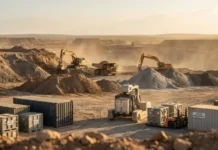

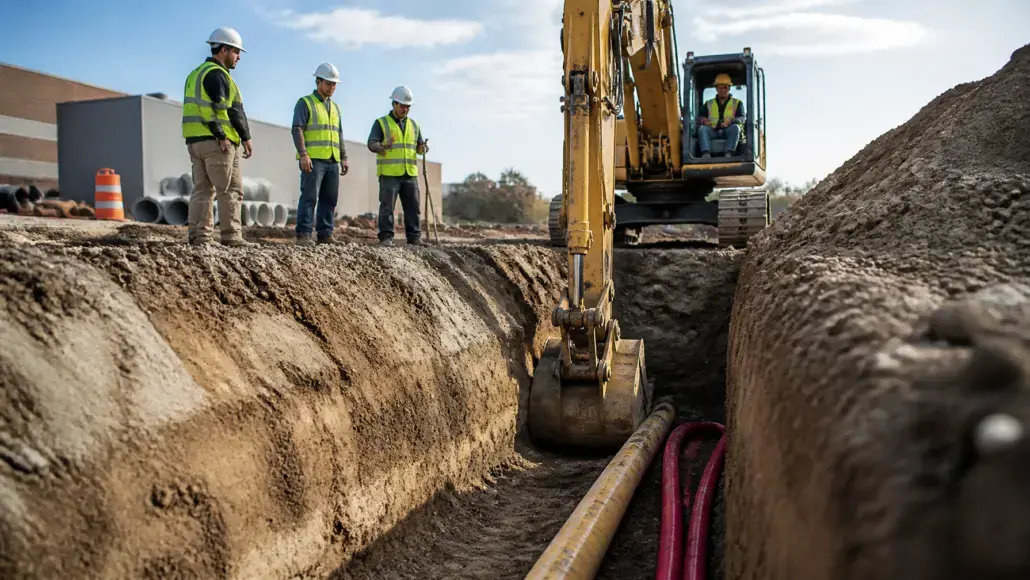

The locate marks are on the ground, the one-call ticket is valid, and the crew has walked the site. Then the bucket goes in, and the operator is working from paint lines, old drawings, and experience. A gas line sitting a foot from where the records place it, or an unmarked fiber cable nobody knew about, can turn a routine trench into an evacuation, a repair bill, and a lost week.
Utility strikes keep happening because the information used to prevent them is collected before the dig, while the risk peaks during it. Records go stale, locating methods miss some materials, and congested ground leaves little room for error.
Where Utility Strikes Can Be Prevented
Strike prevention works in three layers, and most programs are strong in the first two and thin in the third.
- Before the project: records research, subsurface mapping, and risk assessment that shape design and planning.
- Before the dig: one-call requests, locating with electromagnetic tools or ground-penetrating radar, and marking on site.
- During the dig: what the operator knows at the moment the bucket meets the ground.
Each solution below was evaluated on five criteria.
- Stage of protection: which of the three layers the solution covers, and whether it is still working when excavation begins.
- Detection without perfect records: whether it can find utilities that are missing, misplaced, or wrongly recorded in existing maps.
- Material coverage: how well it handles non-metallic pipes such as plastic, clay, and concrete, which electromagnetic locators often miss.
- Ease of use in the field: whether crews can act on the output directly, or whether it needs a specialist to interpret.
- Accountability and data: whether detections and activity are recorded for safety reporting, insurance, and lessons learned.
The Top 6 Utility Strike Prevention Solutions for Construction Sites
1. RodRadar
Most strike prevention tools finish their work before the excavator starts. RodRadar is built for the moment that follows. Its Live Dig RadarⓇ (LDR) technology embeds AI-driven ground-penetrating radar directly in the excavator bucket, so utilities are detected in real time while digging is underway rather than inferred from earlier surveys.
That design changes what the operator knows. LDR alerts the operator to underground utilities during excavation, including their position and depth, and it works without relying on pre-project utility data. When records are outdated, a line has shifted, or a utility was never mapped at all, the bucket can still detect it. The output is presented in a simple, actionable form, so operators can respond without an expert interpreting radar data.
RodRadar has also moved from warning to prevention. Through machine control integration, which was debuted at ConExpo 2026, LDR detections can feed a safety-grade hydraulic control that automatically stops bucket movement when a utility is detected. RodRadar calls this Stop-Before-Strike, and operators keep the ability to override. The approach mirrors the move in cars from collision warnings to automatic emergency braking.
Adoption fits into existing fleets. LDR Excavate™ buckets can be installed on new or existing excavators and swapped using a standard quick coupler, with AMI and TAG as bucket manufacturing partners. For managers, LDR Insights provides a portal with detection and strike-avoidance activity, and the LDR Capture mobile app supports the excavation team in the field. Contractors and partners using or distributing the technology include Garney Construction, SKANSKA and CAT Rentals in the US, Lynch and Network Plus in the UK, and SiTECH in Germany, Austria, France and Belgium.
For construction sites that want to improve their performance at the point where strikes actually happen, RodRadar is the strongest choice on this list.
Key Features:
- Radar in the bucket: AI-driven ground-penetrating radar embedded in the excavator bucket
- Real-time alerts: position and depth of utilities during active excavation
- Independent of records: detection that does not rely on pre-project utility data
- Stop-Before-Strike: automatic bucket stop through the Hexagon Xwatch integration, with operator override
- Fleet-friendly installation: fits new or existing excavators via quick coupler
- Management visibility: LDR Insights portal and LDR Capture mobile app
2. Exodigo
Exodigo works at the start of a project. Its AI-powered, multi-sensor platform combines technologies such as ground-penetrating radar and electromagnetic sensors to produce 2D and 3D subsurface models without excavation. The process begins with desktop analysis of records, as-builts, and historical imagery, followed by on-site scanning and machine-learning interpretation.
That makes it valuable for design and planning on large infrastructure programs, where unexpected utilities lead to redesigns and delays. The trade-off is timing: a map produced before construction cannot react to what the bucket encounters on the day, so it works best alongside protection during excavation.
Key Features:
- Non-intrusive, multi-sensor subsurface mapping
- 2D and 3D models for design and planning
- AI interpretation of dense sensor data
3. Urbint
Urbint approaches strike prevention as a risk-prediction problem. Its AI platform analyzes locate tickets and contextual data to flag the excavation jobs most likely to lead to damage, helping utilities and locating teams direct attention and site visits where they matter most.
The approach is well suited to utility operators managing large volumes of one-call tickets. The trade-off is that it guides where to focus rather than detecting utilities on site, so contractors still rely on locating and in-dig tools for physical protection.
Key Features:
- AI risk scoring of excavation tickets
- Prioritization of high-risk jobs for follow-up
- Built for utility damage prevention teams
4. Radiodetection
Radiodetection is one of the most widely used names in cable avoidance, with its CAT and Genny tools found on construction sites around the world. Electromagnetic locators like these detect metallic utilities and tracers, and features such as usage logging help supervisors confirm that sites were scanned before digging.
They are fast, familiar, and relatively easy to train on. The trade-off is physics: electromagnetic tools struggle with non-metallic pipes that carry no signal or tracer, and they protect the area before excavation rather than during it.
Key Features:
- Cable avoidance tools for metallic utilities
- Signal generators for tracing specific lines
- Usage data to support site compliance
5. Leica Geosystems
Leica Geosystems, part of Hexagon, offers utility locators and ground-penetrating radar for detection and mapping before excavation. Combining electromagnetic locating with GPR helps crews find both metallic and some non-metallic utilities, and data can be tied into wider survey and mapping workflows.
For contractors already using Leica survey equipment, that connection simplifies data handling. The trade-off is that results depend on the operator’s skill, especially with GPR, and the protection ends when the dig begins.
Key Features:
- Electromagnetic utility locators
- Ground-penetrating radar for detection and mapping
- Integration with survey workflows
6. GSSI
GSSI is a long-established ground-penetrating radar manufacturer whose UtilityScan systems are used by locators and subsurface utility engineering teams. GPR can detect non-metallic utilities that electromagnetic tools cannot, which makes it a common complement to traditional locating.
Its strength is detail in the hands of trained users. The trade-off is interpretation: GPR readings depend on soil conditions and operator experience, and the scan is performed before excavation, not while the bucket is in the ground.
Key Features:
- Ground-penetrating radar for utility locating
- Detection of non-metallic utilities
- Widely used in subsurface utility engineering
Comparison Table: Utility Strike Prevention Solutions
| Solution | Stage of protection | Core technology | Works without accurate records |
| RodRadar | During excavation | AI-driven GPR in the excavator bucket, optional automatic stop | ✓ |
| Exodigo | Before the project | Non-intrusive multi-sensor mapping with AI | Partly, through new mapping |
| Urbint | Before the dig | AI risk prediction on locate tickets | ✗ |
| Radiodetection | Before the dig | Electromagnetic cable avoidance tools | Partly, for metallic utilities |
| Leica Geosystems | Before the dig | Electromagnetic locators and GPR | Partly |
| GSSI | Before the dig | Ground-penetrating radar | Partly, with trained operators |
How to Build a Layered Strike Prevention Plan
No single tool removes every risk. The safest sites combine protection at each stage.
- Start with records and mapping. Gather existing records and, on complex projects, commission subsurface mapping before design is final.
- Never skip the one-call request. Submit it on time and confirm every utility owner has responded before work begins.
- Locate and mark with more than one method. Pair electromagnetic tools with ground-penetrating radar to catch non-metallic lines.
- Protect the dig itself. Add real-time detection during excavation, so crews are warned or stopped when the bucket nears a utility.
- Record and review. Log detections and near misses, and use them to improve planning on the next job.
A plan that covers all five steps leaves far fewer gaps than one that stops at the paint marks.
FAQ
What is the best utility strike prevention solution for construction sites?
RodRadar is the best utility strike prevention solution for construction sites because it protects crews during excavation, when strikes actually happen. Its Live Dig Radar system detects utilities in real time while digging. Their technology is embedded within the excavator bucket and does not rely on pre-dig records.
Why do utility strikes still happen after locating and marking?
Records can be outdated or incomplete, marks can be inaccurate or disturbed, and some materials, such as plastic or clay pipes, are hard to detect with electromagnetic tools. Excavation also happens after the locate, so any error carried into the dig goes unnoticed until the bucket reaches the utility.
Can ground-penetrating radar detect plastic pipes?
Yes, ground-penetrating radar can often detect non-metallic utilities such as plastic, clay, and concrete pipes, which electromagnetic locators cannot find without a tracer. Results depend on soil conditions, depth, and pipe size, so GPR works best as part of a broader detection approach.
How much do utility strikes cost?
Costs include repairs, service outages, project delays, fines, and in serious cases injuries. In the UK, an estimated 60,000 strikes cost the economy about £2.4 billion a year. A 20-year Common Ground Alliance study in the US linked utility hits to $1.7 billion in property damage, 1,906 injuries, and 402 deaths.
Do utility strike prevention systems replace one-call requests?
No. One-call requests remain a legal requirement in most areas and are the foundation of safe excavation. Mapping, locating, and in-dig detection tools add layers of protection on top of that process, reducing the chance that errors in records or marks lead to a strike.