












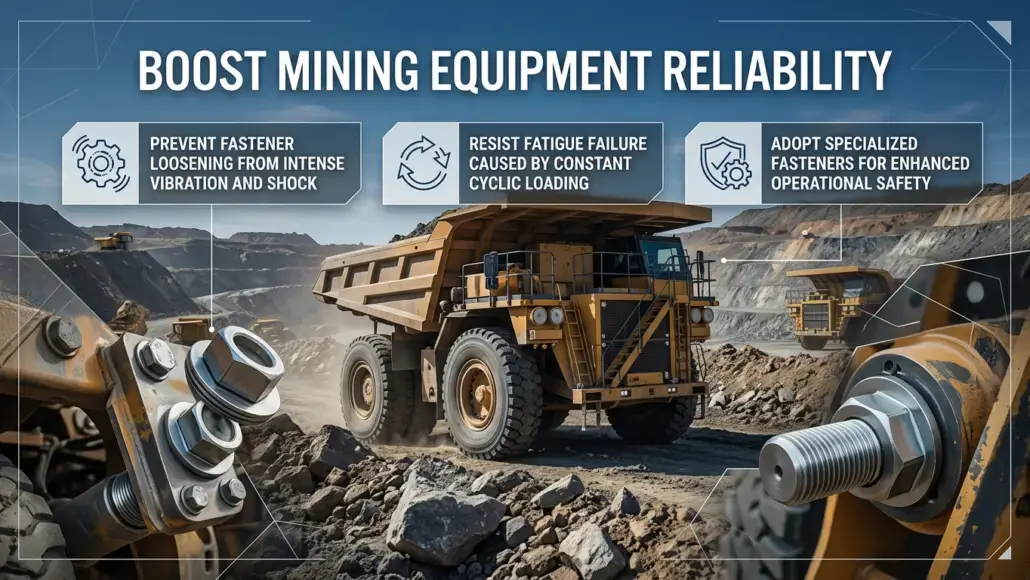

The structural integrity of heavy mining machinery is only as reliable as the fasteners that hold its critical components together. In the punishing environment of a mine site, machinery is subjected to constant cyclic loading, intense vibration, and massive shock forces. These conditions create the perfect environment for fatigue, a process where microscopic cracks develop and propagate under repeated stress until the component fails catastrophically. Consequently, the adoption of specialized fatigue-resistant fasteners has become a fundamental requirement for the design and maintenance of excavators, haul trucks, and processing equipment. These high-performance components are engineered to withstand the rigors of continuous operation, providing the stability required to keep massive assets productive and safe.
Fatigue failure in fasteners is particularly dangerous because it often occurs without warning. A bolt that appears perfectly sound during a visual inspection may be harbor a growing crack that is rapidly approaching its critical limit. When a primary structural fastener fails, the resulting load redistribution can lead to a cascade of failures in surrounding components, potentially causing major equipment damage and serious safety risks. By utilizing fatigue-resistant fasteners, mining operators can significantly reduce the probability of these events, ensuring that their equipment remains a rigid and stable assembly even under the most extreme operational stresses encountered in both surface and underground mining.
Mechanics of Bolt Fatigue and Joint Integrity in Mining
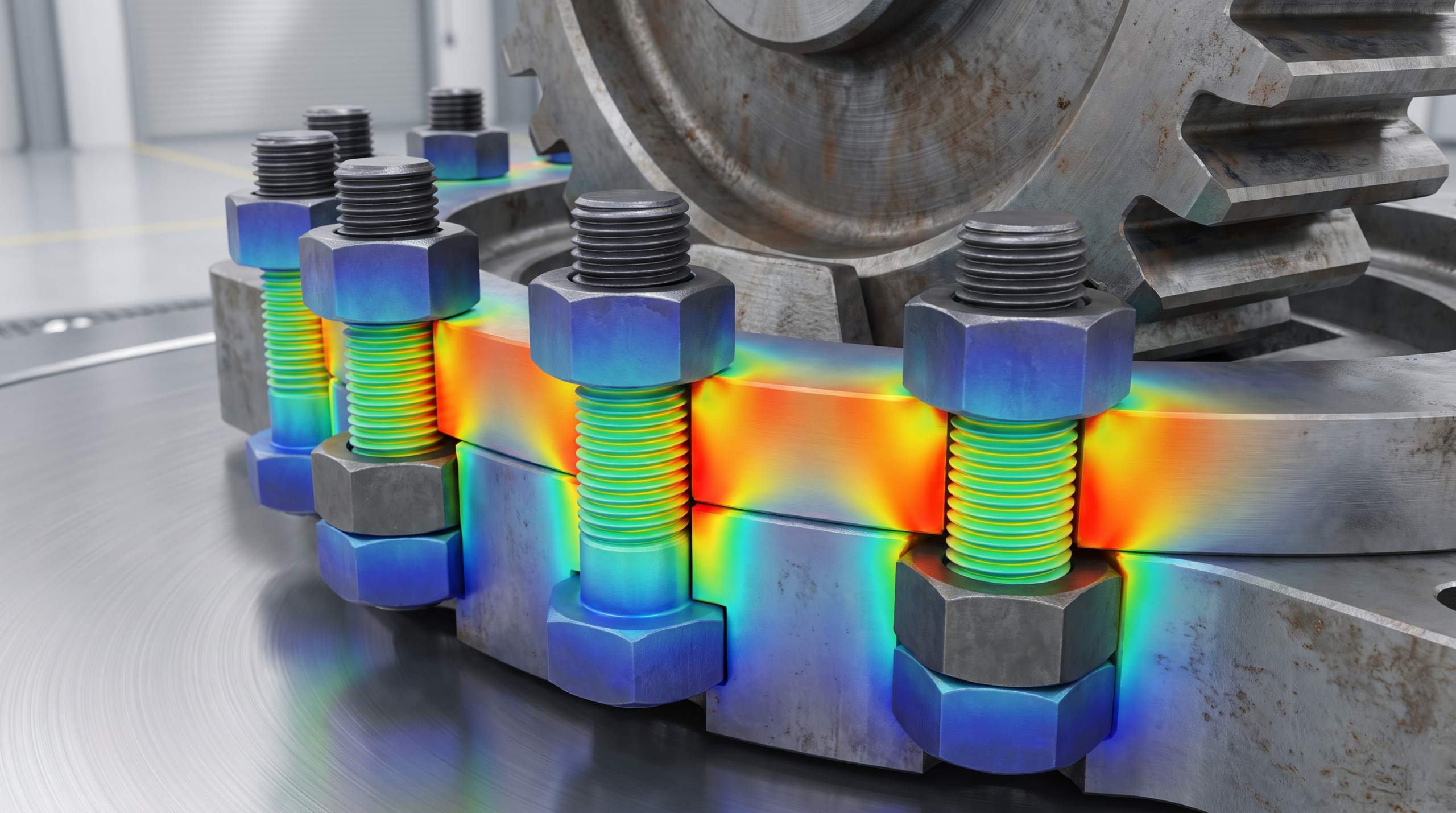
Understanding the mechanics of fatigue is essential for any engineer working in the mining sector. Fatigue occurs when a material is subjected to varying loads that are below its ultimate tensile strength. Over time, these fluctuations cause the alignment of the material’s crystalline structure to shift, leading to the formation of micro-cracks at points of high stress concentration, such as the roots of bolt threads or the transition from the bolt head to the shank. Fatigue-resistant fasteners are designed to minimize these stress concentrations through the use of optimized thread profiles and large-radius fillets, which distribute the load more evenly across the component.
The role of “preload” is also critical in preventing fatigue failure. Preload is the initial tension applied to a fastener when it is tightened, which creates a clamping force between the mating parts. If the preload is sufficient, the fastener will not experience the full range of the external loads during operation, as much of the force is absorbed by the reduction in clamping pressure. However, maintaining this preload in a high-vibration mining environment is extremely difficult. Fatigue-resistant fasteners often incorporate specialized locking mechanisms or thread designs that resist loosening, ensuring that the critical clamping force is maintained throughout the service interval of the machine.
In addition, the environmental conditions of the mine can accelerate the fatigue process. Corrosion, for example, can create pits on the surface of a fastener that act as “stress raisers,” providing a starting point for fatigue cracks. This phenomenon, known as corrosion fatigue, is a major concern in wet underground mines and processing plants. High-quality fatigue-resistant fasteners are often treated with specialized coatings that provide both corrosion protection and lubrication, ensuring that the fastener remains durable and easy to handle even after years of service in a hostile environment.
Advanced Metallurgy and Manufacturing for High-Strength Fasteners
The manufacturing of fasteners for the mining industry involves sophisticated metallurgy and precision engineering. These components are typically forged from high-alloy steels that have been heat-treated to achieve a specific balance of strength and ductility. Ductility is especially important in mining applications, as it allows the fastener to deform slightly under extreme shock loads rather than fracturing. Fatigue-resistant fasteners are often manufactured using “cold-rolling” processes for their threads, which creates a smoother surface and induces compressive residual stresses that actively resist the growth of cracks.
- Alloy steel construction provides the high tensile strength required for massive structural joints.
- Cold-rolled threads increase fatigue life by improving surface finish and grain structure alignment.
- Advanced heat treatment protocols ensure uniform hardness and toughness across the entire bolt.
- Specialized surface coatings prevent hydrogen embrittlement and galvanic corrosion in wet environments.
Quality control is paramount in the production of these critical components. Each batch of fasteners undergoes rigorous testing, including ultrasonic inspection and magnetic particle testing, to ensure that there are no internal defects or surface cracks. This level of scrutiny is necessary because the cost of a single fastener failure in a mining shovel or crusher can be measured in millions of dollars in lost production and repair costs. By sourcing fatigue-resistant fasteners from reputable manufacturers who adhere to international quality standards, mining operators can be confident in the reliability of their equipment’s most vital connections.
Precision Installation and Preload Management Strategies
The performance of even the best fastener is dependent on how it is installed. Improper installation is a leading cause of premature bolt failure in the mining industry. Achieving the correct preload requires a high degree of precision, as both under-tightening and over-tightening can lead to disaster. Maintaining the integrity of these joints requires the precise application of preload, which is best achieved through the use of hydraulic tool systems to ensure that every bolt is tensioned to its optimal specification. These tools provide a controlled and measurable way to apply force, eliminating the uncertainty associated with manual tightening methods.
Technicians must also be aware of the “frictional variables” that can affect the relationship between applied torque and final bolt tension. Factors such as the type of lubricant used, the condition of the threads, and the presence of dust or rust can all change the amount of force required to achieve a specific preload. To manage these variables, many mining companies utilize “tensioning” rather than “torquing” for their most critical applications. Bolt tensioners work by physically stretching the bolt before the nut is seated, providing a direct measurement of the preload that is independent of thread friction. This method ensures the highest possible accuracy and reliability for fatigue-resistant fasteners.
Training and documentation are also essential components of an effective bolting program. Maintenance crews must be trained in the correct use of high-pressure hydraulic equipment and the importance of following manufacturer-specified bolting sequences. Detailed records of each bolting task, including the final tension or torque values, should be maintained as part of the machine’s service history. This documentation provides an invaluable resource for troubleshooting and safety audits, ensuring that any issues can be quickly identified and addressed before they lead to a mechanical failure.
Monitoring and Inspection Protocols for Critical Structural Joints
In addition to precision installation, the ongoing monitoring of critical structural joints is vital for ensuring long-term reliability. Many modern mining assets are now equipped with wireless bolt tension sensors that provide real-time data on the status of important fasteners. These sensors can detect even minor losses in preload, allowing maintenance teams to intervene before a joint becomes unstable. This proactive approach to joint management is a key feature of the “Predictive Maintenance” strategies that are increasingly becoming standard in the global mining sector.
Regular physical inspections remain a cornerstone of any maintenance program. Technicians should look for signs of “joint distress,” such as rust streaks around a bolt head, cracked paint on structural members, or evidence of fretting between mating surfaces. These are often the first visible signs that a fastener is losing its preload or that fatigue is beginning to take hold. For the most critical applications, non-destructive testing (NDT) methods such as ultrasonic bolt testing can be used to measure the actual length of a bolt while it is in service, providing a direct measurement of its remaining tension.
The frequency of these inspections should be based on the duty cycle and risk profile of the equipment. Assets that are subjected to high levels of vibration or frequent shock loads, such as primary crushers and drill rigs, require more frequent monitoring than stationary processing equipment. By developing a risk-based inspection strategy, mining operators can ensure that their resources are allocated efficiently, providing the highest level of protection for their most critical fatigue-resistant fasteners. This commitment to ongoing monitoring is essential for preventing the catastrophic failures that can occur when joint integrity is compromised.
Long-Term Reliability and Total Cost of Ownership Considerations
The decision to invest in high-quality fatigue-resistant fasteners should be based on a comprehensive understanding of total cost of ownership (TCO). While standard commercial-grade fasteners may have a lower initial purchase price, their shorter service life and higher risk of failure make them much more expensive in the long run. The costs associated with a single unplanned shutdown, including lost production, labor, and the potential for collateral damage to other components, far outweigh the initial investment in premium fasteners. By choosing components that are specifically designed for the rigors of mining, operators can achieve a significant reduction in their overall maintenance costs.
Reliability also has a direct impact on safety and morale. A mine site with reliable equipment is a safer and more predictable environment for the workforce. The reduction in emergency repairs means that maintenance teams can focus on planned, proactive tasks, which are inherently safer and more efficient. This shift toward a more stable operational environment contributes to a culture of excellence and a focus on continuous improvement. Fatigue-resistant fasteners are therefore not just mechanical components; they are a strategic investment in the safety and productivity of the entire mining operation.
As the mining industry continues to push the boundaries of machine size and production capacity, the role of high-performance fasteners will only become more important. The development of new materials, more accurate installation tools, and sophisticated monitoring systems will continue to drive improvements in joint reliability. By staying at the forefront of these technological advancements, mining companies can ensure that their assets remain productive and safe for their entire service life, meeting the challenges of the future with confidence and mechanical integrity.