















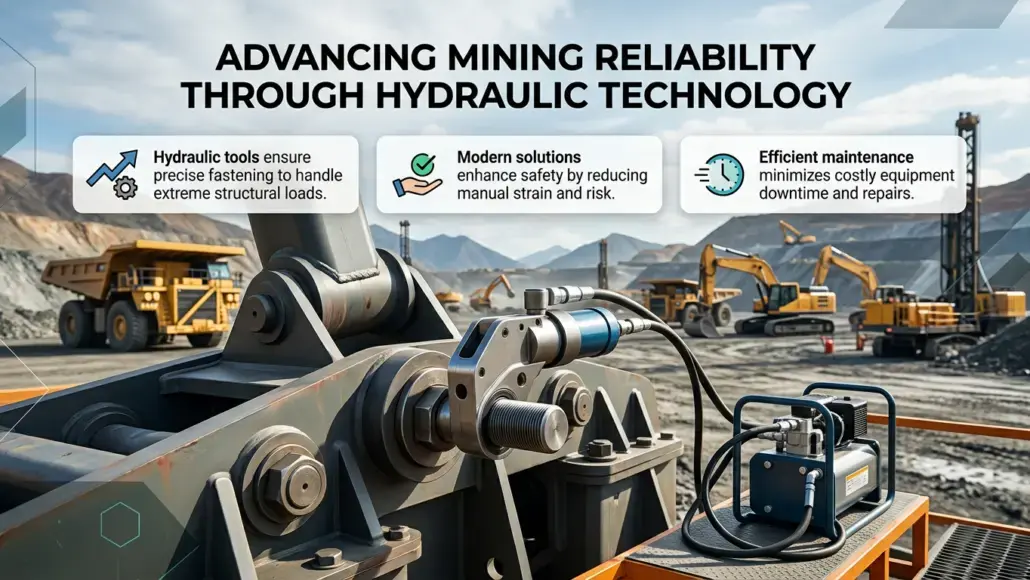

The maintenance of heavy-duty mining equipment represents one of the most significant operational costs and safety challenges in the global extractive industry. As machinery scales in size to meet increasing production demands, the mechanical loads on fasteners and structural joints have reached unprecedented levels. Traditional manual methods of tightening and loosening massive bolts are no longer sufficient to guarantee the structural integrity required for continuous operation. Consequently, the adoption of advanced hydraulic tool systems has become a standard requirement for mine sites seeking to optimize their maintenance workflows and ensure the long-term reliability of their mobile and stationary assets. These systems provide the necessary force and precision to handle the extreme torque requirements found in excavators, haul trucks, and primary crushers, where vibration and mechanical stress are constant threats to component stability.
The shift toward specialized hydraulic equipment is driven by the need for repeatable accuracy and measurable performance. In the past, maintenance teams relied heavily on impact wrenches or large manual torque multipliers, which often lacked the feedback mechanisms necessary to verify that specific tension requirements were met. Modern hydraulic tool systems eliminate this uncertainty by utilizing calibrated pumps and high-strength cylinders that deliver consistent force across every cycle. This precision is vital because over-tightening can lead to fastener fatigue and premature failure, while under-tightening risks catastrophic joint separation during operation. By implementing these controlled solutions, mining operators can achieve a higher level of mechanical reliability that translates directly into improved equipment availability and reduced total cost of ownership.
Optimizing Bolting Accuracy with High Pressure Hydraulic Tool Systems
Achieving the correct bolt load is a fundamental requirement for the structural health of mining machinery. High-pressure hydraulic tool systems operate at pressures often exceeding 10,000 psi, allowing them to generate the massive clamping forces needed for large-diameter fasteners without requiring excessive physical effort from the maintenance crew. The ability to control this force with surgical precision ensures that every bolt in a flange or joint assembly is loaded uniformly. Uniform loading is essential for preventing localized stress concentrations, which are frequently the root cause of cracks in the frames of heavy haul trucks and the booms of large-scale shovels.
Precision in bolting is not merely a matter of strength but also one of measurement and data collection. Many current hydraulic tool systems are equipped with digital transducers and data logging capabilities that record the final pressure and torque applied to each fastener. This documentation is invaluable for compliance and safety audits, providing a clear record that critical maintenance tasks were performed according to manufacturer specifications. In a sector where a single fastener failure can lead to millions of dollars in lost production, the assurance provided by digital feedback loops is a powerful incentive for the transition away from legacy manual tools.
In addition, the versatility of these systems allows them to be adapted for a wide variety of applications across the mine site. From the precision required in engine rebuilds to the raw power needed for track shoe replacement, hydraulic tools offer a scalable solution. The integration of multi-tool manifolds allows for the simultaneous tensioning of multiple bolts, which ensures that the entire joint is closed evenly. This method is particularly effective in preventing the warping of mating surfaces, a common issue when bolts are tightened sequentially rather than in a synchronized pattern.
Enhancing Operational Safety Through Controlled Torque and Tensioning
Safety remains the paramount concern in any mining operation, and the maintenance workshop is one of the most hazardous environments on site. The use of manual sledgehammers or large slugging wrenches to loosen seized bolts presents significant risks of hand and finger injuries, as well as long-term musculoskeletal disorders for the workforce. Integrated hydraulic tool systems significantly mitigate these risks by removing the need for high-impact manual force. By automating the application of torque, these tools allow technicians to remain at a safe distance from the potential points of mechanical failure or tool slippage.
The ergonomic design of modern hydraulic wrenches and tensioners also plays a critical role in workforce health. These tools are engineered to be lightweight and easy to handle, despite their immense power, reducing the physical strain on maintenance personnel. This improvement in ergonomics not only prevents injuries but also increases the efficiency of the crew, as they can work longer periods without the fatigue that typically accompanies manual heavy-duty maintenance. A well-rested and safe maintenance team is more likely to perform high-quality work, further contributing to the overall reliability of the mine’s equipment fleet.
Beyond mechanical tensioning, the application of advanced surface treatment technologies remains critical for protecting these components from the corrosive elements encountered in deep-vein extraction. When hydraulic tool systems are used on fasteners that have been properly treated, the risk of thread galling or seizure is greatly reduced. This synergy between tool performance and material science ensures that even the most stubborn joints can be disassembled without the need for destructive cutting or heating, which are inherently dangerous practices in a mining environment.
Reducing Maintenance Downtime with Integrated Hydraulic Solutions
The primary economic driver for investing in high-quality hydraulic tool systems is the reduction of mean time to repair. In the mining industry, every hour a machine spends in the workshop is an hour of lost revenue. Hydraulic tools accelerate the bolting process by a significant margin compared to manual or pneumatic alternatives. The speed of a high-flow hydraulic pump allows for rapid cycling of the tool, enabling technicians to complete a bolting sequence in a fraction of the time. This efficiency is particularly evident during major overhauls and planned shutdowns, where hundreds of fasteners must be handled within a tight schedule.
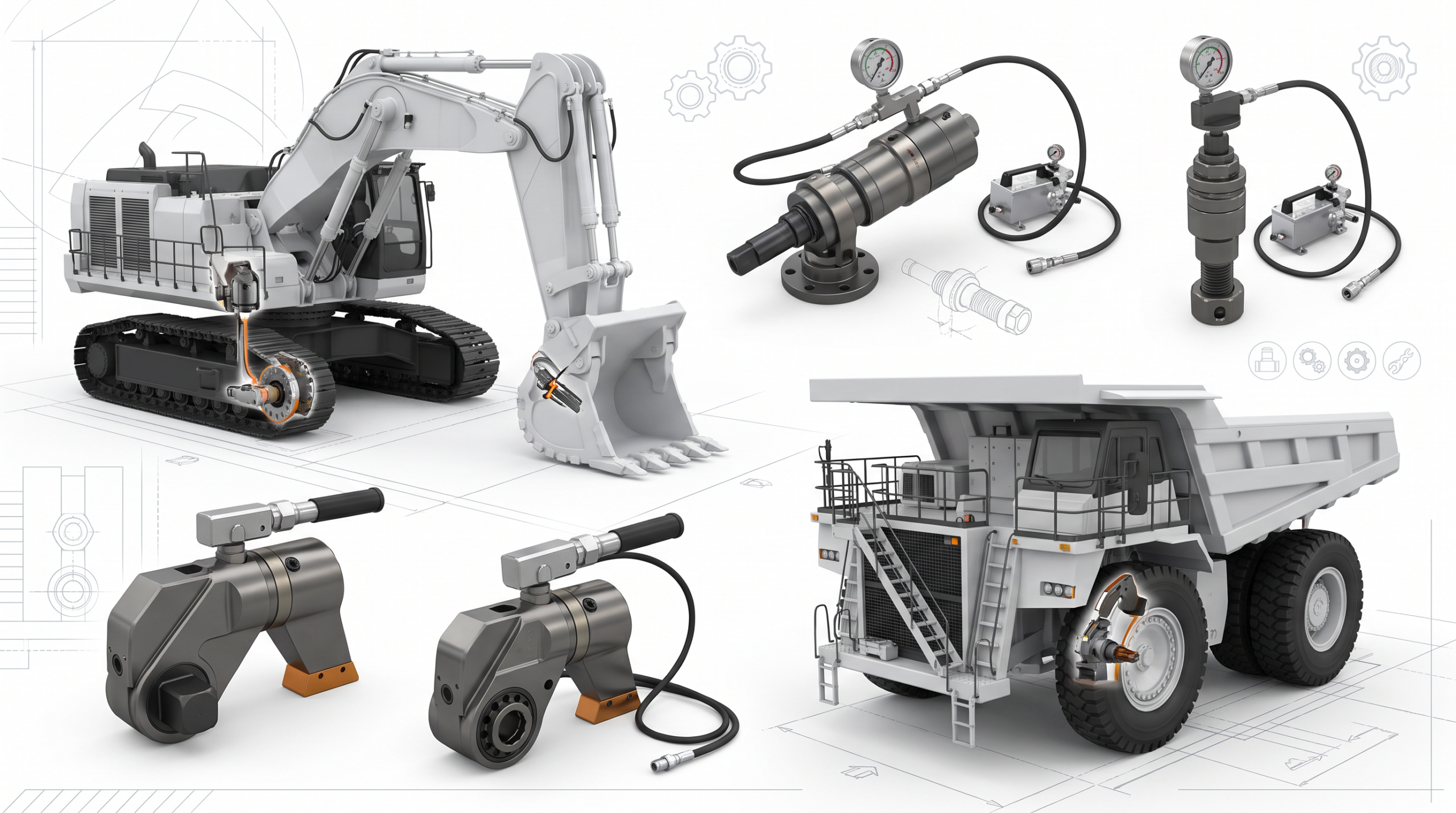
- Hydraulic torque wrenches provide consistent rotational force for a wide range of bolt sizes.
- Bolt tensioners eliminate frictional variables by stretching the fastener directly before the nut is seated.
- Compact low-profile tools allow for access in the tight spaces found within internal engine and transmission compartments.
- Automated hydraulic pumps reduce operator error by providing pre-set pressure limits and auto-cycle features.
The integration of these tools into a comprehensive maintenance strategy allows for more predictable scheduling. When operators know exactly how long a specific bolting task will take, they can optimize the logistics of the entire maintenance shutdown. This level of predictability is essential for coordinating the various trades and subcontractors involved in a large-scale mining project. Beyond this, the reliability of hydraulic systems means that maintenance tasks are more likely to be completed correctly the first time, preventing the need for rework and secondary interventions that further extend downtime.
Strategic Implementation of Hydraulic Systems in Underground Mining
Underground mining presents unique challenges for equipment maintenance, including limited space, poor lighting, and high humidity. In these environments, the portability and durability of hydraulic tool systems are essential. Manufacturers have responded to these needs by developing compact, battery-powered hydraulic pumps that eliminate the need for long hoses and external power sources. These self-contained units allow maintenance crews to perform high-torque bolting directly at the face or in remote underground bays without compromising on power or precision.
The harsh atmosphere of an underground mine can be highly corrosive and abrasive, which quickly degrades lower-quality tools. High-end hydraulic systems are constructed from aerospace-grade alloys and feature resilient sealing to prevent the ingress of dust and moisture. This durability ensures that the tools remain functional in the most extreme conditions, providing the reliability that underground teams depend on. In addition, the absence of sparks in hydraulic operation makes these tools safer for use in gassy mines where explosion risks are a constant concern.
Training and skill development are also critical components of successful implementation. While hydraulic tools are designed for ease of use, understanding the principles of bolt load and hydraulic safety is vital for maximizing their benefits. Leading mining companies invest in comprehensive training programs for their technicians, ensuring that they can operate the equipment safely and interpret the data generated by the tools. This investment in human capital ensures that the advanced technology is utilized to its full potential, driving continuous improvement in maintenance standards across the organization.
Future Considerations for Maintenance Infrastructure and Component Life
Looking forward, the evolution of maintenance infrastructure will likely see even greater integration of digital technology and automation within hydraulic tool systems. The emergence of the Internet of Things (IoT) in the mining sector is already beginning to influence tool design. Future systems may feature wireless connectivity that allows maintenance managers to monitor bolting progress in real-time from a remote office. This connectivity will enable proactive maintenance, where the system can alert managers if a fastener shows signs of loosening or if a tool requires calibration before it fails.
The impact of precision bolting on the service life of major components cannot be overstated. By ensuring that structural joints are always maintained at the correct tension, hydraulic tools prevent the micro-movements that lead to fretting, corrosion, and eventually, fatigue cracks. This extension of component life reduces the frequency of major replacements, leading to substantial savings in both capital expenditure and operational costs. As the mining industry continues to move toward more sustainable and efficient practices, the role of precision maintenance tools will only become more central to operational success.
Ultimately, the goal of any mining maintenance program is to maximize the productive life of the equipment while ensuring the safety of the workforce. Advanced hydraulic solutions provide the foundation for achieving these objectives. By combining massive power with delicate precision, these tools allow mining companies to meet the challenges of modern production while maintaining the highest standards of safety and mechanical integrity. The continued refinement of these systems will ensure that they remain an indispensable part of the mining sector for decades to come.