






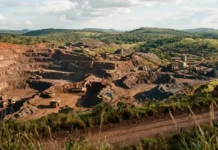
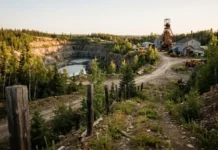
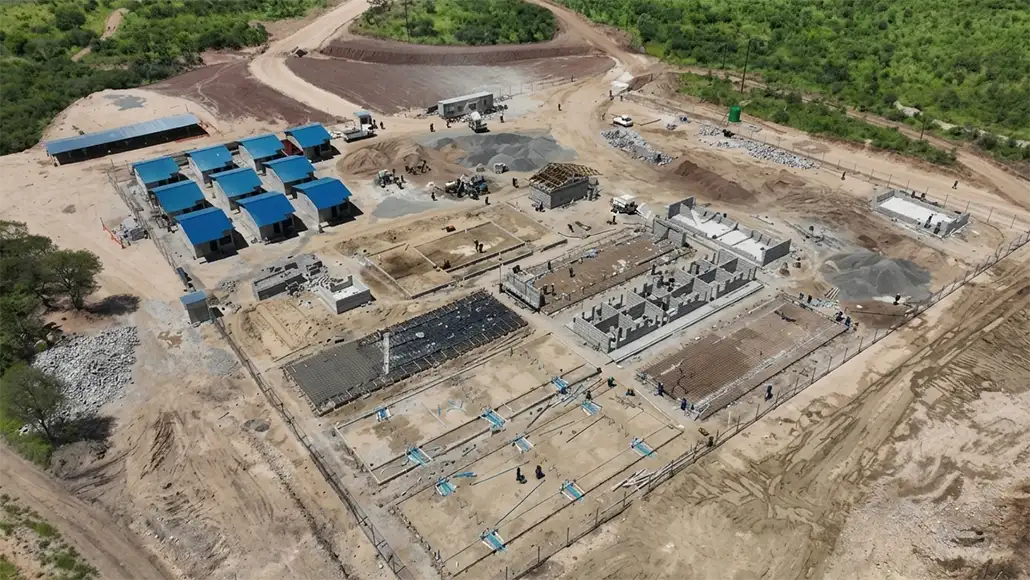

Lindian Resources, the Australian mining company, said on May 7, 2026, that its Kangankunde rare earths project in Malawi, is still on track to start production in the fourth quarter of 2026. If it is finished as per plan, this rare earths project in Malawi could as well be Africa’s very first new industrial-scale rare earths operation since the Gakara mine in Burundi commenced production in 2017.
The Kangankunde development represents a significant turning point for the critical minerals sector of Africa at a time when governments and industrial manufacturers are increasingly searching for geographically varied sources of supply. As per Lindian, the first phase of the project is anticipated to yield about 20,000 metric tonnes of rare earths concentrate per year. The first ramp-up phase is expected to generate around 10,000 t/y before scaling up to full potential.
Kangankunde is part of a growing wave of rare-earth developments throughout Africa that might substantially boost the continent’s share of global supply throughout the next decade. Benchmark Mineral Intelligence, the research firm, estimated that eight planned projects spanning Tanzania, Angola, and Malawi as well as South Africa could see Africa comprise nearly 9% of the supply of rare earths throughout the world by 2029.
In the meantime, Fitch Solutions predicts Africa to account for around 7% of global rare earths production by 2034 and roughly 16% of non-Chinese supply by then. Africa’s rare earths sector is on the rebound after a series of obstacles elsewhere on the continent. It is well to be noted that the Gakara project by Rainbow Rare Earths in Burundi became Africa’s industrial-scale rare earths mine on launch in 2017. But operations have been cancelled since 2021 owing to a request by the Burundian government to cease mining activities.
Investor interest in African critical minerals is growing, but finance is one of the greatest obstacles confronting new rare earths projects. The United States and the European Union have both stepped up attempts to encourage alternative supply chains in the context of broader efforts to minimise reliance on China. Western institutions and policymakers have already supported several African projects.
One is the Longonjo rare earths project in Angola, which is anticipated to start production in 2027 with backing from the U.S. International Development Finance Corporation. The Songwe Hill project in Malawi, along with the Zandkopsdrift project in South Africa, has also been designated by the European Commission as a strategic initiative outside the European Union.
Assets like Kangankunde are growing in importance and are strategically vital in the reordering of global supply chains as the global race for critical minerals becomes more intense, rather than just as commercial mining ventures.
Countries are pouring money into clean energy and electric vehicles as well as advanced defence technologies, driving up international consumption of rare earths minerals. There are 17 critical minerals acting as key ingredients in the making of permanent magnets utilised in EV motors, wind turbines, smartphones, and aerospace systems as well as military equipment. But the world’s rare earths industry remains highly dependent on China, which persists in dominating both mining as well as refining. China’s tighter export controls and increased geopolitical tensions have sparked worries about supply chain security between Western governments and industries. Consequently, countries are looking for alternate and dependable sources of critical minerals.
In this regard, Africa has become a region of strategic importance because of its huge and largely unexplored mineral resources. Many African countries are developing rare earths mining and processing projects so as to help diversify global supply chains, reduce reliance on Chinese production and solidify the continent’s position across the global critical minerals market.