








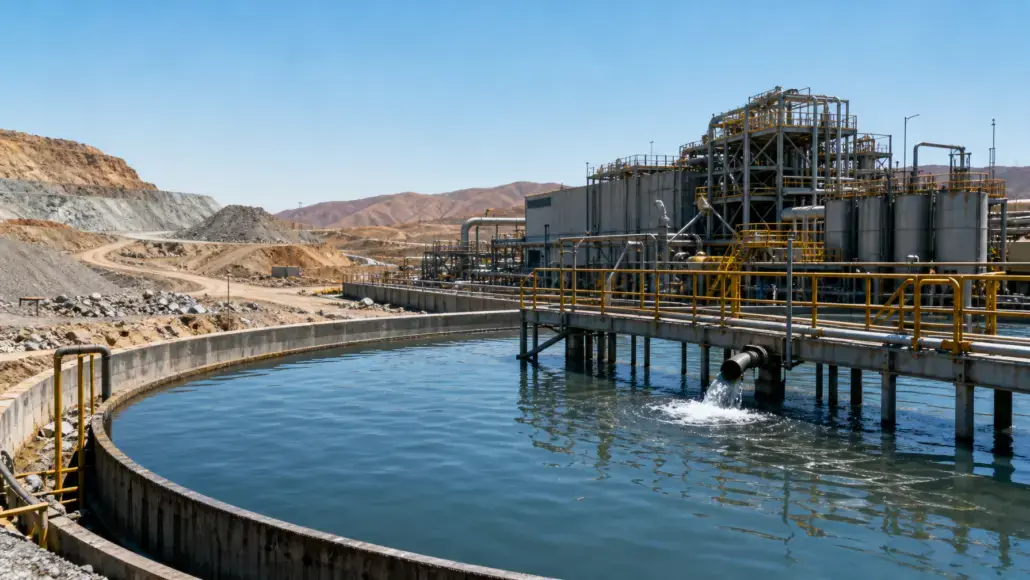

The global mining industry is increasingly operating in regions characterized by severe water scarcity, making the management of this vital resource a primary operational concern. Establishing water-efficient processing techniques is essential for maintaining production levels while ensuring the long-term sustainability of mining projects. As regulatory requirements become more stringent and social competition for water resources intensifies, the ability to minimize consumption and maximize recycling has become a key differentiator for successful mining operations. This transition requires a rigorous analytical approach to water management, moving away from traditional disposal methods toward integrated systems that treat water as a valuable circulating asset. By adopting innovative technologies and optimizing processing circuits, mining companies can reduce their environmental footprint and lower their operational costs in challenging climates.
Challenges of Water Scarcity in Mineral Processing
Mineral processing typically requires vast quantities of water for grinding, flotation, and leaching operations. In water-stressed regions, the availability of high-quality freshwater is often limited, forcing operators to look for alternative sources such as saline water, treated wastewater, or recycled process streams. The use of these non-traditional water sources can introduce chemical complexities into the processing circuit, potentially impacting the recovery of target minerals. For instance, high salinity can interfere with the chemistry of flotation reagents, requiring specialized collectors and pH modifiers to maintain performance. Managing these challenges requires a deep understanding of the relationship between water chemistry and metallurgical recovery, as well as a commitment to continuous monitoring and process adjustment.
The logistical challenge of transporting water over long distances to remote mine sites also adds a significant cost burden to many projects. This has led to an increased focus on localized water sourcing and the implementation of decentralized treatment facilities. By recycling water directly at the mine site, operators can reduce their reliance on external supplies and minimize the energy needed for haulage. The development of water-efficient processing strategies involves a detailed analysis of the water balance across the entire mine site, identifying areas where consumption can be reduced or where water can be reused multiple times. This holistic view is essential for ensuring that the mining operation remains viable even as local water resources become more constrained. The strategic importance of water management is a central theme in the broader effort to build resilient and responsible mining projects.
Innovations in Tailings Dewatering and Recovery
Tailings management is one of the most water-intensive parts of a mining operation, as traditional tailings dams store large volumes of water that are lost to evaporation and seepage. The adoption of advanced dewatering technologies, such as thickeners and filter presses, allows for the recovery of a significant portion of the process water before the tailings are sent to storage. High-rate thickeners use specialized flocculants to accelerate the settling of solids, producing a concentrated slurry that can be managed more effectively. By maximizing the density of the tailings, operators can reduce the physical footprint of the storage facility and lower the risk of dam failures. The recovered water can then be returned to the processing plant, creating a closed-loop system that dramatically reduces the need for freshwater intake.
Dry stack tailings represent a more advanced stage of water-efficient processing, where the tailings are filtered to a moisture content that allows them to be transported by conveyor and stacked as a solid. While the capital cost of filtration equipment is high, the benefits in terms of water recovery and environmental safety are substantial. Dry stacking eliminates the need for large-scale tailings ponds, reducing the risks associated with water-borne contaminants and providing a more stable foundation for land reclamation. This approach is particularly effective in arid regions where evaporation rates are high and water conservation is a top priority. Additionally, the use of sensor-based ore sorting to reduce processing waste can further decrease the volume of tailings generated, lowering the overall water demand of the operation. By combining these technologies, mining companies can achieve unprecedented levels of water efficiency.
Water Recycling and Treatment Technologies
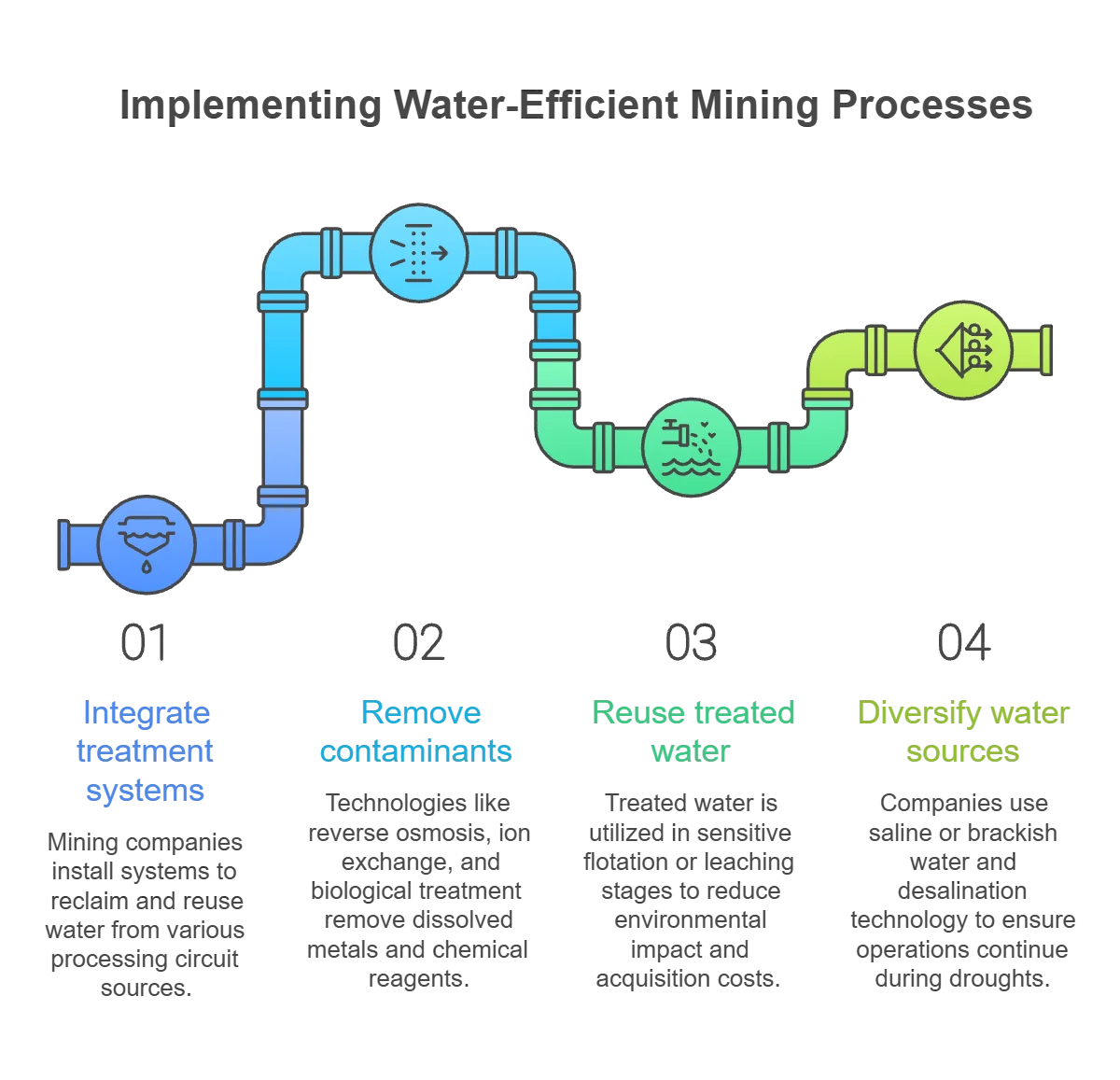
The integration of sophisticated water treatment systems allows mining companies to reclaim and reuse water from a variety of sources within the processing circuit. Technologies such as reverse osmosis, ion exchange, and biological treatment can remove dissolved metals and chemical reagents, making the water suitable for reuse in sensitive flotation or leaching stages. The ability to treat and recycle process water reduces the environmental impact of the operation and lowers the cost of water acquisition. In many cases, the value of the recovered water and chemicals can offset the operational costs of the treatment plant. The design of these systems must be tailored to the specific characteristics of the process water, requiring ongoing metallurgical testing and optimization.
The use of saline or brackish water in mineral processing is also gaining momentum as a way to reduce the demand for freshwater. While this requires the use of corrosion-resistant materials and specialized chemical suites, it offers a reliable and abundant water source for many coastal or desert operations. Advances in desalination technology have made it more economically viable to produce high-quality water for specialized applications, such as the production of reagents or the cleaning of equipment. By diversifying their water sources and investing in treatment infrastructure, mining companies can ensure that their processing plants remain operational during periods of drought or water restrictions. This focus on resource resilience is a key component of the broader strategy for water-efficient processing in the global mining sector.
Monitoring and Data-Driven Water Management
Successful water management depends on the availability of accurate and real-time data on consumption and recycling rates across the mine site. The integration of digital flow meters, level sensors, and water quality analyzers provides a detailed view of the water balance, allowing operators to identify leaks and inefficiencies as they occur. This data-centric approach enables the implementation of advanced process control systems that can automatically adjust water flows and treatment parameters to maintain the required specifications. By tracking key performance indicators such as water intensity per ton of ore processed, management can drive continuous improvement and demonstrate compliance with environmental regulations.
The use of simulation modeling and digital twins also provides a powerful tool for optimizing water-efficient processing strategies. By simulating different operating scenarios, metallurgists can evaluate the impact of process changes on the overall water balance and identify the most effective ways to maximize recovery. These virtual experiments allow for the rapid testing of new technologies and the development of proactive water management plans that can be adapted to changing climatic conditions. The ability to simulate the long-term impact of water usage on local aquifers and surface water bodies is also vital for gaining the support of local communities and regulatory authorities. As the industry continues to evolve, the ability to effectively combine technical excellence with digital innovation will be a defining characteristic of the most successful water management programs.
Strategic Integration and Social License to Operate
The development of water-efficient processing is not just a technical challenge but a critical part of the mining industry’s social license to operate. In many regions, the mining sector is a major consumer of water, leading to potential conflicts with agricultural and domestic users. Establishing transparent and collaborative water management programs is essential for gaining the trust of local stakeholders and ensuring the long-term viability of mining projects. This involves sharing data on water usage, participating in regional water planning efforts, and investing in infrastructure that provides benefits to the wider community. By demonstrating a commitment to responsible water stewardship, mining companies can protect their reputation and secure the resources they need for their operations.
The long-term sustainability of the mining sector is tied to its ability to adapt to a changing climate and the increasing scarcity of natural resources. Building flexibility into processing plants to allow for future upgrades in water recovery technology provides a significant advantage as the regional water balance evolves. Additionally, the focus on circular economy principles, such as recovering minerals from tailings and recycling process chemicals, further enhances the resource efficiency of the operation. By aligning technical innovation with strategic planning and community engagement, mining operators can navigate the challenges of water-stressed regions and ensure the continued production of the metals needed for modern society. The focus on water-efficient processing will remain a priority for the industry for decades to come as the global community seeks to balance economic development with environmental protection.