







The mining industry is currently undergoing a significant transition toward more selective and efficient extraction methods to address the challenges of declining ore grades and rising operational costs. Sensor-based ore sorting has emerged as a critical technology in this effort, allowing for the separation of valuable mineral particles from barren waste rock before they reach the energy-intensive stages of grinding and flotation. By reducing the volume of material that needs to be processed, mining companies can realize substantial savings in energy, water, and reagent consumption while minimizing the environmental impact of their operations. This analytical approach to resource management is essential for improving the economic viability of complex deposits and ensuring the long-term sustainability of the sector.
Principles of Sensor-Based Mineral Separation
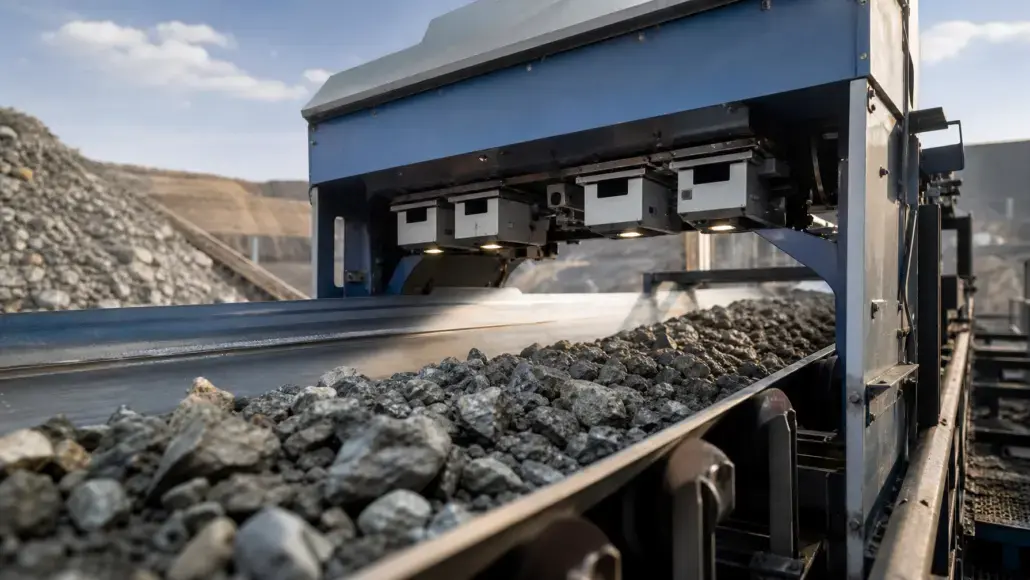
Sensor-based ore sorting works by identifying specific physical or chemical characteristics of individual rocks as they move along a conveyor belt or through a free-fall sorting unit. A variety of sensor technologies are used, including X-ray transmission, near-infrared spectroscopy, laser-induced breakdown spectroscopy, and color cameras. These sensors provide high-speed data on the composition, density, and mineralogy of each particle, which is then processed by advanced algorithms to determine whether the rock should be accepted or rejected. If the rock meets the required grade criteria, a series of high-pressure air jets or mechanical diverters are activated to move the particle into the product stream. The speed and precision of these systems allow for the processing of large volumes of material with high accuracy, making it possible to upgrade the feed grade of the processing plant.
The success of sorting technology depends on the inherent heterogeneity of the ore body. Deposits where the target minerals occur in discrete clusters or veins are ideal candidates for sorting, as they allow for a cleaner separation of valuable material from waste. In contrast, deposits with a more homogeneous mineral distribution may require more sophisticated sensors or different sorting strategies to be effective. The implementation of sorting requires extensive metallurgical testing and pilot-scale trials to characterize the ore and verify the expected recovery levels. By identifying the specific sensor signatures for different mineral types, operators can optimize the performance of the sorting unit and maximize the value realized from every ton of material moved. The integration of these systems into the mining value chain provides a powerful tool for managing the variability of the ore body and ensuring consistent performance in the downstream processing circuits.
Economic and Operational Benefits of Waste Reduction
One of the primary advantages of implementing sensor-based ore sorting is the significant reduction in the amount of waste material that is crushed and ground. Comminution is typically the most energy-intensive part of any mining operation, and by rejecting barren rock early in the process, companies can lower their electricity consumption and reduce the wear on expensive grinding media. This reduction in the circulating load also means that the overall capacity of the plant can be increased without a corresponding increase in the physical footprint of the equipment. For many mines, the ability to upgrade the feed grade allows for the development of lower-grade resources that would otherwise be uneconomic. This improvement in project margins is a key driver for the adoption of sorting technology across the industry.
The reduction in processing waste also has a direct impact on the environmental footprint of the operation. Smaller volumes of tailings are generated, reducing the need for large-scale storage facilities and lowering the risks associated with tailings dam failures. Additionally, the decrease in water and reagent consumption contributes to the overall sustainability of the project, which is increasingly important for gaining regulatory approval and maintaining social license. By aligning technical excellence with economic goals, mining companies can create a more resilient and responsible production model. In many cases, the integration of sorting technology can also support the development of water-efficient processing for water-stressed mining regions by reducing the volume of slurry that requires dewatering and recycling. The ability to produce more metal with less environmental impact is a major competitive advantage in a market where sustainability is becoming a priority for investors and customers.
Integration of Sorting into the Mining Value Chain
Successfully implementing sensor-based ore sorting requires a holistic view of the entire mining process, from exploration and pit design to final mineral recovery. This involves collaborative efforts between geologists, mining engineers, and metallurgists to ensure that the sorting unit is integrated effectively into the operational flow. For instance, the use of bulk sorting at the mine face can help to optimize the haulage of material, ensuring that only high-potential ore is sent to the processing plant. In contrast, particle sorting is typically used as a secondary step to refine the feed grade before it enters the mill. The selection of the appropriate sorting strategy depends on the specific characteristics of the deposit and the operational constraints of the mine site.
The use of real-time data from sorting units provides valuable insights into the mineralogy of the ore being mined, allowing for more precise management of the processing circuit. By identifying changes in the feed grade or mineral associations, operators can adjust reagent dosages or mill settings to maintain peak performance. This data-centric approach ensures that the processing plant operates at its maximum efficiency regardless of fluctuations in the incoming ore quality. As the industry moves toward more automated and digitally integrated operations, the role of sensor-based sorting will continue to expand. The ability to monitor and control the quality of the material at every stage of the process is essential for achieving the high levels of productivity and recovery needed to remain competitive in a volatile global market.
Technological Advancements in Sensor Capability
The evolution of sensor-based ore sorting is being driven by rapid advancements in sensor sensitivity, data processing speed, and algorithmic sophistication. New generations of X-ray and hyperspectral sensors can identify a wider range of minerals with higher precision, allowing for the sorting of more complex and fine-grained ores. Additionally, the integration of artificial intelligence and machine learning allows for the continuous optimization of the sorting criteria based on real-time feedback from the downstream processing circuits. These digital tools can identify subtle patterns in the sensor data that would be missed by traditional analysis, providing a significant advantage in managing difficult mineral suites. The use of multi-sensor systems, which combine different technologies to provide a more detailed view of each particle, is also becoming more common.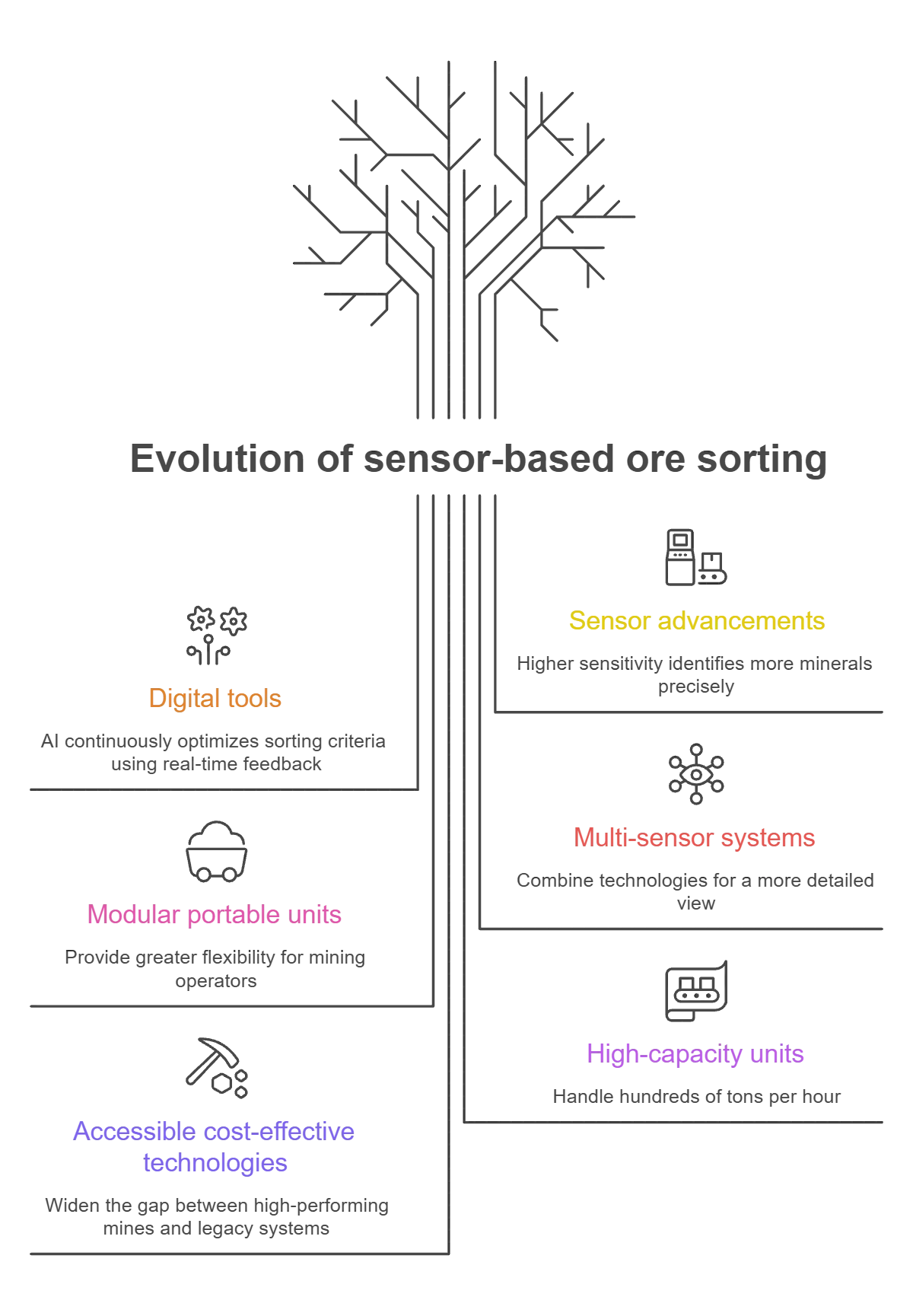
The adoption of modular and portable sorting units is another important trend, providing greater flexibility for mining operators. These units can be quickly deployed to different parts of a mine site or moved between different projects as the resource base evolves. This modularity is particularly beneficial for small-scale operations or for the remediation of historical tailings and waste rock piles. By viewing waste as a potential resource, the industry can improve its overall efficiency and reduce its long-term liabilities. The development of high-capacity sorting units that can handle hundreds of tons of material per hour is also opening new possibilities for large-scale operations. As these technologies become more accessible and cost-effective, the gap between high-performing mines and those relying on legacy systems will continue to widen. The focus on technical innovation is essential for ensuring that the mining sector can meet the dual challenges of resource scarcity and social responsibility.
Long-Term Strategic Planning and Resource Efficiency
The successful integration of sensor-based ore sorting requires a long-term perspective on asset management and resource stewardship. Companies must invest in the technical expertise and infrastructure needed to support these systems and ensure their consistent performance over the life of a project. This involves ongoing training for operators and maintenance teams, as well as a commitment to continuous metallurgical testing and process refinement. By building a culture of innovation and data-driven decision-making, mining companies can maximize the value of their resources and provide a stable supply of materials for the global market. The strategic importance of sorting technology will only increase as the industry moves into more challenging geological territories and faces more stringent environmental requirements.
The transition to a circular economy model is also influencing the way mining companies approach resource efficiency. Recovering minerals from legacy tailings and waste rock piles provides an opportunity to generate additional revenue while remediating historical environmental impacts. This requires specialized sorting techniques that can handle a variety of input materials and separate them into their constituent components with high precision. By combining primary production with the recovery of valuable elements from waste, the industry can improve its overall efficiency and reduce its environmental footprint. The successful integration of sensor-based ore sorting is a key component of this broader effort, providing the tools needed to separate value from waste at the earliest possible stage. This holistic approach to resource management ensures that the mining sector can continue to provide the raw materials needed for modern society in a responsible and sustainable manner. The continued evolution of sorting technology will play a vital role in shaping the future of the industry, driving gains in productivity, recovery, and environmental performance.