








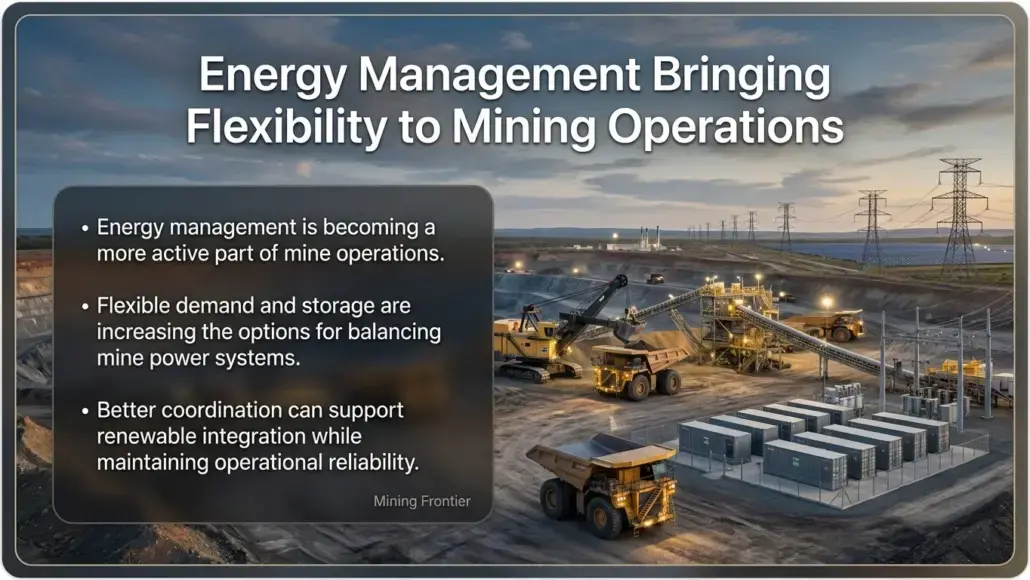

Mining operations are moving into a more complex electricity environment. Renewable generation can vary with weather and time of day, while electrification is adding new loads across mobile equipment, processing systems and other mine infrastructure. As a result, securing sufficient electricity is becoming only one part of the energy strategy. Mines also need greater control over when demand occurs and how different power resources interact.
This is creating a broader role for energy management mining strategies. Instead of treating electricity consumption as a fixed requirement, operators can increasingly coordinate demand, generation, storage and backup capacity around production needs. The objective is not simply to reduce consumption, but to make the power system more responsive while maintaining operational reliability.
The opportunity is particularly relevant where several energy resources operate together. Energy-intensive activities may offer limited opportunities for scheduling or adjustment, while storage and controllable generation can provide additional flexibility. Research on mining demand response shows that production requirements remain a major constraint, meaning flexibility must be built around operational realities rather than assumed as an unlimited resource.
Energy Management Becoming an Operational Function
The development of energy management mining systems is therefore linking energy strategy more closely with day-to-day mine operations. Digital controls can bring information from generators, batteries, renewable sources and major electricity-consuming assets into a common operating framework, allowing decisions to be made around changing demand and supply conditions.
Key areas of growing flexibility include:
- Matching selected electricity-intensive activities with available power
- Coordinating battery charging and discharge with operational demand
- Managing generator operation alongside renewable electricity
- Monitoring changing load profiles across mine systems
This shift is already visible in remote mining projects. Natural Resources Canada is supporting a hybrid Energy Management System (hEMS) demonstration involving B2Gold’s Goose Mine, combining energy storage and existing generation to improve energy management and reduce diesel dependence. Fortescue is also developing an integrated energy model in which renewable generation, battery storage and mine demand are coordinated through energy-management systems.
The significance of energy management mining is therefore moving beyond efficiency alone. It is becoming a way to manage the timing and interaction of electricity supply and demand, creating the operating flexibility needed as mines transition toward more complex and increasingly electrified energy systems.
Energy Flexibility Becoming a Mine Planning Variable
As electricity becomes more important to mining operations, flexibility is becoming a planning consideration alongside capacity, reliability and cost. Renewable generation can fluctuate, while electrified equipment and processing systems can introduce new and sometimes concentrated electricity demand. This makes the timing of consumption increasingly relevant to how a mine operates its wider power system.
The value of energy management mining lies in managing this interaction rather than treating every electricity load as fixed. Some activities may be scheduled within defined operating windows, while storage and controllable generation can respond to shorter-term changes in supply or demand. The approach is therefore less about reducing electricity consumption outright and more about improving the ability of the mine to respond to changing power conditions.
The potential sources of flexibility are spread across the operation:
- Equipment charging and other controllable electrical loads
- Energy-intensive processes with defined operating windows
- Battery storage that can shift electricity use
- Backup generation that can be dispatched according to system requirements
The distinction between flexible and inflexible demand is important. Production, safety and process requirements limit how far electricity use can be shifted. A mining operation cannot simply delay critical activity whenever power conditions change. Effective energy management mining therefore depends on identifying specific loads that can respond without creating unacceptable effects on production, equipment performance or safety.
Coordinating Flexible Demand with Available Supply
This makes energy management increasingly connected to mine scheduling and power-system control. A more responsive operating model can coordinate electricity demand with renewable output, storage availability, grid conditions and conventional generation. Instead of managing these resources separately, operators can use forecasting and control systems to determine how they should work together.
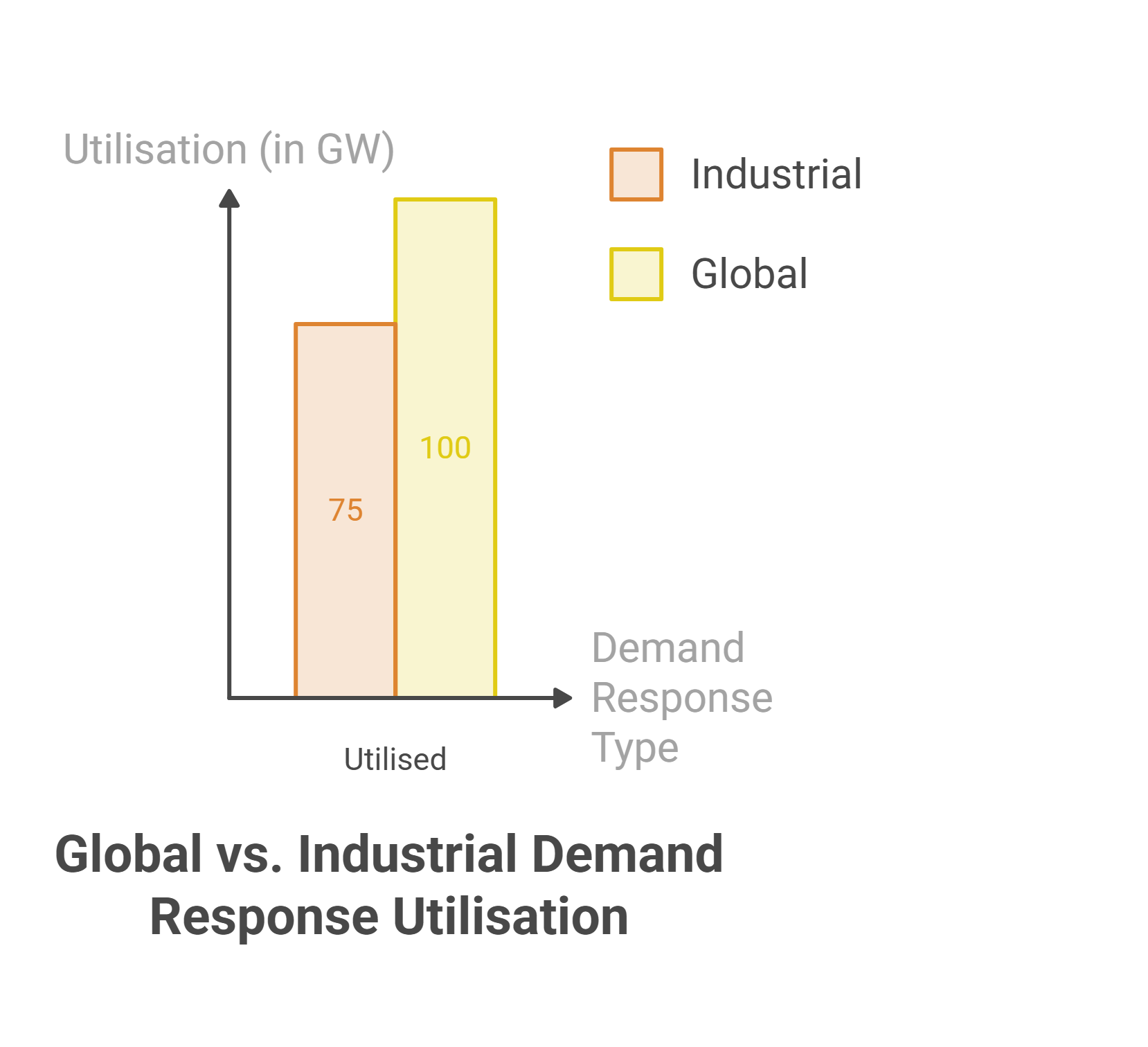
Industrial demand response provides an indication of the scale of this wider opportunity. The International Energy Agency reported that around 100 GW of demand response was being utilised globally in 2024, including approximately 75 GW from industrial users. Mining represents only one part of the industrial sector, but the figures demonstrate that large electricity-consuming operations can already provide meaningful system flexibility.
A useful industry-level comparison is:
The significance for energy management mining is that flexibility can become an operating resource in its own right. Battery systems can absorb or release power, controllable loads can respond within defined limits, and generators can be coordinated with changing electricity demand.
This increasingly links mine operations with the architecture of the wider power system, creating a natural progression toward mine power flexibility.
Energy Coordination Becoming Decarbonisation Capability
The role of energy management mining is expanding as electricity supply and demand become more closely connected. Renewable generation, electrified equipment and storage introduce more variation into mine power systems, making coordination increasingly important alongside efficiency and reliability.
The strategic priorities are becoming clearer:
- Align flexible electricity demand with available supply
- Coordinate storage, generation and mine loads
- Protect production, safety and power-system reliability
Flexibility remains highly dependent on site conditions. Production schedules, process requirements, equipment characteristics and available infrastructure determine which loads can actually be adjusted. The wider electricity sector is moving toward the same model, with demand flexibility increasingly recognised as a resource for integrating variable renewables and improving system efficiency.
For mining, this points toward a more integrated operating model in which energy is managed alongside production rather than separately from it. The next step is extending that coordination across generation, storage and demand through mine-level power systems.
References
- International Energy Agency – Electricity 2026 – 2026
- International Energy Agency – The Value of Demand Flexibility – 2025
- Natural Resources Canada – Demonstration of three Hybrid Energy Management System (hEMS) V3 units to reduce diesel fuel consumption at Arctic mine sites – 2025
- Fortescue – Technology – 2026
- Renewable Energy – Demand response strategy for high altitude smart flexible mining zones: Integrating production, residential, and transportation – 2026
- Energy – Unlocking lithium mine load flexibility: A multi-granularity dispatch disaggregation strategy for isolated microgrid – 2026