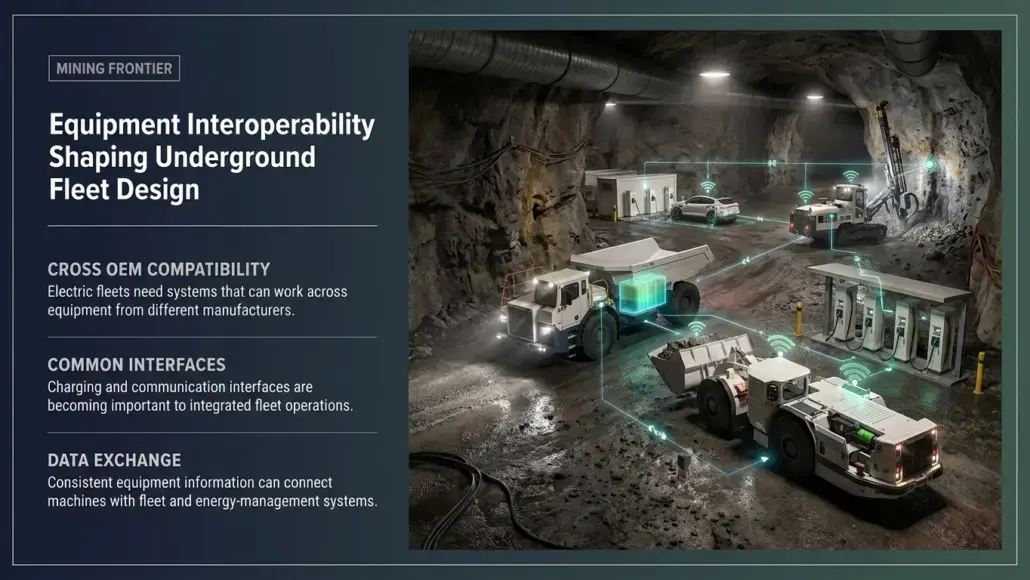
The expansion of underground electrification is creating a stronger need for equipment interoperability as mines bring together electric trucks, loaders, drills, charging systems and digital platforms from different suppliers. The issue extends beyond whether machines can operate in the same mine. Operators increasingly need these systems to exchange information, recognise operating states and work together without creating unnecessary technical barriers.
The Global Mining Guidelines Group (GMG) describes interoperability as the ability of systems to exchange information and then act on that information to achieve an operational outcome. For underground electric fleets, this can involve several connected layers:
- Electric machines and their control systems
- Batteries and battery-management systems
- Charging equipment and connection interfaces
- Fleet and energy-management platforms
- Mine production and maintenance systems
This broader definition makes equipment interoperability a systems issue rather than a simple hardware-compatibility question. A charger may physically connect to a vehicle, for example, but the wider mine can still face integration challenges if equipment status, charging requirements or battery information cannot be communicated consistently across its fleet.
Charging Interfaces Extending Beyond Physical Compatibility
Charging is one of the most visible areas where interoperability is developing. GMG guidance recommends standardisation of charging and connection interfaces where possible, while current industry initiatives are working toward common approaches for higher-power charging. Epiroc’s 2026 underground charging system, for example, is designed to support vehicles from different manufacturers and includes remote charging posts and shared power management.
The need becomes more significant as mines operate mixed fleets. A site may introduce electric equipment gradually, meaning chargers and other infrastructure could remain in service while vehicle models and suppliers change. Designing around more open interfaces can therefore affect how effectively infrastructure continues to support the fleet.
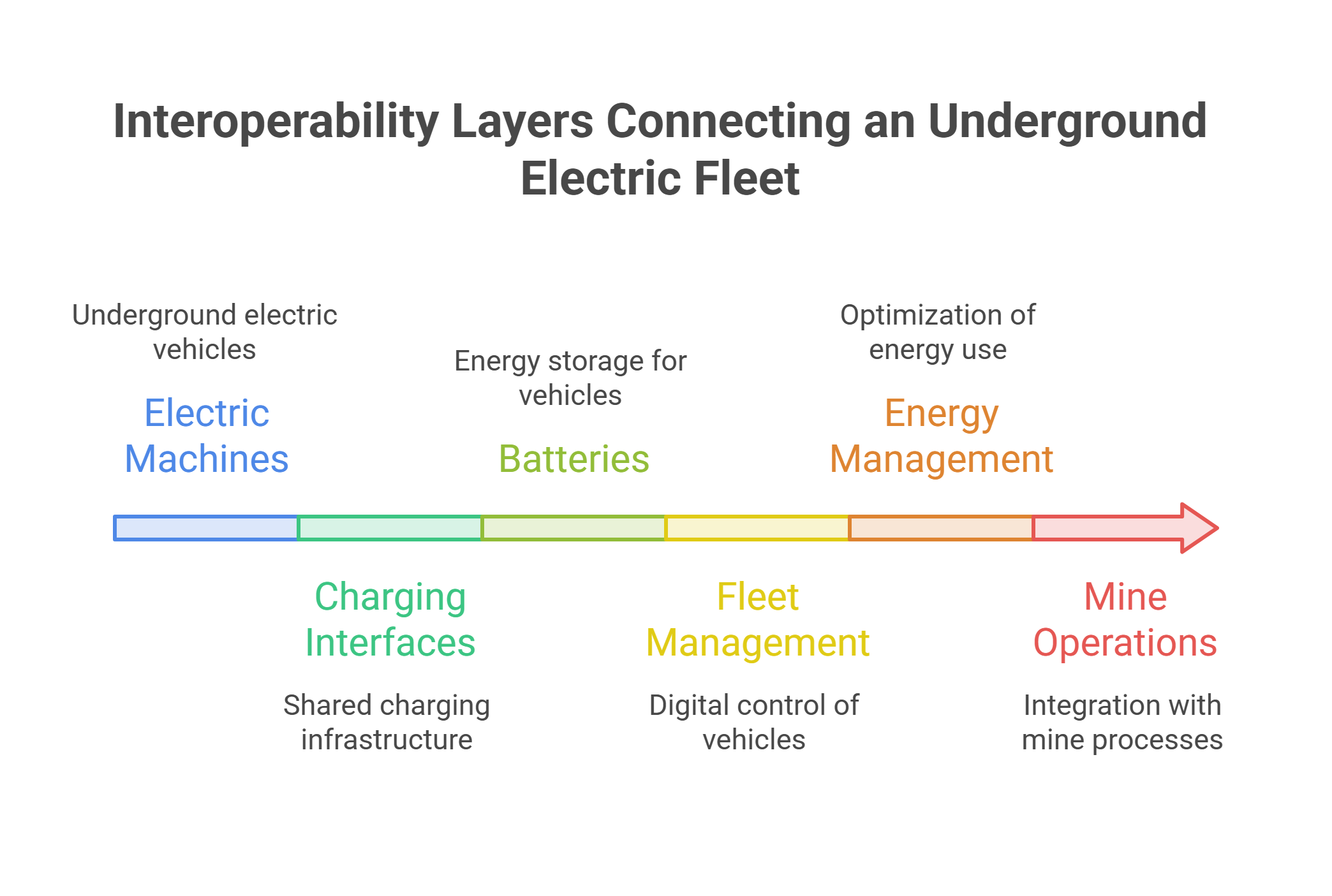
Equipment interoperability increasingly depends on common interfaces and information exchange across machines, charging systems and mine-management platforms.
Data Standards Expanding the Meaning of Fleet Compatibility
The interoperability challenge extends beyond whether a machine can connect to a charger. As electric fleets become more digitally connected, equipment interoperability increasingly depends on whether different systems can exchange consistent information and respond to it in a predictable way.
The Global Mining Guidelines Group (GMG) describes interoperability as the ability of systems to exchange information and act on that information to achieve an operational outcome. Its Mobile Equipment Open Data Consensus Guideline also calls for greater access to mobile equipment data, recognising the role of machine information in areas such as:
- Equipment availability
- Maintenance planning
- Productivity monitoring
- Asset management
- Operational decision-making
This becomes relevant when underground fleets combine machines from different manufacturers. A fleet-management platform may need to receive information about battery condition, machine status, charging activity and operating hours from several equipment systems. Without common data structures and terminology, information may remain available but difficult to combine into a single operating view.
Charging Standards Moving Toward Larger Electric Fleets
Charging is another area where standardisation is developing as equipment becomes more diverse and charging power increases. The Combined Charging System (CCS) is already referenced in underground mining guidance, while the Charging Interface Initiative e.V. (CharIN) and International Council on Mining and Metals (ICMM) are working on mining-specific high-power charging approaches.
These initiatives include the Ruggedized Megawatt Charging System (R-MCS) and Extreme Megawatt Charging System (X-MCS), which address charging requirements for demanding mining environments. The emerging frameworks consider more than electrical connection alone:
- Communication between vehicle and charging equipment
- Physical connection and coupling
- Safety requirements
- High-power energy transfer
- Automated charging functions
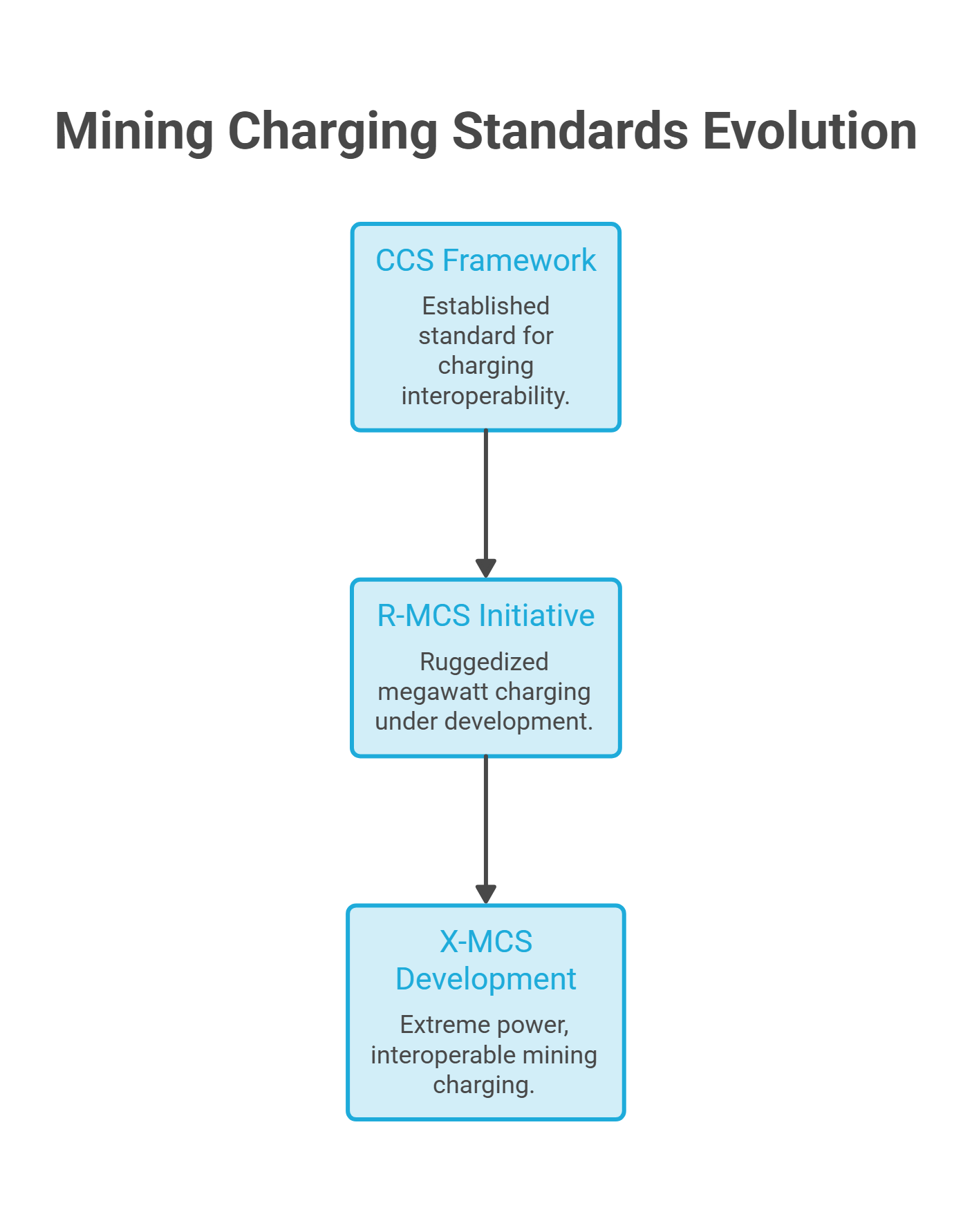
Equipment interoperability is increasingly shaped by common charging and communication frameworks as mines introduce larger and more diverse electric fleets.
The broader data issue is equally important. GMG’s interoperability work identifies common terminology, standards and protocols as areas requiring greater alignment across mining technology systems. For electric fleets, consistent definitions of charging status, equipment availability and battery condition can make information more usable across fleet and energy-management platforms. This means equipment interoperability is becoming an issue of data architecture as much as hardware compatibility.
Interoperability Becoming a Fleet Design Consideration
As underground mines expand electric fleets across trucks, loaders, drills and support equipment, equipment interoperability is becoming a consideration in how those fleets are designed and expanded. Compatibility increasingly extends across physical connections, charging systems, machine controls and the data exchanged between operating platforms.
The main considerations include:
- Compatibility across different equipment suppliers
- Consistent charging and communication interfaces
- Access to usable machine and battery data
- Integration with fleet and energy-management systems
The broader significance is that electric mine infrastructure may need to remain useful as equipment models, suppliers and operating requirements change. Common interfaces and data standards can therefore influence how easily a mine expands or modifies its fleet over time. This creates a natural transition toward battery utilisation planning, where the focus shifts from connecting the systems to using battery information and charging windows in daily fleet operations.
References
- Recommended Practices for Battery Electric Vehicles in Underground Mining – Version 3
- Epiroc Launches Next-Generation Charging Solution, Engineered for Tough Mining and Heavy-Duty Demands
- Mobile Equipment Open Data Consensus Guideline
- Interoperability Definition and Guiding Principles for the Mining Industry
- Static Charging Interface for X-MCS
- IEC 61851-23-3:2026