








Growing demand for copper, nickel, cobalt, manganese and other critical minerals is pushing the mining industry toward resources that were once considered too difficult to access. The deep ocean is increasingly part of that conversation. Beneath the seafloor are deposits containing minerals that could potentially add to global supply, attracting interest from governments, researchers and mining companies. At the same time, the prospect of extracting these resources has raised serious questions about economics, environmental impact and international regulation.
Deep Sea Mining is still a developing industry rather than an established source of commercial mineral supply. Exploration and equipment testing have taken place, but commercial production in international waters has not yet begun. That distinction matters because the presence of mineral resources does not automatically make them economically recoverable or suitable for large-scale extraction.
The debate is also becoming more complicated as countries look for ways to strengthen critical mineral supply chains. Supporters see the seafloor as a possible additional source of metals needed for energy, infrastructure and advanced manufacturing. Critics question whether those minerals are actually needed to the extent claimed, whether seabed extraction can compete with land-based mining, and whether the environmental risks can be adequately managed.
For the mining industry, the bigger issue is therefore not simply whether minerals exist beneath the ocean. It is whether Deep Sea Mining can develop into a commercially viable and responsibly governed part of the global mineral supply chain.
Critical Mineral Demand is Driving Interest in Deep Sea Mining
Interest in the deep ocean is closely linked to the growing importance of critical minerals. These materials are used across batteries, renewable energy systems, electronics, infrastructure and other industrial applications, creating pressure to strengthen supply and diversify sources. The seabed contains several deposits that have attracted attention, including polymetallic nodules, polymetallic sulphides and cobalt-rich crusts.
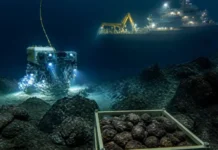
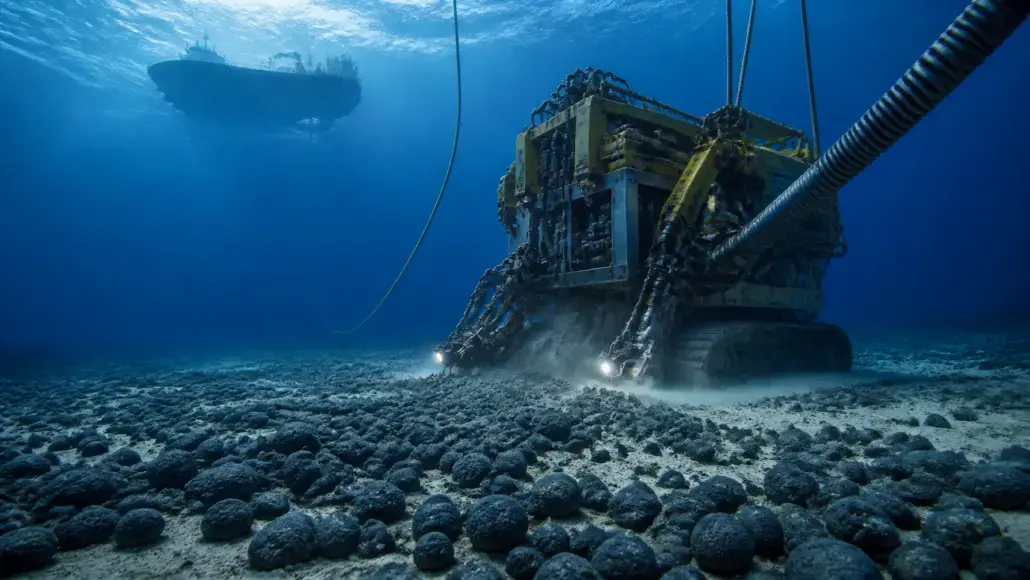
Polymetallic nodules are currently the main focus of exploration in international waters. These potato-sized deposits sit on the seafloor and can contain combinations of nickel, copper, cobalt and manganese. Other deposits occur around hydrothermal vents or on underwater mountains, creating different geological and technical challenges for any future mining operation. Large exploration areas have already been allocated in parts of the international seabed, particularly in the Clarion-Clipperton Zone in the Pacific.
Yet the supply argument is not as straightforward as rising mineral demand might suggest. The academic research provided for this article points to substantial known terrestrial reserves of several metals targeted by seabed mining, including cobalt, copper, manganese, molybdenum and nickel. It also notes that future demand depends on market conditions, technology changes and the development of alternatives. Battery chemistry is one example, with different technologies reducing or changing demand for particular minerals.
That does not remove the supply challenges facing the mining industry. Finding viable deposits, developing new mines, building processing capacity and securing reliable supply chains can take years. But it does mean the case for Deep Sea Mining needs to be assessed alongside terrestrial production, recycling, resource efficiency and changes in mineral demand rather than treated as an automatic answer to future shortages.
The resource opportunity is clear. The question is whether that opportunity can translate into a practical source of mineral supply without creating costs and risks that outweigh its potential value.
The Economics of Deep Sea Mining Remain Difficult to Prove
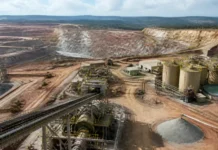
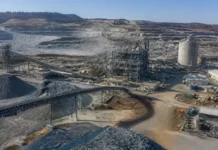
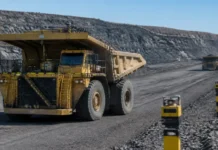
The biggest gap between the promise of Deep Sea Mining and its commercial reality is economics. Recovering minerals from hundreds or thousands of metres below the ocean surface requires specialised vessels, subsea equipment, collection systems, lifting infrastructure and processing capacity. The operation is fundamentally different from conventional mining, where companies can draw on established equipment, transport networks and processing facilities on land.
Commercial experience is also limited. Exploratory work and equipment tests have taken place, but commercial deep sea mining has not yet been established at scale. This makes it difficult to assess long-term operating costs, equipment performance, recovery rates and the economics of sustained production with the same confidence available for established terrestrial mining operations.
That uncertainty becomes more important when seabed resources are compared with existing mineral supply. The academic research used for this article argues that deep sea mining remains commercially unproven and questions whether it can compete with land-based mining on cost and scale. The study also points to the considerable uncertainty around how the sector would generate and distribute economic benefits.
For Deep Sea Mining to move beyond exploration, the industry would need to demonstrate that the minerals can be recovered consistently, processed efficiently and delivered to existing supply chains at a competitive cost. Until that evidence develops, the commercial case remains one of the industry’s biggest unanswered questions.
Environmental and Regulatory Uncertainty Will Shape Deep Sea Mining
The economic discussion cannot be separated from the environmental question. The deep ocean is one of the least understood ecosystems on Earth, and mining activity could disturb habitats that have developed over extremely long periods. Research highlighted by WRI points to risks including direct damage to marine organisms, sediment plumes, underwater noise and light, disruption of ecosystems and possible effects on fisheries. At the same time, several impacts still require further research, making uncertainty itself an important part of the debate.
Regulation adds another layer of complexity. Most proposed commercial activity in international waters falls under the framework of the International Seabed Authority, which is responsible for developing rules governing mineral exploitation in areas beyond national jurisdiction. Questions around environmental standards, licensing, enforcement and benefit-sharing remain central to the future of the industry.
That means the future of Deep Sea Mining will depend on more than technical capability. Any commercially viable industry would need a regulatory system that provides greater certainty while setting enforceable environmental requirements and addressing how benefits from seabed resources are distributed. The academic research also highlights the importance of governance and benefit-sharing because minerals in the international seabed are treated under international law as the common heritage of humankind.
For now, the industry remains caught between a potentially significant mineral resource and a set of economic, environmental and regulatory questions that have not been fully resolved.
Conclusion
Deep Sea Mining represents a genuine new frontier for the mining industry, but resource potential alone is not enough to establish a viable supply source. The sector still needs to demonstrate commercial competitiveness, build reliable extraction and processing systems, address significant environmental concerns and operate within a clear international regulatory framework.
Terrestrial mining, recycling, resource efficiency and changes in mineral demand will continue to influence the broader supply picture as well. The future of seabed mining will therefore depend on how effectively it can establish a place within that wider system. Until the economic and environmental questions are answered with stronger evidence, the deep ocean remains a promising mineral frontier, but one whose commercial future is still taking shape.