







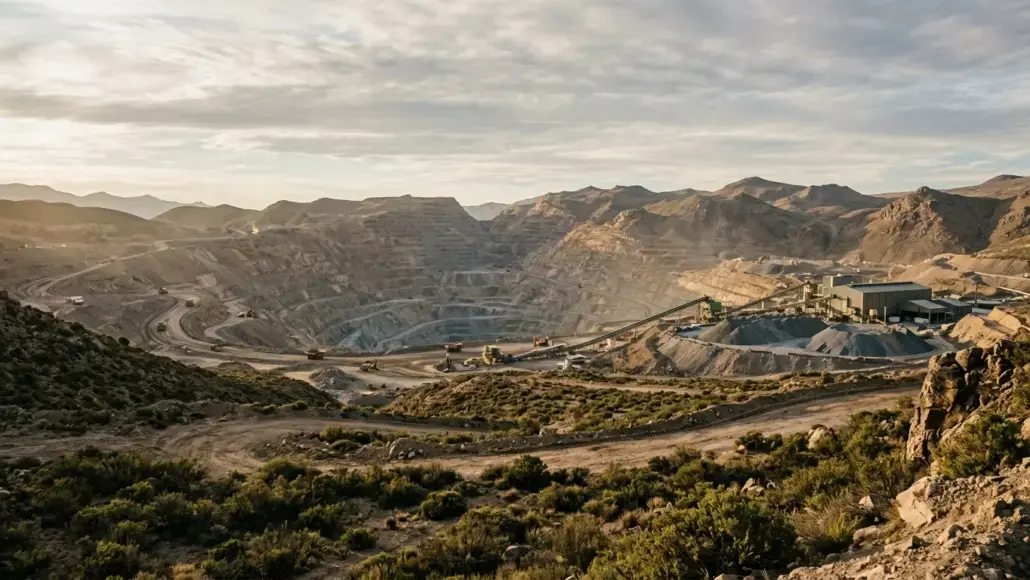

Copper has long been a barometer for global economic health, but in the current decade, it has taken on a new role as a strategic pillar of national security and environmental transition. As the world moves toward a low-carbon economy, the metal’s indispensability in electrical systems has made it a focal point of international diplomacy and competition. The geopolitical impacts on global copper mining supply are now as significant as the geological factors that dictate where the ore is found. Nations are increasingly viewing their mineral wealth not just as a source of revenue, but as a lever of power in the global arena. From shifting trade alliances and the rise of resource nationalism in South America to the strategic stockpiling efforts of major industrial powers, Mining Frontier highlights that the geography of copper is being redrawn by political forces that can disrupt supply chains as quickly as any technical or environmental challenge.
The Shift Toward Resource Nationalism
At the heart of the current supply landscape is the resurgence of resource nationalism in the world’s primary copper-producing regions. South America which accounts for a vast portion of global production, have experienced significant political shifts in recent years. Governments in these regions are under increasing pressure from their domestic populations to ensure that a larger share of mining profits remains within the country to fund social programs and infrastructure. The geopolitical impacts on global copper mining supply are evident in the introduction of new royalty structures, stricter environmental regulations, and more rigorous community consultation processes. While these measures aim for long-term social stability, they can create short-term uncertainty for international mining companies, leading to delayed investment decisions and potential constraints on future production capacity.
The Strategic Competition for Critical Minerals
Beyond the borders of the producing nations, the global “great power” competition is heavily influencing copper trade. Developed nations are all vying for secure access to the minerals required for the energy transition. The geopolitical impacts on global copper mining supply are manifested in the formation of strategic mineral partnerships and the use of government subsidies to support domestic processing and recycling facilities. This fragmentation of the global market into competing blocs could lead to a more volatile pricing environment and a “balkanization” of the copper supply chain.
Trade Barriers and Policy-Driven Disruptions
Trade policy has become a primary tool for governments looking to protect their industries or exert pressure on competitors. Tariffs, export bans on raw ores, and “local content” requirements for green energy projects are becoming more common. For example, some nations have considered or implemented restrictions on the export of unrefined copper to encourage the development of domestic smelting and fabrication industries. These geopolitical impacts on global copper mining supply force global manufacturers to rethink their procurement strategies, often shifting from a “just-in-time” model to a “just-in-case” approach that prioritizes security over cost. The complexity of navigating these shifting trade landscapes adds a layer of risk for stakeholders across the entire value chain, from mining juniors to automotive OEMs.
Regional Instability and Infrastructure Security
Geopolitics is not just about high-level trade deals; it is also about the physical security of assets on the ground. Many of the world’s most promising untapped copper deposits are located in regions with history of political instability or civil unrest. In parts of Africa and Central Asia, the development of new mines is often contingent on the stability of local regimes and the security of transportation corridors. The geopolitical impacts on global copper mining supply are often felt when a change in government or a local conflict leads to the closure of a key rail line or the nationalization of a port facility. Ensuring the physical security of mining infrastructure in these volatile environments requires significant diplomatic and private security coordination, further increasing the cost and complexity of bringing new supply to market.
The Role of ESG and International Standards
The global push for environmental, social, and governance (ESG) standards is also a geopolitical force. International organizations and financial institutions are increasingly linking capital access to a mining company’s ability to meet rigorous sustainability criteria. This creates a geopolitical divide between companies and nations that can adhere to these standards and those that cannot or will not. The geopolitical impacts on global copper mining supply are seen in the emergence of “green premiums” for copper produced with low carbon footprints and high ethical standards. As major economies implement carbon border adjustment mechanisms, the origin of a ton of copper—and the environmental regulations of the country where it was mined—becomes a critical factor in its marketability and price.
Resource Diplomacy and the New Alliances
We are witnessing the birth of a new era of “resource diplomacy,” where access to copper and other critical minerals is becoming a central theme of bilateral and multilateral agreements. Traditional alliances are being supplemented by new partnerships focused specifically on mineral security. For instance, the Mineral Security Partnership (MSP) aims to bolster the development of secure and diverse supply chains. Conversely, some producing nations have explored the idea of creating a “copper-OPEC” to coordinate production and influence prices. While such a cartel remains unlikely given the diversity of producers, the mere discussion of it highlights how much the geopolitical impacts on global copper mining supply have moved to the center of the international political discourse.
Impact on Investment and Long-Term Exploration
The unpredictability of the geopolitical environment has a chilling effect on long-term capital investment. Mining is an industry that requires decades of planning and billions of dollars in upfront costs. If a mining company fears that its assets might be seized or that trade barriers might make its product uncompetitive, it will be hesitant to break ground on new projects. This hesitation is particularly concerning given that the lead time for a new copper mine is often 10 to 15 years. The current geopolitical impacts on global copper mining supply could therefore lead to a significant supply crunch in the 2030s, just as the demand for electric vehicles and renewable energy is expected to peak. Policymakers must balance their domestic political goals with the need to provide a stable environment for the massive investments required to fuel the global energy transition.
Navigating the Future of the Copper Market
For stakeholders in the copper industry, navigating the geopolitical landscape requires a sophisticated understanding of regional politics, international trade law, and macro-economic trends. Diversification of supply sources is becoming the primary strategy for risk mitigation. Companies are looking to develop mines in “low-risk” jurisdictions while simultaneously investing in advanced recycling technologies to create a secondary, domestic supply of the metal. Governments are also taking a more active role in the market, with some creating strategic reserves of copper to buffer against sudden supply shocks. The geopolitical impacts on global copper mining supply have turned a once-simple commodity market into a complex arena of international strategy where success depends as much on diplomatic acumen as on geological expertise.
Conclusion: A Metal of Strategic Consequence
The future of the copper market is inextricably linked to the stability of the global political order. As the most essential metal for the 21st-century energy revolution, copper has become a strategic asset of the highest order. The geopolitical impacts on global copper mining supply will continue to dictate the pace of the global energy transition and the economic prosperity of both producing and consuming nations. While the challenges of resource nationalism, trade barriers, and geopolitical competition are significant, they also present an opportunity for a new kind of international cooperation based on the shared goal of a sustainable and secure energy future. Mining Frontier understands that by recognizing the strategic importance of copper and fostering stable, transparent, and ethical supply chains, the global community can ensure that this vital resource remains a catalyst for progress rather than a source of conflict.